8 Place Du Marché
Sea Smoke
Southing Sta. Rita Hills Pinot Noir 2010

Paul T, Missing My Beautiful Wife 24/7
Just bought a mag of 2012 TEN, not sure what to do with it🤷🏼♂️ save or open?


Louis M. Martini
Monte Rosso Vineyard Gnarly Vine Zinfandel 2011

The Monte Rosso was outstanding in every way- expressive nose of dark red fruits and layers that touched all parts of the palate. The flavors complimented a wonderful dinner. 8 years and still getting better. 100 year old vines that show how good Zinfandel can be when grown and tended to reveal their sense of place. Outstanding 🍷🍷🍷 — 7 years ago
Zenato
Ripassa Valpolicella Ripasso Superiore Corvina Blend 2013

Beautiful deep purple color with a nice, translucent red edge at the glass.
Nose has plum, cedar, violets, cedar, moist earth and fresh black pepper.
Palate has plum, black cherry, bitter dark chocolate, over-ripe strawberry and faint oak.
This wine is very plumy, and just delicious. 2021-23+ for future bottles, likely in a very nice place in 8-10 years past vintage. QPR delivered at our purchase price of $24! — 8 years ago

Château Lucia
Enzo Ide St. Émilion Grand Cru Red Bordeaux Blend 2009
On the nose; dark currants, stewed styled blackberries, dark cherries, black plum, blueberries top nose, black raspberries, strawberries haunt here & there, semi-sweet tarry notes, dark chocolate, dry clay, loamy dry top soil, leather, lead pencil shavings, cedar, black tea, decayed red florals with fresh violets.
The palate is full bodied. Tannins rounded, dusty and 40% resolved. The structure is still big & bold, tension tight, balance is getting there and the length is in a good place with better evolution ahead. Dark currants, stewed styled blackberries, dark cherries, black plum, blueberries top nose, black raspberries, strawberries haunt here & there, semi-sweet tarry notes, dark chocolate, hint of mocha powder, vanilla, medium spice, dry stems, bay leaf, dry black turned earth, dry clay, loamy dry top soil, leather, lead pencil shavings, cedar, black tea, decayed red florals with fresh violets. The acidity is a little light but not bad. The long, drier, balanced finish is developing but needs another 5-8 years to reveal its best self.
Photos of; Owner Michel Bortolussi, small barrel room & Chateau Lucia exterior.
Producer notes and history...the owner of Lucia, Michel Bortolussi, got his start in the Bordeaux wine business selling equipment needed to make wine to all the top producers and winemakers in Bordeaux.
However, his strongest customer base were the numerous Chateau’s located in the Saint Emilion. Michel Bortolussi knee that if so many of his customers could produce great wine, he could as well. One of his best clients was wine consultant, Stephane Derenoncourt. That relationship was the start of Chateau Lucia.
Before Bortolussi and Stephane Derenoncourt teamed up to create Chateau Lucia. The wine was formally sold under the name of Chateau Lucie before Michel Bortolussi changed the name to Lucia.
The first vintage for Lucia was made in 2001. In 2012, Chateau Lucia was sold to Enzo Ide, a Belgian businessman.
Enzo Ide has retained the same technical team for their Right Bank vineyards and wine making. Enzo Ide also owns another vineyard, Chateau La Rousselle in the Fronsac appellation.
The 4.3 hectare St. Emilion vineyard of Chateau Lucia is planted to 90% Merlot and 10% Cabernet Franc.
Lucia has some of the oldest vines in Bordeaux. In fact, some of the vines date all the way back to 1901. They also have two other sections of vineyard with vines that are on average 30 years of age.
The younger vines are situated close to Chateau Monbousquet. Those vines are planted in more of the sandy terroir with some clay in the soils. Overall, the vineyard has a terroir of clay and limestone soils. The vines are planted to a vine density of 5,500 vines per hectare.
There is a lot of intensive labor that takes place at Chateau Lucia. To produce Chateau Lucia, the berries are harvested by hand. The fruit is sorted twice before fermentation. The grapes are whole berry fermented in small open-top, oak tanks that range in size from 30 to 50 hectoliters.
Everything in the small cellars is moved by gravity. Malolactic fermentation takes place in french oak barrels. The wine is aged on its lees in an average of 60% new, French oak barrels for between 12 to 18 months, depending on the character and quality of the vintage.
The production of Lucia is small at about 1,250 cases depending on what the vintage gives.
The 09 while tasty after opening up over an hour, still needs another 6-8+ years in bottle to be all it can be. Drink 2024-33. — 9 years ago
Château Brane-Cantenac
Grand Cru Classé en 1855 Margaux Red Bordeaux Blend 2005
I have a six-pack of this 05. I thought after 10 years in bottle, it would be interesting to check in on its evolution. While tasty, I’ll wait another 8-10 to open another. Even after 2-3 hours in the decanter, it’s still a very young adolescent. On the nose, slightly sour blackberries & dark cherries, dark currants, baked black plum, haunting blue fruits, anise, whiff of spice, steeped tea, dry stones, dry crushed rocks with dry top soil, caramel, vanilla with fresh & dry red florals. The body is thick & full. Tannins are starting to round out. It’s velvety on the palate. The fruits are; bright, fresh & ripe and really show the greatness of the 05 vintage. Dark currants, blackberries, dark cherries, baked black plum, haunting blue fruits, baked strawberries, cherries, raspberries on the long set, dark spice, clay & loamy dry top soil with crushed rocks, dry stones, cigar with ash, graphite, dry stems, slight herbaceous character, mint, used leather, clove, caramel, vanilla, fresh & dry red florals with violets. The round acidity is about perfect. The structure and length are still strong. The balance is in harmony. As for the long finish, it’s lush, ruby, rich and well polished. Photos of; Chateau Brane Cantenac, large wood vats, Henri Lurton and Estate vines. Producer notes and history...Chateau Brane Cantenac began in the early 17th century. At the time, the estate was known as Domaine Guilhem Hosten. Even that far back, wine was produced from the property. In fact, the wine was so highly regarded it was one of the more expensive wines in Bordeaux. It sold for almost as much money as Brane Mouton. This is interesting because of who went on to buy the vineyard in the 1800’s. The Baron of Brane, also known as “Napoleon of the Vineyards”, purchased the Chateau in 1833. At the time of the sale, the estate was called Chateau Gorce-Guy. To get the funds needed to purchase the Margaux vineyard, the Baron sold what is now called Mouton Rothschild, which was at the time of the sale, known as Chateau Brane-Mouton. Not such a good move with hundreds of years in hindsight! In 1838, the Baron renamed property taking his name and the name of the sector where the vineyards were located and called it Chateau Brane Cantenac. The Chateau later passed to the Roy family, who were well-known in the Margaux appellation in those days, as they owned Chateau d’issan. Moving ahead to 1920, the Societe des Grands Crus de France, a group of merchants and growers that owned several chateaux located in the Medoc including; Chateau Margaux, Chateau Giscours, and Chateau Lagrange in St. Julien, purchased Chateau Brane Cantenac. Five years later, M. Recapet and his son-in-law, François Lurton, took over Brane Cantenac along with Chateau Margaux. Lucien Lurton (the son of François Lurton) inherited Brane Cantenac in 1956. Today, the estate is still in the hands of the Lurton family. Brane Cantenac is owned and run by Henri Lurton. After being given the responsibility of managing Brane Cantenac, it was under the direction of Henri Lurton that large portions of the vineyard were replanted. Vine densities were increased, the drainage systems were improved and the plantings were also, slowly changed. The vineyard of Brane Cantenac is planted to 55% Cabernet Sauvignon, 40% Merlot, 4.5% Cabernet Franc and .5% Carmenere. Carmenere was used for the first time in the 2011 vintage. The only other Chateau I know that still uses Carmenere is Clerc Milon. The 75 hectare Left Bank vineyard of Brane Cantenac is essentially unchanged since it earned Second Growth status in the 1855 Classification. At least that is the case with the 45 hectares used to produce the Grand Vin of Brane Cantenac. Those 45 hectares are planted surrounding the Chateau. Those vines are located just in front of the Cantenac plateau and are the best terroir that Brane Cantenac owns. They have other parcels, which are further inland and much of those grapes are placed into their second wine, Le Baron de Brane. Those additional hectares can be divided into 3 main sections. Behind the Chateau, they have 15 hectares of vines on gravel and sand, 10 hectares across the road with sand, gravel and iron and a 13 hectare parcel with gravel called Notton, which is used for their second wine. The vineyard is planted to a vine density that ranges from 6,666 vines per hectare on the plateau and up to 8,000 vines per hectare for the vines located behind chateau, in their sandier soils. The higher levels of vine density are always found in the newer plantings. The terroir of Brane Cantenac consists of deep gravel, sand and clay soil. Experiments in the vineyards are currently looking at becoming more organic in their vineyard management. Today, more than 25% of Brane Cantenac is farmed using organic farming techniques. It is expected that over time, the amount of hectares farmed with organic methods will be increased. Brane Cantenac has gone through 2 relatively recent modernization’s in 1999, when they added began adding the first of their smaller vats to allow for parcel by parcel vinification and then again in 2015 when they completed a much more complete renovation of their cellars and vat rooms. While Brane Cantenac is a traditional producer, they are no stranger to technology as they were one of the first estates to embrace optical grape sorting machines. In very wet vintages, they can also use reverse osmosis. To produce the wine of Chateau Brane Cantenac, the wine is vinified in a combination of temperature controlled, traditional, 22 oak vats, 18 concrete tanks and 20 stainless steel vats that vary in size from 40 hectoliters all the way up to 200 hectoliters, which allows for parcel by parcel vinification. 40% of the fermentation takes place in the oak vats. The oldest vines are vinified in vats that are selected to allow for separate parcel by parcel vinification. The younger vines are vinified more often together in the same vats. However, the Carmenere is entirely micro-vinified, meaning that those grapes were completely vinified in barrel, using micro-vinification techniques. This can also happen because the amount of grapes produced is so small. Some vats can be co-inoculated, meaning they go through alcoholic fermentation and malolactic fermentation simultaneously. At Chateau Brane Cantenac, malolactic fermentation takes place in a combination of French oak tanks and barrels. The wine of Brane Cantenac is aged in an average of 60% new, French oak barrels for 18 months before bottling. The initial 2 months of aging is done with the wine on its lees, which adds more depth to the wine. There second wine is Le Baron de Brane. Le Baron de Brane is not new. In fact, previously, the second wine went under the name of Chateau Notton, which took its name from one of the main parcels where the grapes were planted. During the late 1950’s and into the 1960’s, having a second wine was important as the estate declassified 3 vintages, due to extremely poor, weather conditions in 1956, 1960 and 1963. Production of Chateau Brane Cantenac is about 11,000 cases per year. — 9 years ago

Azienda Agraria Lisini
Brunello di Montalcino Sangiovese 1997
On the nose, dark, slightly baked/stewed; cherries, blackberries, strawberries, rhubarb, cherries and raspberries. Soft spices, vanilla, black cherry licorice and bright dark florals. On the palate; dark, slightly baked/stewed; cherries, blackberries, strawberries, rhubarb, cherries and raspberries, more pronounced spices on the palate, cinnamon, vanilla, clove, black cherry licorice, dry & fresh dark florals, chalky fine minerals, dry powdery earthiness, soft leather, touch underbrush, the acidity is like a waterfall, body is medium lean, dusty to grainy tannins are 75% resolved, showing brown tinge on the edges, the finish is in a really good place, round, lush and last a full minute. It's around its peak with 5-8 years of good drinking left. Newly acquired bottle (3-4 weeks ago) from a pristine Atherton cellar via my friend Alex at"No Limit Wines." The bottles that I received looked brand new from the winery 20 years removed and were reasonably priced. Photos of; the estate, the Lisini family, barrel room and my Veal Bolognese to pair with the wine. It's stunning and amazingly very fresh. Takes us right back to our lunch in Montalcino with another 97 or 98 with great Bolognese 5 or 6 years ago. Amazing lunch. 13.5% which is slightly above perfect. — 9 years ago

Château Cheval Blanc
Héritiers Fourcaud-Laussac St. Émilion Red Bordeaux Blend 1970
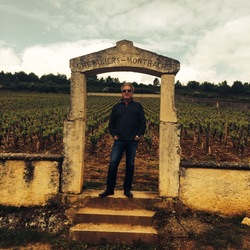
70 Bordeaux Dinner St Emillion Flight
WOTF with 8 1st place votes — 9 years ago
Te Mata Estate
Awatea Hawke's Bay Cabernet Sauvignon Merlot 2009
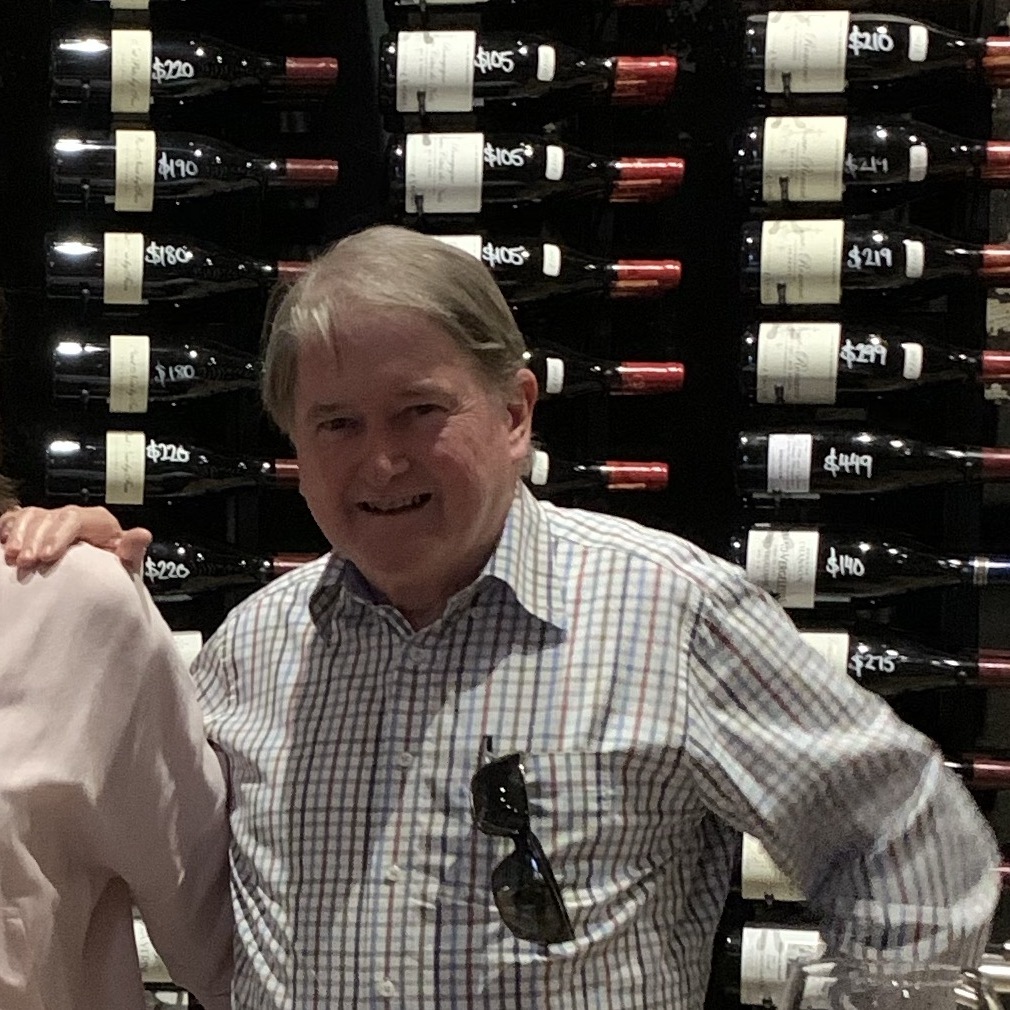
This is the 2nd wine of Te Mata Estate one of the best makers of Cabernet Blends in NZ. Their premium cuvee being Coleraine. Medium weight but with all the Bordeaux descriptors. In a good place at 8 years of age and no need for further cellaring. Visited the winery a week ago and was lucky to meet the Chairman- John Buck OBE. — 10 years ago
Foradori
Fontanasanta Vigneti Delle Dolomiti Nosiola 2014
Foradori Fontanasanta – Nosiola Vigneti delle Dolomiti IGT 2014
New year, a new grape (Nosiola)!
Nosiola is an ancient varietal only found in these parts of Trentino. This wine is made from a tiny 2 hectares planted in calcareous clay and farmed biodynamically. Fermentation and aging take place on the skins in clay amphora for a total time of 8 months.
The color is an elegant straw gold color with a green tint. The nose and palate show floral, chiseled rock minerality and the fruit runs in the fresh but subtle spectrum of pear, citrus and kiwi. A gorgeous purity and elegance flows over the palate. There are zero traces upon appearance, aroma or taste that hint to typical amphora (orange) wines.
#Foradori #ElisabettaForadori #ForadoriWine — 10 years ago



Maybach Family Vineyards
Materium Cabernet Sauvignon 2013

Opened at 2pm and I was scared when I sipped it to make sure the bottle was ok. It was wound tight and I was afraid that it would not show well for dinner. 8 hours later it was PERFECT. It was in full stride and amazed everyone. My 1st Maybach!!! Baby., where have you been all my life!! 😍🍷🍷🍷🍷😍.
This was the runner up WOTN since we have to respect the 61 Musigny and how incredibly well structured it has to be to stand up after 55 years & show as impeccably as it did. However, This is the 2nd place finisher by only .0000000001 point!!!! Lol — 10 years ago


James Cole
Mud's Kitchen Clone #7 Napa Valley Cabernet Sauvignon 2010
Happy Thanksgiving Eve. I wish you all a great Thanksgiving with family & friends giving thanks over some great food & wine pairing. 🍁🦃🍽
Coravined this last weekend as nightcap...it’s a pleasure getting back to it tonight.
The nose at the beginning broods ripe, dark fruit liqueur notes but, calms down in the glass after 10 minutes. It evolves into; bright, ruby, lush, dark, slightly candied floral currants/cassis. Ripe; blackberries, black cherries, blueberries syrup, boysenberries, olallieberries, black plum extract with poached strawberries & raspberries on the glass edges. Anise to black licorice, sweet tarriness, dark, mixed berry cola, mid intensity dark spice, dry crushed rocks, touch of incense, dry tobacco, leathery notes, wood shavings, dark chocolate, vanilla, light nutmeg & clove, dark, rich, turned earth, steeped fruit teas, mid, fresh herbaceousiness, bright, dark, red, blue slightly candied florals with fresh violets & lavender for days.
The body is full, round, lush & ruby. The fruits halfway to candied. The tension, structure, length and balance are in a very good place with another 8-10 years of good drinking ahead. The tannins are beautifully round, 55% resolved and still tarry, chewy with some teeth. Beautifully ripe; dark currants/cassis, blackberries, black cherries, blueberries syrup, boysenberries, olallieberries, black plum extract with poached strawberries & black raspberries. Anise to black licorice, sweet tarriness, dark, mixed berry cola, mid intensity darker spice on the long palate than the nose and show some heat, dry crushed rocks, volcanic minerals, limestone, touch of incense, dry tobacco, leathery notes, wood shavings, dark chocolate, malt in malted balls vanilla, light nutmeg & clove, dark, rich, turned earth, moist clay, steeped fruit teas, mid, fresh herbaceousness, bright, dark, red, blue slightly candied florals with fresh violets & lavender for days. The acidity is round and some of the best I’ve had in the 10’s I’ve had to date. The finish is delicious, ruby, lush, extremely well balanced and is the textbook definition of elegance. It persists several minutes with several nuances along the way. One of the very best 2010’s I’ve had as I am not a big fan of most 10’s. Get some if you can find.
Photos of; James Cole Winery and Estate vines, certainly one of my favorite Napa Winemakers-Charles Hendricks (FYI, has not been their Winemaker since midway through the 14 vintage), their outside patio lounge and the tasting bar. — 7 years ago

Domaine de Pallus
Les Pensées de Pallus Chinon Cabernet Franc 2014

Always a fave, classic and of place. No notes for day 1. Day 2: really classic expression to me. Top-notch with its deep black raspberry and currant notes, graphite, crushed chalk, tobacco leaf, smoke, underbrush, porcini, purple flowers, a kiss of brett. The fruit is ripe, has depth, but doesn’t overwhelm the wine at all, great herbal and mineral notes that are really integrated and layered into the wine’s profile. Acid is lip smacking, this has great juiciness and no edgy tartness at all. Tannins have some nice ripeness to them, there’s nice structure but very balanced, could see this being very rewarding 8-10. — 7 years ago
Hirsch Vineyards
Block 8 Pinot Noir 2013

What a special place. Iron oxide soil. Grand Cru block. Tasting these siblings side by side and I couldn’t be any happier! — 8 years ago
Château Lafite Rothschild
Carruades de Lafite Pauillac Red Bordeaux Blend 2003
On the nose, ripe; blackberries, sweet & sour dark cherries, cooked cherries & strawberries & hues of blueberries. Black tea, cola, soft baking spices; vanilla, light clove & cinnamon. Crushed rocks, stones, limestone, turned, moist black earth, tobacco leaf, saddle-wood, soft leather, dry & fresh dark red florals.
The body is medium edging toward full. The tannins pretty well resolved. The ripe fruits show the hot, ripe vintage. Blackberries, sweet & sour dark cherries, cooked cherries & strawberries & hues of blueberries black tea, cola, soft baking spices; vanilla, light clove & cinnamon. Crushed rocks, stones, limestone, tobacco with ash, some graphite, soft medium dark spice, turned, forest floor, powdery but edgy minerals, saddle-wood, soft leather, dry & fresh dark red florals with some violets on the finish.
This showed better with Ribeye. The Ribeye brought out a fuller, richer wine with even more complexity. 9.35-9.4 with the Ribeye. It just missed 9.2 on its own. It’s big brother the 03 “Lafite” is 💯 point Parker wine.
Photos of; Chateau Lafite, their oak vat fermenters, Estate wine and their magnificent barrel room.
Interesting history and producers notes...Lafite Rothschild has a long and interesting history dating back to 1234, even though the property was not in the Bordeaux wine business at that time.
It is has been largely believed that vines were already planted on their terroir. The owner of the estate at the time, Gombaud de Lafite left his mark, his name. Almost 1,000 years after he owned it, the Chateau is still named after him! The vines were probably in existence at Lafite for over a century, it was not until around 1680, the majority of vineyards of what we know of as Lafite Rothschild today were created. This is because on the 1680 estate manifest, there are six mentions of their Bordeaux vineyards. Jacques de Segur, earns credit for cultivating the vineyard as I wrote in my Colon Segur post last weekend. In 1695, Alexandre de Segur married Marie-Therese de Clauzel, heiress to Chateau Latour. So to dovetail that write up, within a generation, the Segur family married into two of the greatest Bordeaux vineyards, Chateau Lafite and Chateau Latour! When their son, Nicolas-Alexandre passed away, Chateau Lafite and Chateau Latour were separated.
In 1797, Chateau Lafite was sold again. In the deed of sale, Chateau Lafite was described as a Premier Cru of Medoc. This is one of the earliest mentions of what we know of today as Lafite Rothschild producing wines of what would later be classified as an 1855 First Growth.
At that time, of Lafite were managed by the Goudal family. The Goudal family were wine historians and were able to read accurate records and details of the viticulture and marketing plans for Chateau Lafite in the estates formative years. The Goudal family gets the credit for creating the cellar and saving many of the oldest bottles that remain in the cold, dark cellars, including their oldest bottle, the 1797 Lafite!
The start of the famous Rothschild family begins in 1744, with the birth of Amschel Meyer. Amschel Meyer began creating his fortune while working as a merchant at “Zum Roten Schild,” which eventually became the family name of Rothschild.
In 1798 his sons were sent to various cities to create their fortunes. Needless to say, his sons all prospered as did their children in turn. This eventually led to them wanting to own a Chateau in Bordeaux. So in 1853, Baron Nathaniel de Rothschild, an English member of the Rothschild family, purchased Chateau Brane-Mouton. As was the custom of the day, the new owner renamed it using his name and Chateau Mouton Rothschild was born.
This was followed in 1868, when James Rothschild, another member of the family purchased Chateau Lafite, which was now a coveted First Growth.
On 8 August, 1868, Baron James d’Rothschild purchased Chateau Lafite, which was sold at a public auction in Paris. It’s assumed, he bought the property for family competitive reasons looking to one up his brother, the owner of Mouton Rothschild. At that time, Mouton Rothschild was only a Second Growth at the time. But, that does not paint the entire picture. The 1855 Classification had not taken on the importance associated with it the we see it today. Plus, buying Lafite was a reasonable investment as the vineyard sold for about 8 times its earning potential.
The actual Chateau is one of the older structures in Bordeaux, as part of the building dates back to the later part of the 16th century. In 1868, the vineyard took up 135 hectares, of which 74 hectares were cultivated with vines. Production was much smaller in those days than it is today as it was between 4,000 and 5,000 cases.
Just three months after the purchase, Baron James d’Rothschild passed away and Chateau Lafite Rothschild became the joint property of his three sons; Alphonse Rothschild, Gustave Rothschild & Edmond Rothschild. Since 1868, Chateau Lafite Rothschild has remained in the hands of the of Rothschild family. The new owners renamed the estate Chateau Lafite Rothschild.
Jumping ahead to the modern age, in 1962, the Rothschild family added to their holdings when they purchased Chateau Duhart-Milon, a Fourth Growth vineyard also located in Pauillac. It was owned by the Casteja family for more than a century, Chateau Duhart Milon suffered from neglect and was in a awful condition. By the time Duhart Milon was obtained by the Rothschild family, the vineyard was down to only 17 hectare which required extensive renovations.
Baron Eric Rothschild, nephew of Baron Elie Rothschild, took over the management of Lafite Rothschild in 1974. Baron Eric Rothschild was part of the fifth Rothschild generation to inherit Chateau Lafite Rothschild. In 1984, the Rothschild family added to their holdings in Bordeaux with the purchase of Chateau Rieussec in Sauternes.
1987 was a difficult vintage, but because that was the year Lafite celebrated the inauguration of their wine new cellar, they had a lot to be excited about.
The new cellars were built under the supervision of Catalan architect Ricartdo Bofill, is both underground and circular, with a vault supported by 16 columns, giving the structure a majestic architectural style. The cellar holds 2,200 barrels, which is about 55,000 cases of wine. The construction took two years to finish and was completed in 1988.
Domaines Baron Rothschild became one of the first Bordeaux properties to invest in South America when they purchased Vina Los Vascos from a Chilean family. The owners of Lafite Rothschild continued expanding their holdings with the purchase of Chateau lEvangile in Pomerol from the Ducasse family, who owned the property for almost 100 years.
The wine making at Chateau Lafite Rothschild was managed by Charles Chevallier, who began his position in 1994. Charles Chevallier was replaced by Eric Kohler in January 2016. 2017 saw another change at the estate when Jean Guillaume Prats replaced Christopher Salin as the President of Domaines Baron Rothschild.
Perhaps, it’s the most refined of the First Growth. The wine, like all First Growth’s takes decades to mature. It has remarkable staying powers. Bottles of 1870 Lafite Rothschild discovered in the Glamis castle remain profound at more than 140 years of age! It is consider by many Master Sommeliers to be the best wine in the world.
Chateau Lafite Rothschild is one of the earliest major Bordeaux estates to bottle their own wine. In 1890, they bottled a large portion of the wine and again in 1906. Part of the estate bottling was due to requests from Negociants who were willing to pay more for Chateau bottled wines. Also, bottling was primarily done to combat piracy. At the time, it was known that merchants in some countries, like Russia were bottling cheap wine and placing labels from Lafite Rothschild on the bottles. The Koch’s famous Jefferson bottles were not the first attempt at counterfeiting.
Prior to 1996, some would say the property had its share of ups and downs. The 1960’s and 1970’s were not great for Chateau Lafite Rothschild. But since 1996, Lafite Rothschild has been producing some of the best wine in their history!
Sadly, only the wealthy can afford to purchase it. Price aside, there is no denying the level of quality. In 2003 Lafite Rothschild produced a wine that is possibly unequaled by the estate at any time in their long history. Hence, my purchase of their 03 second wine. 2009, 2010 and 2016 are not far behind.
Starting in about 2008, Lafite Rothschild became the most collectible wine from Bordeaux. Prices exploded due to demand from China as Chinese businessmen bought them as gifts or bribes depending on you look at it.
The reason this started was Lafite Rothschild paid for product placement on the number one rated Chinese soap opera on television. Characters in that show were pictured enjoying life with Lafite Rothschild and since then demand went through the roof as did priced.
However, Issac Newton had it right when he declared “What goes up, must come down.” Prices for Lafite Rothschild plummeted after 2011. By the difficult 2013, prices were finally starting to hold firm, but many of the vintages that were setting price records on a daily basis had lost close to 50% of their value.
Starting with the 2012 vintage, Chateau Lafite Rothschild began instituting anti-counterfeiting measures. From 2012 forward, to help fight, rampant counterfeiting, the estate places a seal of authenticity on the capsules of both Lafite Rothschild and Carruades de Lafite. The seal features a unique, numbered code that can be checked on their website, to verify if the wine is real.
The 112 hectare vineyard of Chateau Lafite Rothschild is planted to 70% Cabernet Sauvignon, 25% Merlot, 3% Cabernet Franc and 2% Petit Verdot. This shows a slight change in the vineyard.
While Cabernet Sauvignon remained at 70%, today there is slightly more Merlot, less Cabernet Franc and the Petit Verdot has been added since the mid 1990’s.
Located in the far north of the Pauillac appellation, only the small, Jalle de Breuil stream separates the vineyards from St. Estephe. You could divide the vineyards of Chateau Lafite Rothschild into three sections with 100 separate parcels in all. The estate has close to 50 hectares of vines located close to the Chateau, on both sides of the D2, which offers gentle rises in elevations of up to 27 meters. They also have about 50 hectares vines planted on the plateau in the Carruades sector, where they have two blocks of vines, one of which is inside the vineyard of Chateau Mouton Rothschild. It is interesting to note that even though the parcels in the Carruades sector give their name to the second wine of the estate, those vines are almost always placed in the Grand Vin.
There are also vines adjacent to, and interspersed with the vineyards of Chateau Duhart Milon. The property also consists of a smaller, 4.5 hectare parcel of vines located in the Saint Estephe appellation, “La Caillava”. The vines in St. Estephe are situated not that far from Cos d Estournel, which are located on a larger a parcel known as Blanquet. The vines in Saint Estephe are allowed to be placed into the wine of Chateau Lafite Rothschild because those vines were used to produce Lafite in 1885, at the time of the classification. The vineyards are close to their famous neighbor Mouton Rothschild.
Located just south of the Chateau, the best terroir of Lafite Rothschild has a thick layer of gravel with sand, clay, marl and limestone in the soils with rolling, gravel slopes. The gravel can be as deep as 4 meters in some parcels.
It is important to note that even though their vineyards are in the far north of Pauillac, most of the soil is pure gravel, rocks and stones. With more than 50% of the soil consisting of gravel, that is a large part of the reason Lafite Rothschild has such elegant, feminine textures and that coveted sensation of minerality.
On average, the vines are close to 40 years of age. However, Chateau Lafite Rothschild has much older vines. In fact, they have some vines that are more than 100 years of age planted in the La Graviere section. That small parcel of Merlot vines dates back to 1886. Less than 1% of the vines are that old.
Additionally, they have a small section of Cabernet Sauvignon that dates back to 1922! Other old vines range from 50 to 90 years of age! They also maintain some of the oldest Petit Verdot vines in the Medoc that was planted in the early 1930’s.
At Chateau Lafite Rothschild, between 1% to 1.5% of the vineyard is replanted every year. Vines less than 20 years of age are never included in the Grand Vin.
The vineyard of Chateau Lafite Rothschild is planted to a vine density that ranges from 7,500 to 8,500 vines per hectare. Only organic fertilizers are used in the vineyards of Lafite Rothschild.
During harvest, the goal is not to pick at the maximum level of ripeness. Instead, they are seeking a blend of grapes at differing levels of maturity, which gives the wine its unique textures, freshness, aromatic complexities and elegant sensations.
Lafite Rothschild is the largest of the First Growth vineyards with close to 112 hectares of vines. A large portion of the estate is taken up with stunningly, beautiful landscaping, lakes, trees and parkland.
At one point in time, Chateau Lafite Rothschild produced a dry white, Bordeaux wine that was sold as Vin de Chateau Lafite. The wine was produced from a large percentage of Semillon, blended with a small amount of Sauvignon Blanc. The last vintage for their white wine was 1960. The wine was sold as a generic AOC Bordeaux blanc with a simple, scripted label, black and white label.
Lafite vinification takes place in 66 vats that are a combination of 29 wood vats, 20 stainless steel tanks and 17 concrete vats that range in size from as small as 45 hectoliters up to 123 hectoliters in the concrete and as large as 270 hectoliters for the wood. The wide range of vat sizes coupled with different materials allow Chateau Lafite Rothschild to vinify depending on the needs of each specific parcel and grape variety. The stainless steel tanks and oak vats are used for Cabernet Sauvignon. The Merlot is vinified in the concrete tanks. Malolactic fermentation occurs in smaller, stainless steel tanks that vary in size from 25 hectoliters up to 60 hectoliters. At this point, Chateau Lafite Rothschild does not yet use gravity to move the fruit and juice in the cellar. It’s a good bet that a remodel is coming soon.
The average annual production of Chateau Lafite Rothschild ranges from 15,000 to 20,000 cases of wine per year, depending on the vintage. They of course make this second wine, Carruades de Lafite, which due to the name and association with the Grand Cru, has also become extremely collectible. Carruades de Lafite takes its name from a specific section of their vineyard that is located near Mouton Rothschild. Carruades is actually one of the older second wines in Bordeaux, as it was first produced in the mid 1850’s. About 100 years later during the mid 1960s, the estate reintroduced their second wine naming it Moulin de Carruades. The name was changed again in the 1980’s to Carruades de Lafite.
There is also a third wine which is sold as an AOC Pauillac that is produced from declassified fruit from Lafite Rothschild and Duhart-Milon.
The blend for Chateau Lafite Rothschild changes with each vintage depending on the character and quality of the vintage. Generally speaking, the amount of Cabernet Sauvignon in the blend ranges from 80% to 95%. Merlot is usually 5% to 20%. Cabernet Franc and Petit Verdot usually varies from 0 to 5%.
— 8 years ago

2Naturkinder
Bat-Nat Rosé Schwarzriesling Pinot Meunier 2015

Now this is a good pet-nat, with a good cause too. Expected a lot more funk. Fruity and savoury. Stupidly easy to drink - first one to disappear off the table 😂Watermelon, strawberry, herbs.
Info from 2naturkinder's website (crazy detailed):
How we made it
The first vintage of our “Bat-Nat” has been harvested in September 2015. It’s made of Schwarzriesling / Pinot Meunier growing on shell limestone. The vineyard is pretty much in the middle of our town. We started farming it organically in 2014. And as the vineyard had been treated well before we took over the plants didn’t suffer from that switch – at the cost of a reduced yield. 2015 was a low-acid year so we picked the grapes relatively early.
With 50% of the grapes crushed we gave it a skin contact time of 24h before pressing followed by a sedimentation time of 48h. The fermentation took place outside and was pretty slow – it was a really chilly fall. In the middle of November it could finally be bottled with a residual sugar of 15 g/l. Fermentation stopped at 6 g/l RS and started over again after spring kicked in. In July 2016 it finally got disgorged by hand.
The story
In 2014 we took over this vineyard from a colleague. There is a neat cottage in the middle of it which just looked like a perfect home for bats. Together with local bat hero Christian Söder we developed the idea of a cycle: we get guano from local bat colonies – a wonderful fertilizer. In the vineyard we have several bat boxes installed to offer opportunities for those lovely animals to hang out. In return we give a share of the revenue back to the bats via the Landesbund für Vogelschutz. The bat on the label is the grey long-eared bat which has become very rare in our area. It’s also incredibly cute and we want to help it stay around.
Fact sheet
Variety: Schwarzriesling / Pinot Meunier
Location: Kitzinger Eselsberg
Soil: shell limestone
Harvest: 16.09.2015
Yield: 40 hl/ha
Skin-contact for 24h
Sedimented for 48h
Bottled after 8 weeks with 15g RS
Disgorged: July 2016
Bottles produced: 800
Alcohol: 12%
Acid: 6.3 g/l
Residual sugar: 0.8 g/l
Bottle size: 0.75 l — 10 years ago

Cayuse Vineyards
Bionic Frog Walla Walla Valley Syrah 2011
While I love the undeniable sense of place that Cayuse, Horsepower and No Girls provide....I always struggle to catch these prodigious wines in the right drinking window. This was big to be sure but after an 8 hour audouze and 2 hours in the decanter it was a powerful polished and nuanced Syrah like few others I've tried. The fox fur, raw hot dog and saline on the nose are so different than the taste of bramble, deep purple fruit, blackberry compote and volcanic ash that develop on the entry and mid-palate. The last glass was silky smooth on the finish with a substantial and uniquely earthy mouthfeel. Ready to drink now with time and air. Best paired with food but oh so tasty and fun. — 10 years ago
Bon Marché
California Sauvignon Blanc

An excellent, well priced white! I don't say this about whites a lot but this has a place in my Arsenal when cooking/grilling pork or chicken!
— 11 years ago
Giacomo Conterno
Cascina Francia Barolo Nebbiolo 2001
In an awkward place. Very muted on the nose, pretty disjointed on the palate. After a tough night 1, tasted it over a week. Day 8 it started really showing. Crazy.. — 12 years ago

Jean-Marc Burgaud
Côte du Py Morgon Gamay

Just terrific! Definitely at the youthful point of its journey—a lot of sap and predominant plumb—but certainly all else in place to suggest a wonderful run of 5 to 8 years in the cellar. An easy pour for Thanksgiving 2019 from this 2018 vintage.
🇺🇸🦃🇺🇸 — 7 years ago
Clendenen Family Vineyards
The Pip Santa Maria Valley Nebbiolo 2014

#Nebbiolo is a surprisingly rare grape. Even in its native Piedmont, it accounts for only 8% of vineyard land. There are fewer than 100 hectares planted in the United States. 🕵️♂️🍇
Over 80% of prewar Italian immigrants came from Sicily and Southern Italy. Piedmont was the wealthiest and most politically dominant region. But if fortunes were reversed, could Nebbiolo have taken Primitivo/Zinfandel’s place as a grape relatively uncommon on the boot but dominant in California? 🤔🇮🇹🇺🇸
Probably not. The Nebbiolo vine is *not* for beginners. It flowers early and ripens late, making it susceptible to both spring and autumn frosts. It loves the occasional fog bath (some say the name is derived from ‘nebbia’, Italian for fog ☁️☁️☁️) but is prone to the mildew that may result from such humid conditions. Its fussiness would make Pinot Noir blush: it demands southwesterly exposure, a proper gradient, constant sun above, and fog licking at its toes. #diva
Sound anything like California’s Central Coast? 🌅
In the Santa Maria Valley, where the East-West Transverse Range bends back into the North-South Coastal Range, it’s possible. Vineyard selection still requires extreme discretion - an eye like @JimClendenen’s, perhaps.
Jim began the Nebbiolo program at the legendary #BienNacido vineyard in 1994. Production is small, but if you track down his “The Pip” Nebbiolo, it will only run you about $30. You’ll believe anything is possible when you have real California Nebbiolo of this quality come wafting out of the glass at you! 🙌🙌
🏞.“The Pip” is named after Jim’s old cellar dog Pip, a border collie. So it only seemed right to include one of our own pips! 🐈 — 7 years ago
Château La Fleur de Boüard
Lalande de Pomerol Red Bordeaux Blend 2005
The nose reveals, dark currants, ripe, slightly liqueur; blackberries, black plum, dark cherries, black raspberries, charred strawberries, hints of cooked rhubarb and raspberries. Mixed berry licorice/cola, anise, vanilla, cinnamon, nutmeg, touch clove, steeped fruit tea, herbaceous notes, leather, tobacco, charcoal, wood shavings, limestone minerals, dry stones, a little forest floor, dark fresh florals, lavender & violets.
The body is round, lush with some dusty tannins on the long set. It’s really beautiful right now but, there is still better things ahead over the next 5-8 years before it peaks. It’s silky & satiny. The structure, length, tension and balance are really starting to hit its stride. Dark currants, ripe, slightly liqueur; blackberries, black plum, dark cherries, black raspberries, plum, charred strawberries, hints of cooked rhubarb and raspberries. Mixed berry licorice/cola, anise, vanilla, cinnamon, nutmeg, touch clove, mocha powder, medium dark spice, steeped fruit tea, herbaceous notes, mint, expresso roast, leather, cedar, limestone minerals, dry stones, crushed dry rock & clay, a little forest floor, dark fresh florals, lavender & violets. The acidity is round & beautiful...really shows the greatness of the vintage. The finish is; lush, rich, ripe, elegant, well balanced, polished and quite persistent.
Photos of, Chateau La Fleur de Bouard, the tops of the stainless steel tanks that flow by gravity into the tanks that hang from the other side of the floor/ceiling and their Merlot vines.
I think this was under $35 when I bought it in futures.
Producer history & notes...Chateau La Fleur de Bouard was started by Hubert de Bouard, the owner of Chateau Angelus and Chateau Bellevue in St. Emilion. Hubert de Bouard purchased the vineyard from in 1998. This is a relatively new wine, as the first year for the wine was produced with the 2000 vintage.
Chateau La Fleur de Bouard is produced from a specific a two hectare parcel of old vines that are around 45 years of age, situated on the Lalande de Pomerol Plateau. The vineyard for Chateau La Fleur de Bouard Le Plus is planted to 100% old vine Merlot.
In 2011, La Fleur de Bouard completed a multi-year, top to bottom reconstruction of their entire wine making making facilities and the chateau, making this one of the most modern estates in the Right Bank. The most striking new feature is their hanging, reverse, conical, stainless steel vats as shown in my photos.
The production of La Fleur de Bouard sees a five day cold soak at 10 degrees Celsius and a four-week maceration in “OVNI” stainless steel tanks. The wine is vinified in a combination of stainless steel vats and short, squat shaped oak barrels. The wine receives regular pigeages.
Malolactic fermentation takes place in 100% new, French oak barrels from four different coopers, Taransaud (40%), Demptos (40%), Darnajou (15%) and Vicard (5%). Aging sur lies takes place in 100% new, French oak barrels for an estimated 33 months prior to bottling. The wine requires collaring time for the oak to fully integrate into the wine, and for the secondary notes to develop. — 8 years ago
Château Pichon Longueville Comtesse de Lalande
Pauillac Red Bordeaux Blend 1996
It’s a B-day double dip of Pichon Lalande. Following up the 89 with the 96. I Coravined this 96 about a year ago and put it back because it wasn’t ready. I still feel that way, but my trust in Coravin has been a little shaky lately. So, I figured I’d I finish it just in case the Coravin advanced it too far or to spoil as I’ve experienced in the last year. On the nose; scorched earth, spearmint, cigar, dark currants, well baked blackberries, dark cherries, black plum, black raspberries, cherries, strawberries, steeped black tea, slight tarry notes, herbaceous character, soft, subtle spice, dark chocolate, black licorice, expresso grounds, cedar, used leather, dry, decayed & fresh red florals with fresh violets. The body full and putting on weight as it continues to open up. The tannins have softened & are rounder but still have big teeth. The structure, length, tension are still quite big. The balance is in a very good spot and will continue to evolve to a better place. The palate fruits are like the nose with lots of dark currants. Well baked blackberries, sweet & sour dark cherries, black plum, black raspberries, cherries, strawberries, steeped black tea, slight tarry notes, scorched earth, spearmint, cigar box, herbaceous character, soft, subtle spice, dark chocolate, black licorice, expresso grounds, cedar, used leather, dry crushed rocks, dry river stones, dry, decayed & fresh red florals with fresh violets. The acidity is round & well done. The finish is big, thick, rich, long with split evenly with dark currants/earth and lasts minutes. Still needs at least 5 years plus in the bottle to really get to a sweeter spot with another 15-20 years ahead. Personally, I’ll wait 10 years to open another. Photos of; Pichon Lalande, Virginie de Pichon Longueville Comtesse de Lalande, their library cellar I’d love to spend a weekend opening bottles and their barrel room. I remember being at dinner about 8 years ago where their Director told us they had recently opened three bottles of 1897 and one was still good! Wish I’d been in line with a glass. 😋 Anybody notice the difference in the 96 & 89 label? — 9 years ago
Château Cheval Blanc
St. Émilion 1er Grand Cru Classé Red Bordeaux Blend 2001
On the nose, it's pure elegance. Kirsch cherries, ripe blackberries, dark cherries, plums, poached strawberries, raspberries haunt the background, vanilla, very light and soft spice, candied moist black earth, fresh violets and liquid, fresh, slightly perfumed red/dark florals. The full body is smooth, sexy and silky elegance. The tannins are round, beautiful and 65-70% resolved. The dark cherries and cherries roll the eyes back in the head. OMG! The fruits are simply garden of Eden beautiful. Poached strawberries, creamy black and regular raspberries, ripe black plum, overly extracted pomegranate, dry cranberries, soft, delicate top soil/dry clay, limestone, crushed dry rock powder, dry stones, black cherry cola/licorice, hint of anise, light notes of dry herbs, fresh tobacco leaf, sweet, dark, moist, turned earth, lead pencil shavings, rich, round mouthwatering acidity and a rich, elegant cherry driven finish that doesn't stop and I will not forget. Cheval Blanc is not a classified First Growth but on my palate it qualifies as such. Glorious bottle! I've had the 05 & 10 early. It will certainly out do this 2001 but not today. Photos of; the historical Cheval Blanc; which I prefer. I love the Bordeaux history. The new and modern 20 Million dollar addition. Shots of the cellar...the new concrete and stainless state of the art fermentation tanks. Producer notes and history...The name Cheval Blanc translates into white horse. The Chateau's history in St. Emilion traces back to 1832. It was the year the Ducasse family purchased land from Chateau Figeac. Prior to it being know as Cheval Blanc, the vineyard was better known as Le Barrail de Cailloux, which loosely translates into "barrel of tiny stones." Of course, the inspiration from the terroir's unique gravely soils. The original vines purchased from Figeac became what many people think is the best wine of St. Emilion, Chateau Cheval Blanc. For the most part, I agree with that. Back in 1832, Chateau Figeac was owned by Countess Felicité de Carle-Trajet. At that time, Chateau Figeac had grown to a massive 200 hectare estate; which is huge by St. Emilion standards. It was the Countess who decided to sell portions of their holdings. The breakup of the larger Figeac estate helped create a myriad of new St. Emilion wine making estates; which explains why so many Chateauxs include the word Figeac as part of their name. However, the owners of what was to become Cheval Blanc wanted to establish their own identity that was separate from Figeac. In 1838, the Ducasse family purchased what was to became the majority of Cheval Blanc. Some of the vines were previously part of Figeac. They began buying more St. Emilion vineyard land to create Chateau Cheval Blanc. In 1852, Mille Ducasse married Jean Laussac-Fourcaud, she came with a dowry that included their recently acquired Bordeaux vineyards that included 2 of the 5 gravel mounds running through the vineyards of Cheval Blanc and Figeac. Pretty amazing dowry! The Laussac-Fourcaud family built the chateau that is still in use today. The Laussac-Fourcaud continued to add holdings and increasing the size of the Cheval Blanc vineyards. By 1871, they accumulated a total of 41 hectares of vineyards in Saint Emilion. Chateau Cheval Blanc remains that same size to this day. A number of years ago, Cheval Blanc spent a boat load of money on updating and renovating to a modern facility in a true modern fashion that drastically departed from its original existing historical structure. Cheval Blanc has always tried to be innovative. Around 1860, when the chateau for Cheval Blanc was being built, extensive work was also being done in the vineyards. In fact, even then, Chateau Cheval Blanc was at the forefront of vineyard management techniques when they added a vast network of drains in their vineyards. Chateau Cheval Blanc was probably the first estate in the Right Bank to install this type of drainage system. At first, Chateau Cheval Blanc sold their wine under the Figeac label. Once Chateau Cheval Blanc began winning medals for the quality in their wine, they changed their label. That change included placing pictures of their medals on the label, which is still featured on their label today. More importantly, the wines were now sold under the name of Chateau Cheval Blanc. Cheval Blanc continued gaining in popularity by producing some of the best wines in all of Bordeaux during the 1920’s, 1940’s and 1950’s. In 1998 Cheval Blanc was purchased by Bernard Arnault and Baron Albert Frere for a 135 million Euros. They asked Pierre Lurton to manage the property for them. Today, Pierre Lurton also manages their other estates, Chateau d’Yquem, Chateau La Tour du Pin and Quinault l’Enclos. 1991 was one of the most difficult vintages in Bordeaux history, Cheval Blanc did not produce a wine. #RESPECT! In 2009, LVMH purchased the shares owned by Bernard Arnault in a private transaction. There was no official announcement of the price. However, rumors placed the price at close to 15 Million Euros per hectare (€615,000,000), making this the most expensive transaction yet, on a per hectare purchase price in the history of Bordeaux. 2000, 2005, 2009 & 2010 were near perfect or perfect vintages for Cheval Blanc and again in 2015, they produced candidates for wine of the vintage. In that same year at an auction held by Christie’s, a scarce, six-liter bottle of the legendary 1947 Cheval Blanc, (Probably the only real bottle in existence) sold for a record setting price of $304,375 dollars! In 2011, with the help of famed architect and Pritzker Architecture Prize winner, Christian de Portzamparc, Chateau Cheval Blanc completed a major construction and renovation project. This remodeling included; building a new winery, barrel cellars, vinification room, tasting area and efforts with the landscaped gardens. Even though the structure is modern in design (sigh), this new cellar cost over $20,000,000. The 39 hectare vineyard of Cheval Blanc has a complex terroir that consists of 3 different soils. Even though the vineyards are in one large parcel, this can be divided up as follows: 40% of their soils are gravel over multiple types of clay, including blue clay. Another 40% of their terroir has deep gravel soils, while the remaining 20% of their soils consists of sandy clay in the soil. The vineyard of Chateau Cheval Blanc is planted to 49% Cabernet Franc, 47% Merlot, and 4% Cabernet Sauvignon today, but the goal is to return to the original mix of 55% Cabernet Franc, 40% Merlot and 5% Cabernet Sauvignon. The vines at Cheval Blanc are old, averaging 45 years of age. They have 8 hectares of Cabernet Franc planted in the 1950’s. However, some of the older parcels of Cabernet Franc are close to 100 years of age, as they were planted in 1920. Cheval Blanc vinification takes place in 52 different temperature controlled, cement vats that vary in size, due to the needs of specific parcels to allow for each parcel being vinified in its own tank. Malolactic Fermentation takes place in tank. The wines are aged in 100% new, French oak barrels for close to 18 months before bottling. @ FL Yountville — 9 years ago

Château Montrose
Saint-Estèphe Cabernet Sauvignon Blend 1970
70 Bordeaux Dinner St Estephe Flight.
This was the groups WOTF with 8 1st place votes — 9 years ago
Leonetti Cellar
Reserve Walla Walla Valley Cabernet Sauvignon Blend 2009
Supreme Cab (with 8% Merlot) from Figgins. Layers all over the place- bramble, red berry compote, chocolate, spice, vanilla, even a little grapefruit thing. Long smooth finish. Full bodied but not beastly. No legs, but this sucker really coats the glass. — 10 years ago

Joseph Phelps Vineyards
Backus Vineyard Cabernet Sauvignon 2004
The Backus Vineyard is on a steep hillside in the low end of the Vaca mountains...across from Rudd Vineyards and Screaming Eagle. It's a blend of 96% Cabernet Sauvignon, 3% Petit Verdot & 1% Malbec. Tonight, it's showing elegant evolution. The tannins are about at the halfway point in their evolution. It has a slightly jammy character. The fruits are; ripe to dry blackberries, spiced plum, dark cherries, touch of blueberries, black raspberries & raspberries come on late, coffee grounds, spice-box, clove, nutmeg, cinnamon, vanilla, mocha chocolate, a nice woody barrel toast comes through mid palate, black licorice anise, dry stems, black tea, dry florals & fresh violets, dry hay, rich semi-sweet black earth, dry crush brown volcanic rocks and the acidity is perfect. The wine is in a good place tonight with a 3 hour decant. The structure, balance, length and finish are outstanding. The finish goes on and on. It's; ruby, lush, thick, round, elegant with just the right amount of spice and earth. The first bottle in a set of three. I would have the next bottle in 5-8 years. Guessing, the last bottle in another 3-7 years depending on the showing of the second bottle. Sweet dark cassis nectar. — 10 years ago
Stoney Ridge
The Tragically Hip Fully Completely Grand Reserve Red 2013

Time and place have a huge effect on one's wine tasting experience. Cracking this bottle and drinking it while watching the Hip's Kingston concert (8-20-16), I felt like I was properly toasting a band that has meant a lot to me and so many other fans. For that, I'm giving this wine the biggest rating. — 10 years ago


Adobe Road
Sonoma Coast Pinot Noir 2006

The '06 is in a really nice place, modest oakiness, strawberry nose, but clean and balanced. I am a fan. Hard to believe this was a WTSO purchase 8 years ago, amazing QPR. Probablt won't get any better from here. — 11 years ago
Somm David T
Independent Sommelier/Wine Educator
A longtime friend visited us today at our rental property. We have an annual Christmas tradition of me giving him a bottle of Pinot and a coffee cake (homage to my mother’s Christmas coffee cake) and he shares his allocation of Sea Smoke. He gave us this bottle awhile back and a 2015 Southing today. In honor of our tradition, we are enjoying this 2010 tonight.
The nose reveals; mulberries, boysenberries, plum, dark cherries, blueberries, fresh & dry cranberries, poached strawberries, raspberries hovering on the edge of the glass, steeped fruit teas, touch smoke & soft grilled meats, subtle, sweet, tarry notes, dark, rich soils, dark chocolate, limestone, crush, dry rocks, understated caramel/mocha notes, bay leaf, soft sage, dry stems, dark, fruit licorice, light, dark spice, clove, nutmeg, hints of vanillin, barrel char with fresh & withering, slightly candied, dark, red, blue & purple flowers.
The body is round, full, lush and velvety. It glides beautifully over the palate. The 2010 is around its peak with 5-8 years of good drinking ahead. She is an elegant beauty. The tension, structure, length and balance are in a great place for many but, I think even better in 2-3 years. Mulberries, boysenberries, plum, dark cherries, blackberries, blueberries, fresh & dry cranberries, poached strawberries, raspberries haunting the secondary fruits, steeped fruit teas, touch smoke & soft grilled meats, subtle, sweet, tarry notes, dark, rich soils, dark chocolate, limestone, crush, dry rocks, understated caramel/mocha notes, bay leaf, soft sage, menthol, dry stems, dark, fruit licorice, perfect, dark spice with just the right amount of palate heat, clove, cinnamon stick, nutmeg, hints of vanillin, barrel char with fresh & withering, slightly candied, dark, red, blue & purple flowers. The acidity is nearly perfect & holds back the slightly higher ABV. The long finish is a darling, elegant, sexy, beauty with great balance & polish polish for days that slides into a spicy, round & drier, tarry, tannin presence that persists minutes.
Photos of; two of their single vineyard Pinot’s, branded barrel and Winemaker- Victor Gallegos. — 7 years ago