Turn Key Wines
Château Lynch-Bages
Grand Cru Classé Pauillac Cabernet Sauvignon Blend 2000


Blankiet Estate
Paradise Hills Vineyard Merlot 2004
Man, I love this wine. My 2nd time having the 2004, and it's just stellar. I wrote down cinnamon and sweet/pastry/tart (in a very good way)...and went to look at my old review, which said cinnamon and key lime. Well damn, how's that for consistency! — 10 years ago



Domaine Bernard Baudry
Les Granges Chinon Cabernet Franc 2014
This is a wine you can always rely on because it's consistently great each vintage. Save your Baudry bottles; I believe this has aging capabilities that will turn this excellent bottle into something even better down the road. Patience. — 11 years ago
Ridge Vineyards
Lytton Springs Dry Creek Valley Zinfandel Blend 2012

darker-fruited than the geyserville, but just as lithe on the palate. curious to see what this vintage will turn into with age — 12 years ago

Lock & Key
Meritage North Coast Cabernet Sauvignon Blend 2010

Excellent balance between fruit, body, and earth. Would buy again. — 13 years ago
Château Larcis Ducasse
Saint-Émilion Red Bordeaux Blend 2003
I’m opening my last bottle of the 03 Larcis Ducasse after recently reading a couple of professional write ups about the wines fruit fading and to drink up. I did not find that to be the case w/ my last bottle. I found the wine to be around it’s peak form with another 5 years plus ahead. On the nose; menthol, eucalyptus, ripe; dark cherries, cherries, blackberries, plum, poached & candied strawberries, notes of blue fruits, black raspberries, cherry cola, touch herbaceous; sage & bay leaf, limestone & rich, moist, black, turned earth, crushed dry rocks, graphite, dry soil/clay with dry & fresh dark florals. The body is medium full. Tannins are 75-80% resolved. The length, structure, tension & balance are right where I’d expect them to be and are quite enjoyable. The palate is very similar to the nose. Menthol, eucalyptus, ripe; dark cherries, cherries, blackberries, plum, poached & candied strawberries, notes of blue fruits, black raspberries, cherry cola, touch herbaceous; sage & bay leaf, limestone & rich, moist, black, turned earth, crushed dry rocks, dry & very grippy, edgy minerals, Montecristo cigar, graphite, dry soil/clay with dry & fresh dark florals. The acidity is lovely and the long finish is well balanced with an even tug of war between fruit & earth with the dry earth dominate on the long set. Photos of; of their great southern exposed sunny hillside vineyard, the old craved stone entrance and Nicolas Thienpont & Stephane Derenoncourt. Producer notes & history...Chateau Larcis Ducasse began during the days of the ancient Romans, who valued the best hillside vineyards in the area. The early part of the modern era for Larcis Ducasse begins in 1893, when Henri Raba bought the Saint Emilion vineyard. After Henri Raba passed away in 1925, his wife and son Andre Raba continued managing Larcis Ducasse. His niece, Helene Gratiot Alphandery, inherited the property in 1941. She managed Chateau Larcis Ducasse until 1990. Then her son, Jacques-Olivier Gratiot took control of the property after she passed away and he remains in charge today. Chateau Larcis Ducasse remains the property of the Gratiot Alphandery family today. Prior to 2003, it had been years since the wines of Chateau Larcis Ducasse were prized by Bordeaux wine lovers. The wine had fallen out of favor, due to a lack of attention and effort. That changed in 2002 when they hired Saint Emilion consultants, Nicolas Thienpont and Stephane Derenoncourt to turn things around and manage the estate. One of the first improvements at the property suggested by them was to create a new drainage system. The next step was to change harvesting practices. Prior to 2002, the grapes were often picked too early and over a very short duration of 2 to 3 days. Now, the harvest takes place when the fruit is ripe and picking can take as long as 2 to 3 weeks. Starting with the 2005 vintage, all work in the vineyards moved to 100% organic farming methods. The 10.85 hectare St. Emilion vineyard of Larcis Ducasse is planted to 78% Merlot and 22% Cabernet Franc. This shows a slight change in the vineyard, as more Cabernet Franc has been added to the plantings since 2003. The vineyard is located just around the bend in the road from Chateau Pavie. In fact, their vines but up against each other. They are surrounded by more good producers. To the south, is Chateau Canon La Gaffeliere and La Gaffeliere, and as you move north, Chateau Troplong Mondot and Chateau Pavie. The terroir of Chateau Larcis Ducasse is a mixture of soils. The vines on the top of plateau and the slopes have a south facing exposure. At the higher elevations on the plateau, the terroir is limestone, clay and chalk soils. As you travel further down the slopes towards the terraces, the terroir is a blend of chalky limestone, marl, sand, silt and clay soil. At the base of the slopes, you find sand and clay soils. On average the vines are 35 years of age. While the older plantings were done at a vine density of 6,600 vines per hectare, as the vineyard continues to be slowly replanted, the vine density is increasing with each subsequent replanting. The new plantings are being done at 7,500 vines per hectare. They are also using budwood obtained through selection massale. The yields are kept low at Larcis Ducasse. In 2009, the effective yields were only 25 hectoliters per hectare.To produce the wine of Chateau Larcis Ducasse, the grapes are whole berry fermented. The fruit is transported by gravity flow into traditional, cement tanks for fermentation. Cuvaison takes between 25-28 days. There are no pump overs. Pigeages are conducted during fermentation. Malolactic fermentation takes place in barrel. The wine of Chateau Larcis Ducasse is then aged in 67% new, French oak barrels, which are mixed in size, between standard barrels and 500 liter French, oak casks. The wine is then aged for an average of 18 to 20 months in barrel before bottling. The production averages close to 4,000 cases depending on what the vintage gives. — 9 years ago


Marchesi Antinori
Tignanello Toscana Super Tuscan Blend 2014

A great way to turn around a long delay. Killer. — 9 years ago
Florida Orange Groves
Key Limen Key Lime Wine
Sweet. Pretty lime-y. Tastes like Florida. — 9 years ago
Thibaud Boudignon
Anjou Chenin Blanc 2012
Classic Chenin nose with pear, quince and lemon fruit. It has a pretty hint of hazelnut and flowers to add complexity. Round with quince and tangerine fruit tones that quickly turn to high toned mineral and floral flavors. This has a zesty, mineral driven back end. — 10 years ago



Nicolas Joly
Clos de la Coulée de Serrant Savennières Chenin Blanc 1998

Like a country road in Loire...these make you turn your head every few minutes! — 11 years ago
Turn Key Wines
Smashberry Red blend

An interesting Red blend from the Central Coast courtesy of Club W — 12 years ago
Château Cos d'Estournel
Saint-Estèphe Red Bordeaux Blend 1989

Good, but a little green peppery out of the bottle, will it turn around?? — 12 years ago
Dark Star Cellars
Left Turn Zinfandel Blend 2007
Dark Star / Left Turn — 13 years ago
Turn Me Wine
Riesling
From viva la vine — 14 years ago
Grosset
Polish Hill Clare Valley Riesling 2016
Still very young. Orange blossom, rubber, key limes, lemon and tarragon. Medium plus acid and not quite as taught as it once was. Great producer sure, but better rieslings our there for the bucks. Like to see if this would go in a blind line up. — 9 years ago

Tenuta San Guido
Bolgheri Sassicaia Cabernet Sauvignon Cabernet Franc 1995

Château Gloria
Saint-Julien Red Bordeaux Blend 2010

Another gorgeous bottle of Gloria. The nose is intoxicating in and of itself, with perfumed notes of cedar, mint, anise, field berries, and flowers. The palate is still a bit austere, but not enough to turn me away.. beautiful texture, soft red fruits, some minerals, and a seamless finish. Gloria continues to impress. — 9 years ago

Château Beychevelle
Saint-Julien Red Bordeaux Blend 2014

Tasted at Chateau
51% M, 39% CS, 5% CF, and 5% PV
Deep purple, no sign of age, compact rim. Youthful.
Fruit forward, dominated by red currant, underripe raspberry, red cherry. Baking spices and new wood smell.
On the palate, surprisingly approachable. Med plus tannin but softened already, med full body, dry. The midpalate really needs to fleshen out. Slightly lacking. Finish on nutty new oak.
Time will tell if this will turn out to be in line with a line up of superb recent wines from this classic house. 89+? — 9 years ago
Château Doisy-Daëne
Bordeaux Sec Sémillon-Sauvignon Blanc 2015
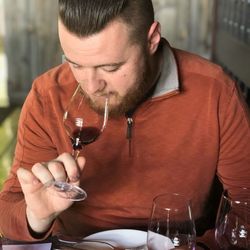
For someone known for their sweet wines from Barsac, a 94 pt critique from Wine Spectator on a Sec is awesome for them, and I almost agree in my critique. It has a very fragrant nose of white flowers, beeswax, kiwi, and lime zest. The pallet is very zesty, and bright, exhibiting notes of grapefruit, key lime, honeysuckle, vanilla, and a bright mouthwatering acidity to the finish. Lovely and refreshing, but would most certainly see some lovely age. I'd like to lay this vintage down and see what 10 years would do for it. Yum! — 9 years ago
Dominus Estate
Napanook Napa Valley Cabernet Sauvignon Blend 2013

Just as magnificent from bottle as it was in barrel, the 2013 Napanook is dense, powerful and brooding, with searing intensity and extraordinary balance. Lavender, plums, violets, licorice and smoke are some of the signatures, but the 2013 exudes finesse, power and intensity. Bracing and searing, the 2013 is going to require quite a bit of patience. If anything, this is an insane level of quality for the second selection. The 2013 could turn out to be a thirty-year wine. It is every bit that magnificent, especially if given some aeration. (Antonio Galloni, Vinous) — 10 years ago
Kay Brothers
Reserve Griffon's Key Amery Vineyard Grenache 2015

Wine of the session at Kay brothers. Smart and vibrant winemaking, great fruit clarity and really shows how good mclaren Grenache can be. — 10 years ago

Domaine Lafage
Miraflors Rosé Blend 2014
A near perfect rosé at a great price. I prefer this soft fruit tempered by a light floral note all properly and proportionately positioned against a mineral intensive rocky bottom as swift waters twist and turn their way downstream leaving one's palate clean and refreshed but laced with the memory of the moment😎🌀 - buy the magnum at my favorite local Morehead City, NC hang - Promise Land Market (thx sweet Janeen and Daniel for spinning some crazy sweet tunage!)! Find this place in all its realness, and drink this wine! — 11 years ago
Cakebread Cellars
Napa Valley Chardonnay 2012
Wet stone & key lime pie nose, palate is linear with a taught, one dimensional green apple acidity and classy finish — 12 years ago
Anita und Hans Nittnaus
Turn Me Red Zweigelt

So good and so cheep. — 12 years ago

Somm David T
Independent Sommelier/Wine Educator
The 2000 is delicious but, it is evolving at a glacial pace. Out of magnum.
On the nose, touch of barnyard, glycerin, ripe; blackberries, dark cherries, black raspberries, plum, strawberries & cherries. Vanilla, dry clay, limestone, river stones, just a touch of pyrazines & bandaid, dark,,turned, moist earth, dry grass and dry & fresh dark florals.
The body is full, round & sexy. Dry softened, sweet tannins. ripe; blackberries, dark cherries, black raspberries, plum, strawberries & cherries. Vanilla, dry clay, limestone, river stones, just a touch of pyrazines & bandaid, fresh tobacco leaf, saddle-wood, dry underbrush, dark, turned, moist earth, dry grass and dry & fresh dark florals. The acidity is magnificent. The structure, tension, length and balance are sensational. The finish is drop dead gorgeous. I’d still hold mine another 5 years as long as you have 3-4 bottles for more 5 year increments.
Photos of, their Estate vines, Clyde Beffa-Owner of K&L Wine Merchants, Owner of Chateau Lynch Bages - Jean-Michel Cazes, guests of the dinner and a sunset view from their Estate.
Producer notes and history...Lynch Bages takes its name from the local area where the Chateau is located in Bages. The vineyard of what was to become Lynch Bages was established and then expanded by the Dejean family who sold it in 1728 to Pierre Drouillard.
In 1749, Drouillard bequeathed the estate to his daughter Elizabeth, the wife of Thomas Lynch. This is how the estate came to belong to the Lynch family, where it remained for seventy-five years and received the name Lynch Bages. However, it was not always known under that name.
For a while the wines were sold under the name of Jurine Bages. In fact, when the estate was Classified in the 1855 Classification of the Medoc, the wines were selling under the name of Chateau Jurine Bages. That is because the property was owned at the time by a Swiss wine merchant, Sebastien Jurine.
In 1862, the property was sold to the Cayrou brothers who restored the estate’s name to Chateau Lynch family.
Around 1870, Lou Janou Cazes and his wife Angelique were living in Pauillac, close to Chateau Pichon Longueville Baron. It was here that Jean-Charles Cazes, the couple’s second son, was born in 1877.
In the 1930’s, Jean-Charles Cazes, who was already in charge of Les-Ormes-de-Pez in St. Estephe agreed to lease the vines of Lynch Bages. By that time, the Cazes family had history in Bordeaux dating back to the second half of the nineteenth century.
This agreement to take over Lynch Bages was good for both the owner and Jean Charles Cazes. Because, the vineyards had become dilapidated and were in need of expensive replanting, which was too expensive for the owner. However, for Cazes, this represented an opportunity, as he had the time, and the ability to manage Lynch Bages, but he lacked the funds to buy the vineyard.
Jean-Charles Cazes eventually purchased both properties on the eve of the Second World War. Lynch Bages and Les-Ormes-de-Pez have been run by the Cazes family ever since. In 1988, the Cazes family added to their holdings in Bordeaux when they purchased an estate in the Graves region, Chateau Villa Bel Air.
Around 1970, they increased their vineyards with the purchase of Haut-Bages Averous and Saussus. By the late 1990’s their holdings had expanded to nearly 100 hectares! Jean-Michel Cazes who had been employed as an engineer in Paris, joined the wine trade in 1973. In a short time, Jean Michel Cazes modernized everything at Lynch Bages.
He installed a new vat room, insulated the buildings, developing new technologies and equipment, built storage cellars, restored the loading areas and wine storehouses over the next fifteen years. During that time period, Jean Michel Cazes was the unofficial ambassador of not just the Left Bank, but all of Bordeaux. Jean Michel Cazes was one of the first Chateau owners to begin promoting their wine in China back in 1986.
Bages became the first wine sent into space, when a French astronaut carried a bottle of 1975 Lynch Bages with him on the joint American/French space flight!
Beginning in 1987, Jean-Michel Cazes joined the team at the insurance company AXA, who wanted to build an investment portfolio of quality vineyards in the Medoc, Pomerol, Sauternes, Portugal and Hungary.
Jean-Michel Cazes was named the director of the wine division and all the estates including of course, the neighboring, Second Growth, Chateau Pichon Baron.
June 1989 marked the inauguration of the new wine making facilities at Lynch Bages, which was on of their best vintages. 1989 also marked the debut of the Cordeillan- hotel and restaurant where Sofia and I had one of our best dinners ever. A few years after that, the Village de Bages with its shops was born.
The following year, in 1990, the estate began making white wine, Blanc de Lynch Bages. In 2001, the Cazes family company bought vineyards in the Rhone Valley in the Languedoc appellation, as well as in Australia and Portugal. They added to their holdings a few years later when they purchased a vineyard in Chateauneuf du Pape.
In 2006, Jean-Charles Cazes took over as the managing director of Chateau Lynch Bages. Jean-Michel Cazes continues to lead the wine and tourism division of the family’s activities. Due to their constant promotion in the Asian market, Chateau Lynch Bages remains one of the strongest brands in the Asian market, especially in China.
In 2017, Chateau Lynch Bages began a massive renovation and modernization, focusing on their wine making, and technical facilities. The project, headed by the noted architects Chien Chung Pei and Li Chung Pei, the sons of the famous architect that designed the glass pyramid for the Louvre in Paris as well as several other important buildings.
The project will be completed in 2019. This includes a new grape, reception center, gravity flow wine cellar and the vat rooms, which will house at least, 80 stainless steel vats in various sizes allowing for parcel by parcel vinification.
The new cellars will feature a glass roof, terraces with 360 degree views and completely modernized reception areas and offices. They are not seeing visitors until it’s completion.
In March, 2017, they purchased Chateau Haut Batailley from Françoise Des Brest Borie giving the Cazes family over 120 hectares of vines in Pauillac!
The 100 hectare vineyard of Lynch Bages is planted to 75% Cabernet Sauvignon, 17% Merlot, 6% Cabernet Franc and 2% Petit Verdot. The vineyard has a terroir of gravel, chalk and sand soils.
The vineyard can be divided into two main sections, with a large portion of the vines being planted close to the Chateau on the Bages plateau. At their peak, the vineyard reaches an elevation of 20 meters. The other section of the vineyard lies further north, with its key terroir placed on the Monferan plateau.
They also own vines in the far southwest of the appellation, next Chateau Pichon Lalande, on the St. Julien border, which can be used in the Grand Vin. The vineyard can be split into four main blocks, which can be further subdivided into 140 separate parcels.
The average age of the vines is about 30 years old. But they have old vines, some of which are close to 90 years old.
The vineyards are planted to a vine density of 9,000 vines per hectare. The average age of the vines is about 30 years old. But they have old vines, some of which are close to 90 years old.
Lynch Bages also six hectares of vine are reserved for the production of the white Bordeaux wine of Chateau Lynch Bages. Those vines are located to the west of the estate. They are planted to 53% Sauvignon Blanc, 32% Semillon and 15% Muscadelle. On average, those vines are about 20 years of age. Lynch Bages Blanc made its debut in 1990.
To produce the wine of Chateau Lynch Bages, vinification takes place 35 stainless steel vats that vary in size. Malolactic fermentation takes place in a combination of 30% French, oak barrels with the remainder taking place in tank.
The wine of Chateau Lynch Bages is aged in an average of 70% new, French oak barrels for between 12 and 15 months. Due to the appellation laws of Pauillac, the wine is sold as a generic AOC Bordeaux Blanc, because Pauillac does not allow for the plantings of white wine grapes.
For the vinification of their white, Bordeaux wine, Blanc de Lynch-Bages is vinified in a combination of 50% new, French oak barrels, 20% in one year old barrels and the remaining 30% is vinified in vats. The wine is aged on its lees for at least six months. The white wine is sold an AOC Bordeaux wine.
The annual production at Lynch Bages is close to 35,000 cases depending on the vintage.
The also make a 2nd wine, which was previously known as Chateau Chateau Haut Bages Averous. However, the estate changed its name to Echo de Lynch Bages beginning with the 2007 vintage. The estate recently added a third wine, Pauillac de Lynch-Bages.
— 8 years ago