Sense Of Place
Hopes End Wine
Run Away To The Dark Side To A Place Called Port Misery Shiraz Blend 2016

Smooth but with a deep taste. A great glass of wine for a reasonable price. — 8 years ago
Domaine Jean-Louis Chave
Hermitage Syrah 2000
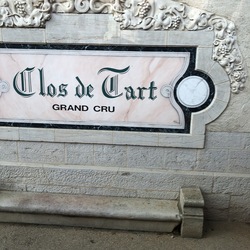

Side by side Chave and Guigal La Mouline from 2000. Pretty special. These wines are both extraordinary in every sense of that word. — 8 years ago

Salon
'S' Blanc de Blancs Le Mesnil Brut Chardonnay 1997

1997 vintage. At Salon. Pale golden hue. Recently disgorged for a new release. Stunning nose - lemon curd, toasty, vanilla pod, stone fruit, chalky minerality - layers of complexity. On the palate, stunning - laser sharpness, high but soft acidity, great concentration and broad on the mid palate. The length is exceptional. This wine is in a great place right now. Drink it! Although will last for a very long time still. — 9 years ago
A. Rafanelli
Unfiltered Dry Creek Valley Zinfandel 2014


Popped and poured. Judging from this bottle and a few others that I have had the pleasure to try, I would have to say these 2014's are already in outstanding form. If there is a single word that best describes this vintage of Rafanelli's Zinfandel, it has got to be "balance". I mean, everything seems to be in the right place and in the right amounts. I think these are going to be very fun to drink over the next 10-15 years and I'm looking forward to their evolution. Drink now or Hold. — 9 years ago
Château Pichon-Longueville Baron
Baron de Pichon-Longueville Pauillac Red Bordeaux Blend 2003
This is the most picturesque Chateau in Bordeaux. Oh...and they make a pretty amazing Bordeaux. It's a good first look at the 03 vintage from my five bottle set. There are steak wines and then there are steak wines. This was a 10 pair with the T-bone...Heaven. The tannins have softened but have many years ahead to get to that perfect place. The mouthfeel is full, round, creamy and elegant. The fruits have a not too sweet liqueur style. They are; blackberries, dark cherries, black plum, black raspberries, plum, sweet tobacco leaf, anise, used leather, black tea, used coffee grounds, rich wet black turned earth, stones, dry red florals, spice; clove, nutmeg, baking spices; very light vanilla, touch of caramel, dark chocolate and acidity that pours over the palate. There is the start of harmony in the structure, length, balance and tension. The finish lasts a full two-minutes and it crushed with the T-bone. Next bottle in 5-7 years. For the legions of you on Delectable crushing only young Napa Cabernet, you have no idea what you're missing in aged Bordeaux...forget about it...even vs. well aged Napa Cabernet. Respect!!! 3-4 hour decant and it needed every second of it. — 9 years ago

Beaulieu Vineyard
Private Reserve Georges de Latour Napa Valley Cabernet Sauvignon 2010

In a great place. Round, unctuous, blue and red fruit with a nice backbone of acidity and supple tannins. — 10 years ago
Textbook Vineyards
"Mise en Place" Jonathan & Susan Pey Oakville Cabernet Sauvignon 2012



Tenuta Sette Ponti
Oreno Toscana Super Tuscan Blend 2008
Needs growth time and patience. Super young and a tad all over the place. Flavors all over the place but after time tobacco and cherry start to emerge. Needs 3-7 more years of age to fully become one of the better super Tuscans — 11 years ago

Dunn Vineyards
Howell Mountain Cabernet Sauvignon 1999
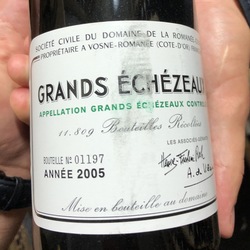
In an absolute beautiful place. Intense, highly expressive and layered with black raspberries, currants, leather, cedar, hints of red flowers and licorice. Finishes with excellent length, depth and dusty tannins. Terrific bottle. — 6 years ago
Château Pontet-Canet
Pauillac Red Bordeaux Blend 2003

45+ minute decant. Dark red color. Has that great barnyard nose I love with meat and spice elements too. There is an interesting tartness when it first hits your tongue, which isn’t good or bad, just different and maybe out of place. Nice balance of cherry fruit and smoke. Medium plus finish. I really enjoyed this!! — 7 years ago


Château Brane-Cantenac
Grand Cru Classé en 1855 Margaux Red Bordeaux Blend 2005
I have a six-pack of this 05. I thought after 10 years in bottle, it would be interesting to check in on its evolution. While tasty, I’ll wait another 8-10 to open another. Even after 2-3 hours in the decanter, it’s still a very young adolescent. On the nose, slightly sour blackberries & dark cherries, dark currants, baked black plum, haunting blue fruits, anise, whiff of spice, steeped tea, dry stones, dry crushed rocks with dry top soil, caramel, vanilla with fresh & dry red florals. The body is thick & full. Tannins are starting to round out. It’s velvety on the palate. The fruits are; bright, fresh & ripe and really show the greatness of the 05 vintage. Dark currants, blackberries, dark cherries, baked black plum, haunting blue fruits, baked strawberries, cherries, raspberries on the long set, dark spice, clay & loamy dry top soil with crushed rocks, dry stones, cigar with ash, graphite, dry stems, slight herbaceous character, mint, used leather, clove, caramel, vanilla, fresh & dry red florals with violets. The round acidity is about perfect. The structure and length are still strong. The balance is in harmony. As for the long finish, it’s lush, ruby, rich and well polished. Photos of; Chateau Brane Cantenac, large wood vats, Henri Lurton and Estate vines. Producer notes and history...Chateau Brane Cantenac began in the early 17th century. At the time, the estate was known as Domaine Guilhem Hosten. Even that far back, wine was produced from the property. In fact, the wine was so highly regarded it was one of the more expensive wines in Bordeaux. It sold for almost as much money as Brane Mouton. This is interesting because of who went on to buy the vineyard in the 1800’s. The Baron of Brane, also known as “Napoleon of the Vineyards”, purchased the Chateau in 1833. At the time of the sale, the estate was called Chateau Gorce-Guy. To get the funds needed to purchase the Margaux vineyard, the Baron sold what is now called Mouton Rothschild, which was at the time of the sale, known as Chateau Brane-Mouton. Not such a good move with hundreds of years in hindsight! In 1838, the Baron renamed property taking his name and the name of the sector where the vineyards were located and called it Chateau Brane Cantenac. The Chateau later passed to the Roy family, who were well-known in the Margaux appellation in those days, as they owned Chateau d’issan. Moving ahead to 1920, the Societe des Grands Crus de France, a group of merchants and growers that owned several chateaux located in the Medoc including; Chateau Margaux, Chateau Giscours, and Chateau Lagrange in St. Julien, purchased Chateau Brane Cantenac. Five years later, M. Recapet and his son-in-law, François Lurton, took over Brane Cantenac along with Chateau Margaux. Lucien Lurton (the son of François Lurton) inherited Brane Cantenac in 1956. Today, the estate is still in the hands of the Lurton family. Brane Cantenac is owned and run by Henri Lurton. After being given the responsibility of managing Brane Cantenac, it was under the direction of Henri Lurton that large portions of the vineyard were replanted. Vine densities were increased, the drainage systems were improved and the plantings were also, slowly changed. The vineyard of Brane Cantenac is planted to 55% Cabernet Sauvignon, 40% Merlot, 4.5% Cabernet Franc and .5% Carmenere. Carmenere was used for the first time in the 2011 vintage. The only other Chateau I know that still uses Carmenere is Clerc Milon. The 75 hectare Left Bank vineyard of Brane Cantenac is essentially unchanged since it earned Second Growth status in the 1855 Classification. At least that is the case with the 45 hectares used to produce the Grand Vin of Brane Cantenac. Those 45 hectares are planted surrounding the Chateau. Those vines are located just in front of the Cantenac plateau and are the best terroir that Brane Cantenac owns. They have other parcels, which are further inland and much of those grapes are placed into their second wine, Le Baron de Brane. Those additional hectares can be divided into 3 main sections. Behind the Chateau, they have 15 hectares of vines on gravel and sand, 10 hectares across the road with sand, gravel and iron and a 13 hectare parcel with gravel called Notton, which is used for their second wine. The vineyard is planted to a vine density that ranges from 6,666 vines per hectare on the plateau and up to 8,000 vines per hectare for the vines located behind chateau, in their sandier soils. The higher levels of vine density are always found in the newer plantings. The terroir of Brane Cantenac consists of deep gravel, sand and clay soil. Experiments in the vineyards are currently looking at becoming more organic in their vineyard management. Today, more than 25% of Brane Cantenac is farmed using organic farming techniques. It is expected that over time, the amount of hectares farmed with organic methods will be increased. Brane Cantenac has gone through 2 relatively recent modernization’s in 1999, when they added began adding the first of their smaller vats to allow for parcel by parcel vinification and then again in 2015 when they completed a much more complete renovation of their cellars and vat rooms. While Brane Cantenac is a traditional producer, they are no stranger to technology as they were one of the first estates to embrace optical grape sorting machines. In very wet vintages, they can also use reverse osmosis. To produce the wine of Chateau Brane Cantenac, the wine is vinified in a combination of temperature controlled, traditional, 22 oak vats, 18 concrete tanks and 20 stainless steel vats that vary in size from 40 hectoliters all the way up to 200 hectoliters, which allows for parcel by parcel vinification. 40% of the fermentation takes place in the oak vats. The oldest vines are vinified in vats that are selected to allow for separate parcel by parcel vinification. The younger vines are vinified more often together in the same vats. However, the Carmenere is entirely micro-vinified, meaning that those grapes were completely vinified in barrel, using micro-vinification techniques. This can also happen because the amount of grapes produced is so small. Some vats can be co-inoculated, meaning they go through alcoholic fermentation and malolactic fermentation simultaneously. At Chateau Brane Cantenac, malolactic fermentation takes place in a combination of French oak tanks and barrels. The wine of Brane Cantenac is aged in an average of 60% new, French oak barrels for 18 months before bottling. The initial 2 months of aging is done with the wine on its lees, which adds more depth to the wine. There second wine is Le Baron de Brane. Le Baron de Brane is not new. In fact, previously, the second wine went under the name of Chateau Notton, which took its name from one of the main parcels where the grapes were planted. During the late 1950’s and into the 1960’s, having a second wine was important as the estate declassified 3 vintages, due to extremely poor, weather conditions in 1956, 1960 and 1963. Production of Chateau Brane Cantenac is about 11,000 cases per year. — 8 years ago


Chateau Montelena
The Montelena Estate Napa Valley Cabernet Sauvignon 1998

Loved it at Press in St Helena after Albariño and Pinot Noir. Strong but soft, my happy place when one begins to describe older characteristics in a wine without the wine becoming a dead piece of acid without elegance and all you are left with is a sharp sensation and a longing to have opened the wine 10 years ago. Anyhow- beautiful wine and definitely the time to drink it!! — 10 years ago
Emidio Pepe
Montepulciano d'Abruzzo 1983
One of the best Pepe wines I've ever had. Drinking like a beautiful grand cru burg with its own special sense of place. This is one of the best wines in the world. #sommselect — 10 years ago
Domaine des Comtes Lafon
Volnay Santenots-du-Milieu 1er Cru Pinot Noir 2003

Surprise given the vintage's heat. Dark fruits, decent sense of freshness & structure for a few more years. I would drink it up though. — 11 years ago
Spottswoode
Family Estate Grown St. Helena Cabernet Sauvignon 2002
My 4th bottle, the best and my last, this absolutely killed it and is why I love Napa Valley Cabernet, especially #Spottswoode. 12 years old this easily has another 10 to go but is in a beautiful place right now. Open or decant for 30 minutes, though I did not decant. A deep resold color, not a sign of brick as one would expect. Shows the importance of provenance (bought from winery). A complex set or aromas and flavors of creme d'cassis, currants, sweet and sour cherries, sweet cedar, and graphite. Palate wise the textures are all in alignment, with medium to full body, ample acidity and medium grain slightly chewy tannins that may be it's only flaw. #2002 — 11 years ago
Dom Pérignon
Brut Champagne Blend 1996
Soft brioche, settled citrus, hints of shells and a salinity. Secondary notes coming through- honeysuckle, biscuit. Delicate and sophisticated- perfectly in place. — 7 years ago



Michael David Winery
6th Sense Lodi Syrah 2016
Color of inky purple. Nose is concentrated with chocolate milk, ripe cherry, cherry jam , raisins, a bit spice, and strength of alcohol. Taste is spicy sweet, a bit chocolate and vanilla note,!hidden acidity, Aftertaste is off balance a bit too much sulfate and metallic note. Average. — 8 years ago
Ochota Barrels
A Sense of Compression The Taras : MJKeenan Collaboration Single Vineyard Grenache

All aboard the funk train, last stop Funktown. A curveball Grenache! — 8 years ago

Château Pichon Longueville Comtesse de Lalande
Pauillac Red Bordeaux Blend 2001
Our monthly 4th Friday event at the storage facility. No requirements, just wine you want to share with others! Always an enjoyable time.
Special place in my heart for this winery. A few months ago, I had an '88 go celebrate my birth year. It was STELLAR. This is pushing forward easily...after an hour of air, the fruit and secondary earth and funk notes came out. So good! Thanks Walter! — 9 years ago
@Benjamin Keator : There were only a few wines after a while, but it was like once someone mentioned bringing out an amazing wine, everyone went and did the same.
Olga Raffault
Les Picasses Chinon Cabernet Franc 2007
Can't say enough about a wine this serious at this price point. Absolutely stunning, elegant, and even (in a chinon way) powerful. Floral aromatic dominate - lavender and a bit of rose. Graphite, dusty chalk, red pepper, some raspberry. Fresh yet not primary. Hints of savory notes as well. Incredible spine of minerality runs through the palate. Great acidity and structure. Coiler and energetic. Finishes long and bright with refreshing pyrazines for days. In an incredible place now, so no fault in drinking but has a long, long life ahead. One of the best values in the wine world. Just exceptional — 9 years ago
Domaine Jamet
Côte-Rôtie Syrah 2007
If there were ever an archetypical Syrah, Jamet's Cote-Rotie would be a strong candidate. To me this is a pure expression of a classic Northern Rhone Syrah. It is not a single site, but a blend of terroirs, encompassing over 20 sites mostly from hard rock schist bedrock with little to no topsoil. There is NO Viognier in this wine like one might expect from most Cote-Rotie that might have 1-5% co-fermented.
Importantly, there is also a lot less of the oak character that can dominate and overwhelm many Northern Rhone wines. The oak maturation, while not short at 22 months, only uses 15% new oak with no trace of it on the palate as it is perfectly integrated. Grape bunches are whole cluster fermented and macerated for up to 3 weeks.
The 2007 we have here was drinking superbly for a young wine, showing lively and racy layers of peppercorn spice, roast beef, and warm blackberry and currant fruit from the hot 2007 vintage. While from a warm vintage, not a hair is out of place. Density and purity exude from the nose and hint at what a brilliant future this wine has. Perfect acidity and fleshy ripe tannin provide the backbone structure for father time to peel back the layers of this beauty. I will be chceking back in 5 years at the earliest. — 10 years ago

Château de Beaucastel
Châteauneuf-du-Pape Red Rhône Blend 1987

29 years old and drank incredibly well. What a treat. The big fruits have softened but in their place is now a brooding torrent of notes which evolved from sip to sip. Quite a remarkable wine. — 10 years ago
Louis-Benjamin Dagueneau
Silex Pouilly-Fumé Sauvignon Blanc

2012. Intense and lush but also translates a sense of place. — 11 years ago
Crocker & Starr
Stone Place Cabernet Sauvignon 2011
A medium + intensity of Black fruits (black cherry, black currants) dark chocolate, mint, tobacco and cedar. Nose and palate matching in flavor profile and complexity. Still tight and will just get better with age. — 12 years ago
Clos des Papes
Châteauneuf-du-Pape Red Rhône Blend 1995
In a great place right now--must get more! Lovely, Burgundian-like quality that is still showing plenty of energy. Yum! — 12 years ago
Riaan Potgieter
Happy Sangiovese Friday everyone.
I’ve had this wine before, but every time I open a bottle it gets better and better. What a wine for SF! 😁
👁: light ruby, very delicate
👃: so sense and complex. Layered with red fruit, bay leaf, leather, herb, cedar and spice.
👅: absolutely stellar. Smooth and very polished. Great freshness with smooth trippy tannins. Densely layered flavour. Long juicy finished with a touch of spice.
I’m just blown away by this. I’m pretty confident this is heading to a 5🌟 future. 😋 — 6 years ago