It Takes A Village
Château Brane-Cantenac
Grand Cru Classé en 1855 Margaux Red Bordeaux Blend 2005

I have a six-pack of this 05. I thought after 10 years in bottle, it would be interesting to check in on its evolution. While tasty, I’ll wait another 8-10 to open another. Even after 2-3 hours in the decanter, it’s still a very young adolescent. On the nose, slightly sour blackberries & dark cherries, dark currants, baked black plum, haunting blue fruits, anise, whiff of spice, steeped tea, dry stones, dry crushed rocks with dry top soil, caramel, vanilla with fresh & dry red florals. The body is thick & full. Tannins are starting to round out. It’s velvety on the palate. The fruits are; bright, fresh & ripe and really show the greatness of the 05 vintage. Dark currants, blackberries, dark cherries, baked black plum, haunting blue fruits, baked strawberries, cherries, raspberries on the long set, dark spice, clay & loamy dry top soil with crushed rocks, dry stones, cigar with ash, graphite, dry stems, slight herbaceous character, mint, used leather, clove, caramel, vanilla, fresh & dry red florals with violets. The round acidity is about perfect. The structure and length are still strong. The balance is in harmony. As for the long finish, it’s lush, ruby, rich and well polished. Photos of; Chateau Brane Cantenac, large wood vats, Henri Lurton and Estate vines. Producer notes and history...Chateau Brane Cantenac began in the early 17th century. At the time, the estate was known as Domaine Guilhem Hosten. Even that far back, wine was produced from the property. In fact, the wine was so highly regarded it was one of the more expensive wines in Bordeaux. It sold for almost as much money as Brane Mouton. This is interesting because of who went on to buy the vineyard in the 1800’s. The Baron of Brane, also known as “Napoleon of the Vineyards”, purchased the Chateau in 1833. At the time of the sale, the estate was called Chateau Gorce-Guy. To get the funds needed to purchase the Margaux vineyard, the Baron sold what is now called Mouton Rothschild, which was at the time of the sale, known as Chateau Brane-Mouton. Not such a good move with hundreds of years in hindsight! In 1838, the Baron renamed property taking his name and the name of the sector where the vineyards were located and called it Chateau Brane Cantenac. The Chateau later passed to the Roy family, who were well-known in the Margaux appellation in those days, as they owned Chateau d’issan. Moving ahead to 1920, the Societe des Grands Crus de France, a group of merchants and growers that owned several chateaux located in the Medoc including; Chateau Margaux, Chateau Giscours, and Chateau Lagrange in St. Julien, purchased Chateau Brane Cantenac. Five years later, M. Recapet and his son-in-law, François Lurton, took over Brane Cantenac along with Chateau Margaux. Lucien Lurton (the son of François Lurton) inherited Brane Cantenac in 1956. Today, the estate is still in the hands of the Lurton family. Brane Cantenac is owned and run by Henri Lurton. After being given the responsibility of managing Brane Cantenac, it was under the direction of Henri Lurton that large portions of the vineyard were replanted. Vine densities were increased, the drainage systems were improved and the plantings were also, slowly changed. The vineyard of Brane Cantenac is planted to 55% Cabernet Sauvignon, 40% Merlot, 4.5% Cabernet Franc and .5% Carmenere. Carmenere was used for the first time in the 2011 vintage. The only other Chateau I know that still uses Carmenere is Clerc Milon. The 75 hectare Left Bank vineyard of Brane Cantenac is essentially unchanged since it earned Second Growth status in the 1855 Classification. At least that is the case with the 45 hectares used to produce the Grand Vin of Brane Cantenac. Those 45 hectares are planted surrounding the Chateau. Those vines are located just in front of the Cantenac plateau and are the best terroir that Brane Cantenac owns. They have other parcels, which are further inland and much of those grapes are placed into their second wine, Le Baron de Brane. Those additional hectares can be divided into 3 main sections. Behind the Chateau, they have 15 hectares of vines on gravel and sand, 10 hectares across the road with sand, gravel and iron and a 13 hectare parcel with gravel called Notton, which is used for their second wine. The vineyard is planted to a vine density that ranges from 6,666 vines per hectare on the plateau and up to 8,000 vines per hectare for the vines located behind chateau, in their sandier soils. The higher levels of vine density are always found in the newer plantings. The terroir of Brane Cantenac consists of deep gravel, sand and clay soil. Experiments in the vineyards are currently looking at becoming more organic in their vineyard management. Today, more than 25% of Brane Cantenac is farmed using organic farming techniques. It is expected that over time, the amount of hectares farmed with organic methods will be increased. Brane Cantenac has gone through 2 relatively recent modernization’s in 1999, when they added began adding the first of their smaller vats to allow for parcel by parcel vinification and then again in 2015 when they completed a much more complete renovation of their cellars and vat rooms. While Brane Cantenac is a traditional producer, they are no stranger to technology as they were one of the first estates to embrace optical grape sorting machines. In very wet vintages, they can also use reverse osmosis. To produce the wine of Chateau Brane Cantenac, the wine is vinified in a combination of temperature controlled, traditional, 22 oak vats, 18 concrete tanks and 20 stainless steel vats that vary in size from 40 hectoliters all the way up to 200 hectoliters, which allows for parcel by parcel vinification. 40% of the fermentation takes place in the oak vats. The oldest vines are vinified in vats that are selected to allow for separate parcel by parcel vinification. The younger vines are vinified more often together in the same vats. However, the Carmenere is entirely micro-vinified, meaning that those grapes were completely vinified in barrel, using micro-vinification techniques. This can also happen because the amount of grapes produced is so small. Some vats can be co-inoculated, meaning they go through alcoholic fermentation and malolactic fermentation simultaneously. At Chateau Brane Cantenac, malolactic fermentation takes place in a combination of French oak tanks and barrels. The wine of Brane Cantenac is aged in an average of 60% new, French oak barrels for 18 months before bottling. The initial 2 months of aging is done with the wine on its lees, which adds more depth to the wine. There second wine is Le Baron de Brane. Le Baron de Brane is not new. In fact, previously, the second wine went under the name of Chateau Notton, which took its name from one of the main parcels where the grapes were planted. During the late 1950’s and into the 1960’s, having a second wine was important as the estate declassified 3 vintages, due to extremely poor, weather conditions in 1956, 1960 and 1963. Production of Chateau Brane Cantenac is about 11,000 cases per year. — 9 years ago



Domaine Dujac
Chambolle-Musigny Pinot Noir 2005

What a great wine and what a perfect time to drink it... Went beautifully with the duck at Jardinere.
Beautifully bright fruit with notes of cherry cola, iron, wet earth, and fragrant strawberry. A 'village' chambolle doesn't get much better than this.... Drink it if you got it! — 11 years ago
Domaine Georges Roumier
Chambolle-Musigny Pinot Noir 2010

Clarity about the grape and place. Well defined. But it is not super long or complex, but very pretty with tart red fruit. Great for a village level Burgundy — 11 years ago
Domaine Léon Barral
Valinière Faugères Mourvedre Syrah 2010

A lovely biodynamic wine, a blend of Syrah and Mourvèdre from the Languedoc.
This village style wild wine has a deep black purple color, with a complex nose of barn yard, black fruits, cherries, plums, sweet spices, roasted coffee and earthiness, all coming together nicely in a wild rustic full body, with a lovely acidity and fierce tannins. It is defently a village style wine that you can't stop enjoying, until the long finish expires and the bottle is gone, my score 90, drink 2015-2024 — 11 years ago
Domaine Roulot
Meursault Chardonnay 2011
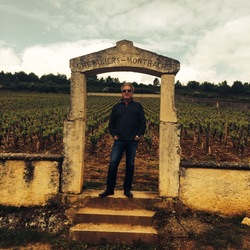
Lemon, lime, crushed stone, bracing acidity another great example of a Roulot Village level wine. No one does it better. — 12 years ago
Sarl Garaudet Pere & Fils
Vieilles Vignes Meursault Chardonnay 1995
Lots of butterscotch but a little lemony freshness and a refreshing hit of acidity on the finish, it isn't a paragon of complexity, but a very satisfying 19 year old village wine. — 12 years ago
Marqués de Murrieta
Capellanía Blanco Rioja Viura 2014

White flowers, citrus, on-point oak application / has a nice village-level burg feel to it, with a strongly mineral and saline twist — 7 years ago
Laguna
Russian River Valley AVA Chardonnay 2015

White peach. Clean. Oak. Warm. Smooth. Crocuses peaking through snow. Apricot. A bird takes flight. I’m typically Autumn- this is Winter into Spring but I like it very much. Subtle. Haiku. — 9 years ago
Dyer Vineyard
Diamond Mountain District Cabernet Sauvignon 2012
REALLY nice bottle of wine. This wine has a lot going on. Sourced from a 2.2 acre plot that is right across the street from Diamond Creek, the Dyers put love into everything they make. And it shows. This wine has a blackberry and floral perfume that is intoxicating. The nose was very reminiscent of Cab Franc and in a blind tasting that would have been my guess. The entry of this wine is delicately powerful. It has the blackberry power, the cassis of a younger wine, but the finesse in the middle with notes of graham cracker, grilled meats, herbs, pie spice, cola, and BRAMBLE....just a LOT going on here!! This wine is still very locked up, and takes a BUNCH of coaxing to get it out of its shell. Once it does, it does NOT disappoint. Very pumped about being able to spend some time with Dawnine and Bill in the next couple of weeks! — 9 years ago

Domaine Leroy
Bourgogne Pinot Noir 1999

Even though I used cork puller, not easy open it. This is a second time to taste same wine with different vintage following to 2009. Once open, garnet color and oak aroma came out. It takes one hour to open it. Then Over time, I can feel flower aroma. Smooth and full body feeling can be felt in its elegance. Acidity and tannin are enough. @1800, Winelover-TH, 170429 — 9 years ago
Gilbert Picq et Ses Fils
Chablis Chardonnay 2014

This village-level Chablis offers classic aromas of iodiney oyster shell and lime with a sexy suggestion of baked bread. Its thick, ripe flavors of orange zest and ginger are perfectly leavened by racy lemony acidity. Pair this penetrating wine with food now or hold it for 6 to 12 months. (ST) — 10 years ago
Pattes Loup (Thomas Pico)
Vent d'Ange Chablis Chardonnay 2011
Fantastic village Chablis. This is my 8th bottle of this yes same vintage. But its so good. Line a chablis Who Want to be a White from Beaune!!! With The mineral.
Really yellow tones of Apples and citrus deap Line a Premier Cru. Dont buy it, Then there is more for me — 10 years ago
Domaine du Comte Liger-Belair
Vosne-Romanée Pinot Noir 2010
Absolutely stunning. Idk about paying $250 for a village wine, but if I were to, this would be the btl. Meaty and full, yet still distinctly vosne, with elegance and spice. At this point in its life, this is way better than the 2010 roumier buss that we had with it. Curious what ten years would do though? — 11 years ago
Olivier Jouan
Vieilles Vignes Bourgogne Hautes Côtes de Nuits Pinot Noir 2012
Intense. This has got a lot of life in the bottle. The last couple bottles I've had feel like they have a lot of potential and it takes a long time open for it to show. Too bad I haven't made it past a few hours with one. 👍🏼 — 11 years ago
Domaine Harmand-Geoffroy
Vieilles Vignes Gevrey-Chambertin Pinot Noir

Right out of the gate the nose on this is classic Red Burgundy. It takes me back to the first time I had a real Red Burgundy myself as this had the elegance and perfume aromatics and flavors of earth, mushroom, red berries, a touch of floral and plenty of forest floor. Hard to stop smelling this it is so food! — 11 years ago
Domaine Maume
Lavaux St. Jacques Gevrey-Chambertin 1er Cru Pinot Noir
Lean and rustic; lovely. Haven't had a village Gevrey quite like it. — 12 years ago
Russian River Brewing Company
It Takes A Lot Of Great Beer To Make Great Wine Saison

Important items for today. A little local brew and the only way to keep your feet dry! #harvestbeer #hardwork — 12 years ago
Giuseppe Rinaldi
Brunate - Le Coste Barolo Nebbiolo 1999

1999 Barolo Brunate/Le Coste—Medium red. As is usually the case, the Brunate/Le Coste takes things up a notch. It presents a deeply mentholated, balsamic nose along with layers of dark fruit, licorice and tar flavors that develop in the glass in a potent style that captures the essence of the vintage. Rinaldi’s Brunate/Le Coste remains the best traditional Barolo most people have never tasted. — 13 years ago
De Toren
Fusion V Stellenbosch Red Blend 2011
Lush, fruit forward. Candied dates, prunes, clove, roasted character on the front. Gives way to a darker smoked meat character. Was the best with the homemade salad dressing consisting of avocado, fresh basil, Greek yogurt, green onion, garlic and parsley. In a way I could see all of these characteristics in this wine. In the past these have seemed a little tight and a bit closed off on the finish, but this wine was ready for the show. I think this producer is really quite underrated when it comes to the time it takes for these to really start expressing and I would put these up against any of the South African 'first growth' wineries. — 7 years ago
Poderi Aldo Conterno
Bussia Barolo Nebbiolo 2006

Absolutely fantastic wine. Beautiful harmony between earthy and fruity. Incredible complexity from start to finish...Takes time to open, has a slight bite of astringent if rushed. If you have the patience and self-control it is absolutely worth the wait. Incredible wine. — 9 years ago

Denis Jeandeau
Viré-Clessé Chardonnay 2013

Really nicely performed. Definitely could compete with Bourgogne blanc and village wines of some serious producers. The vintage lends a little tropicality to this and it gestures at elegant indulgence in a nice way. Feels like you're drinking good winemaking, if that makes sense. — 9 years ago
Nichol Vineyard
Naramata Village Grown Unfiltered Cabernet Franc 2014
I could have never blind tasted this and come close to it being a cab franc...cab sav, sure and about 20 other things too. It's much better than I would have ever guessed. Try it, it's a serious wine. Like it reads Vonnegut and wants to talk about the subtext kinda serious. — 10 years ago
Pierre-Yves Colin-Morey
Bourgogne Chardonnay 2013
Delicious - great citrus notes. Excellent for what it is - drinks better than a lot of people's village wine — 10 years ago
Produttori del Barbaresco
Barbaresco Nebbiolo

Nice full concert with the lighter instruments. Loved it because it takes you on a journey down the fields, across the river and through the woods. — 10 years ago
Sandhi Wines
Santa Barbara County Chardonnay

Was this good? Yes, yes it was. Was it great? It was pretty close. I applaud IPOB. It paired fantastically with pulled bbq chicken lettuce wraps and calabacitas. My only problem? The Lioco is a bit cheaper, and more to my taste. This was good though, and everyone liked it, which is more than you can say about most wines. It had a Burgundy feel to it, but more like a Bourgogne than being able to dial into a village or a vineyard. — 11 years ago
Domaine Maume
Aux Etelois Gevrey-Chambertin Pinot Noir 2009

This wine was closed when we opened it but the next day it turned out to be a gem. Keep for another 3 years. Great balance between acid and fruit. Tannins resolved over night and now the wine has dark berry notes and a hint of bitterness and dirt! The ripeness of the 2009 vintage shines through but is well managed. Beats any California Pinot at the price level ca. 50$ when I bought it. This is how Burgundy should taste! Low 13.3%. For a Gevrey at the village level stellar! — 11 years ago
Maison Bertrand Ambroise
Côte de Nuits Villages Pinot Noir 2011

Rich deep red colour. Fantastic earthy aromas, I get plum, leather, wood smoke, smoked meat, dry fruit, red cherry. Very tender and almost silky, although showed a bit of young age with green bitter tannins on first pour. Let it sit in glass or decant it — gets so much better. Amazing young Burgundy even at village level. — 12 years ago
Domaine Robert Arnoux / Arnoux-Lachaux
Chambolle-Musigny Pinot Noir 2010

A lovely wine (but not a surprise). The fruit was trending toward darker fruit but the wet rock notes balanced it out. Slightly more extracted and less chambolle like than I expected but nonetheless a solid performance. I'd let this "humble" village effort rest a few more years. — 12 years ago
Jordan Wardlaw
Raul is one of those special and unique producers whose wines stand out in just about any field with others of similar quality. I could fill pages with tasting notes, but I feel it’s more appropriate to simply reiterate that these wines are beautiful, complex, superbly crafted and downright delicious. It is nearly impossible not to drink a whole bottle. I’m giving an extra point or two for the Saint Jacques Mencía cuvée because of the exceptional value it delivers at well under $20. This would embarrass many village level Burgundies at three or even four times the price. — 7 years ago