All Good Things

Château Pontet-Canet
Pauillac Red Bordeaux Blend 2004

I Coravin-ed this bottle awhile ago. I put it back as it wasn’t drinking as I would have hoped. A couple of months later and it’s come around nicely. I been doing short term and longer term tests of Coravin bottles. As much as I love my Coravin, I am a little more skeptical of their research that states their bottles will hold up 9 years after their first Coravin. I believe the Coravin help develop this 04 a little sooner. It’s drinking nicely without food tonight. On the nose; dark currants, expresso, black olive tapenade, cedar, tobacco, sweet soft leather, vanilla, blackberries, dark cherries, black raspberries, baked black plum, plum, an array of blue fruit mix, light cinnamon, clove, medium spice, mocha chocolate, dark chocolate, stones, rich, moist black earth and dark decayed florals & fresh violets. The palate is medium full. The tannins are not quite 50% resolved. After it opens up with a half-hour in the glass, it’s like velvet in the mouth. The structure, tension, length and balance are starting to develop into a very good place. However, there are many, many years of aging to go. The fruits are ruby, ripe; blackberries, dark cherries, black raspberries, baked black plum and strawberries. Expresso, black olive tapenade, cedar, tobacco, sweet soft leather, tobacco, menthol, graphite, anise, vanilla, light cinnamon, clove, medium spice, mocha chocolate, dark chocolate, dry stems, crushed rocks with dry top soil, stones, rich, moist black earth, volcanic minerals, and dark decayed florals. The acidity is very good for what was deemed a ho-hum vintage. The long finish is; rich, ruby, gorgeous and lasts well over two minutes. I am enjoying it a lot tonight but will still wait another 10 years to open another. I believe at that point, it has all the potential to merit an outstanding score. When I tasted this at the UGC in Bordeaux fresh into bottle, I thought it was one of the top three wines of the day. In the right photo, you get a full sense where the wine gets it’s stoney & rich, dark earthiness. — 9 years ago



Azienda Agricola Fontodi
Flaccianello della Pieve Colli Toscana Centrale Sangiovese 2004
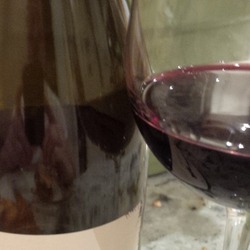
Powerful, tobacco-laced, cherry-saturated nose. After an hour, all kinds of secondary aromatics. Delicate but powerful sour cherry and sweet cedar notes. Nice, persistent acidity. 30 second finish and good for another 10+ years. Perfect wine to celebrate my wife's successful IPO! — 9 years ago

Dom Pérignon
Brut Champagne Blend
Vintage 2003. Merry Christmas to us!
Nothing at all bad to say and everything good! — 10 years ago

Château Pavie Macquin
Saint-Émilion Red Bordeaux Blend 2001

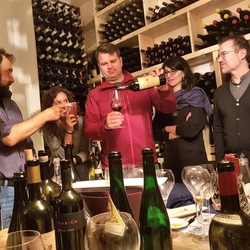
Pretty aromas of all things forest-like, wrapped in a big red fruit hug. — 11 years ago
Ridge Vineyards
Three Valleys Sonoma County Zinfandel Blend 2012
These guys: always solid and 2012 is just an all around good year for CA. Second day drinking was even better. Will be coming back as always. — 12 years ago
Château Latour
Premier Grand Cru Classé Pauillac Red Bordeaux Blend 1971

NYC for my 35th and this was firing on all cylinders. Extremely dark in color, massive nose and the palate showed everything good about classic Latour. This liked and tasted like an 80's wine, so youthful and surprisingly no sediment in the bottle. Easily a top 5 wine this year. — 12 years ago
Folie à Deux
Ménage a Trois California Cabernet Sauvignon Blend 2012

It's good one! all time favorite. Not full and not bold and not too sweet — 13 years ago
Château Gruaud Larose
Saint-Julien Red Bordeaux Blend 2003

Scampi NYC is a popular new Southern Italian influenced restaurant in Manhattan's Flatiron district, led by a chef whose previous gigs included Ai Fiori (good food, corporate vibe) and The Spaniard (don't look beyond the burger). The extensive wine list was put together by @Kimberly Prokoshyn, former head somm at Rebelle and stalwart of many a La Festa del Barolo. The list's main strength is its reasonably priced back vintages from Bordeaux and Burgundy - of all possible strengths, that's about as good as it gets.
My father in law's birthday made for the ideal occasion to visit. The restaurant is loud but not quite excessively. Dishes are all designed to share and range from delicious light dishes, of which the fluke crudo was a highlight, to more hearty fare such the half chicken and rib eye steak. The pastas were innovative, rich and addictively good.
Our first wine was a 2003 Gruard Larose. It is rich and ripe, mocha, black fruits and leather. It sustains nicely while the tannins are pleasingly resolved. It's probably about as good as this wine will get. The power of this Bordeaux stood up well to the vivid flavors of the cuisine, and was a dream with the campanelle with fennel sausage.
The appetite was whetted for the next bottle...
— 9 years ago


Château Brane-Cantenac
Grand Cru Classé en 1855 Margaux Red Bordeaux Blend 2005
I have a six-pack of this 05. I thought after 10 years in bottle, it would be interesting to check in on its evolution. While tasty, I’ll wait another 8-10 to open another. Even after 2-3 hours in the decanter, it’s still a very young adolescent. On the nose, slightly sour blackberries & dark cherries, dark currants, baked black plum, haunting blue fruits, anise, whiff of spice, steeped tea, dry stones, dry crushed rocks with dry top soil, caramel, vanilla with fresh & dry red florals. The body is thick & full. Tannins are starting to round out. It’s velvety on the palate. The fruits are; bright, fresh & ripe and really show the greatness of the 05 vintage. Dark currants, blackberries, dark cherries, baked black plum, haunting blue fruits, baked strawberries, cherries, raspberries on the long set, dark spice, clay & loamy dry top soil with crushed rocks, dry stones, cigar with ash, graphite, dry stems, slight herbaceous character, mint, used leather, clove, caramel, vanilla, fresh & dry red florals with violets. The round acidity is about perfect. The structure and length are still strong. The balance is in harmony. As for the long finish, it’s lush, ruby, rich and well polished. Photos of; Chateau Brane Cantenac, large wood vats, Henri Lurton and Estate vines. Producer notes and history...Chateau Brane Cantenac began in the early 17th century. At the time, the estate was known as Domaine Guilhem Hosten. Even that far back, wine was produced from the property. In fact, the wine was so highly regarded it was one of the more expensive wines in Bordeaux. It sold for almost as much money as Brane Mouton. This is interesting because of who went on to buy the vineyard in the 1800’s. The Baron of Brane, also known as “Napoleon of the Vineyards”, purchased the Chateau in 1833. At the time of the sale, the estate was called Chateau Gorce-Guy. To get the funds needed to purchase the Margaux vineyard, the Baron sold what is now called Mouton Rothschild, which was at the time of the sale, known as Chateau Brane-Mouton. Not such a good move with hundreds of years in hindsight! In 1838, the Baron renamed property taking his name and the name of the sector where the vineyards were located and called it Chateau Brane Cantenac. The Chateau later passed to the Roy family, who were well-known in the Margaux appellation in those days, as they owned Chateau d’issan. Moving ahead to 1920, the Societe des Grands Crus de France, a group of merchants and growers that owned several chateaux located in the Medoc including; Chateau Margaux, Chateau Giscours, and Chateau Lagrange in St. Julien, purchased Chateau Brane Cantenac. Five years later, M. Recapet and his son-in-law, François Lurton, took over Brane Cantenac along with Chateau Margaux. Lucien Lurton (the son of François Lurton) inherited Brane Cantenac in 1956. Today, the estate is still in the hands of the Lurton family. Brane Cantenac is owned and run by Henri Lurton. After being given the responsibility of managing Brane Cantenac, it was under the direction of Henri Lurton that large portions of the vineyard were replanted. Vine densities were increased, the drainage systems were improved and the plantings were also, slowly changed. The vineyard of Brane Cantenac is planted to 55% Cabernet Sauvignon, 40% Merlot, 4.5% Cabernet Franc and .5% Carmenere. Carmenere was used for the first time in the 2011 vintage. The only other Chateau I know that still uses Carmenere is Clerc Milon. The 75 hectare Left Bank vineyard of Brane Cantenac is essentially unchanged since it earned Second Growth status in the 1855 Classification. At least that is the case with the 45 hectares used to produce the Grand Vin of Brane Cantenac. Those 45 hectares are planted surrounding the Chateau. Those vines are located just in front of the Cantenac plateau and are the best terroir that Brane Cantenac owns. They have other parcels, which are further inland and much of those grapes are placed into their second wine, Le Baron de Brane. Those additional hectares can be divided into 3 main sections. Behind the Chateau, they have 15 hectares of vines on gravel and sand, 10 hectares across the road with sand, gravel and iron and a 13 hectare parcel with gravel called Notton, which is used for their second wine. The vineyard is planted to a vine density that ranges from 6,666 vines per hectare on the plateau and up to 8,000 vines per hectare for the vines located behind chateau, in their sandier soils. The higher levels of vine density are always found in the newer plantings. The terroir of Brane Cantenac consists of deep gravel, sand and clay soil. Experiments in the vineyards are currently looking at becoming more organic in their vineyard management. Today, more than 25% of Brane Cantenac is farmed using organic farming techniques. It is expected that over time, the amount of hectares farmed with organic methods will be increased. Brane Cantenac has gone through 2 relatively recent modernization’s in 1999, when they added began adding the first of their smaller vats to allow for parcel by parcel vinification and then again in 2015 when they completed a much more complete renovation of their cellars and vat rooms. While Brane Cantenac is a traditional producer, they are no stranger to technology as they were one of the first estates to embrace optical grape sorting machines. In very wet vintages, they can also use reverse osmosis. To produce the wine of Chateau Brane Cantenac, the wine is vinified in a combination of temperature controlled, traditional, 22 oak vats, 18 concrete tanks and 20 stainless steel vats that vary in size from 40 hectoliters all the way up to 200 hectoliters, which allows for parcel by parcel vinification. 40% of the fermentation takes place in the oak vats. The oldest vines are vinified in vats that are selected to allow for separate parcel by parcel vinification. The younger vines are vinified more often together in the same vats. However, the Carmenere is entirely micro-vinified, meaning that those grapes were completely vinified in barrel, using micro-vinification techniques. This can also happen because the amount of grapes produced is so small. Some vats can be co-inoculated, meaning they go through alcoholic fermentation and malolactic fermentation simultaneously. At Chateau Brane Cantenac, malolactic fermentation takes place in a combination of French oak tanks and barrels. The wine of Brane Cantenac is aged in an average of 60% new, French oak barrels for 18 months before bottling. The initial 2 months of aging is done with the wine on its lees, which adds more depth to the wine. There second wine is Le Baron de Brane. Le Baron de Brane is not new. In fact, previously, the second wine went under the name of Chateau Notton, which took its name from one of the main parcels where the grapes were planted. During the late 1950’s and into the 1960’s, having a second wine was important as the estate declassified 3 vintages, due to extremely poor, weather conditions in 1956, 1960 and 1963. Production of Chateau Brane Cantenac is about 11,000 cases per year. — 9 years ago


Caymus Vineyards
Napa Valley Cabernet Sauvignon 2014

Jumped the gun tonight, just bought my 1st bottle YUP of Caymus 2014 Napa Cab Sauv! Why had to try it. See my picture above, we decanted it to a Water Pitcher for maximum breathing. Waited 30 minutes and gave the sniff test. Nose of jammy black fruits. Trying my first sip, still a little hot. Waited an tried again, sweet vanilla oak on palate, good acid on tongue (yep), starting to open. Nicely balanced with soft tannin structure, rich fruit. Needs a good 2-3 hours next time! I give this a solid 95! Why? It reminds me of the 2012. The 2013 needed 6 hours and was still tight. 2012 vs 2014 very close in all the above statements. Bravo. Paid 64.98 plus tax at WineWorks in Marlton NJ Tonight. Yes I know I had to experience this with family right away. CB 95.. Let me know your thoughts. PS: needs to be served at 55-60 degrees in temperature. Really Good!! — 10 years ago


Krug
Grande Cuvée Brut Champagne Blend
It's been a few years since last visiting this icon and midnight on a Sunday seemed like a good idea. #Absolutelyoutstanding and preferred over all of its peers. Opulence in the autolysis department yet enough fruit to balance and keep it focused. Quintessential 'spoil yourself' champagne at the top of the class. If only I could make it a weekly event..TS — 11 years ago
Château Ducru-Beaucaillou
Saint-Julien Red Bordeaux Blend 2005

Good things come to those who wait... And I should of with this. Black as night with a tinge of purple. Dark fruits and lead with a little wood. Really really good but in 5-10 more years awesome. Needs 3-4hrs open before you can even think about drinking it and even then let it keep sleeping. — 11 years ago
Silver Oak
Alexander Valley Cabernet Sauvignon 2010
With a little filet and some cheesy potatoes with ALL kinds of dairy in them. A delightful dinner pairing choice, but also good alone. — 12 years ago
Paul Jaboulet Aîné
La Chapelle Hermitage Syrah 1998
So good w/ a great future ahead. Still primary fruit for the first couple of hours and then it all comes into place after that. Will be fantastic when fully mature. — 13 years ago

Tenuta San Guido
Bolgheri Sassicaia Cabernet Sauvignon Cabernet Franc 2014
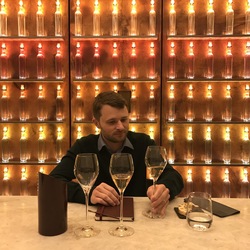
Bright red. Great lift and length. Only good things to come. — 9 years ago
Doubleback
Walla Walla Valley Cabernet Sauvignon 2015

Just got my allocation. Had to see if ok. Well it really, it is a lack of self control. Wonderful aroma is dark fruit. That great cab aroma. Complexity all the way and Long delicious finish. A really good wine and I say ready to drink. Not sure what Aging will accomplish. I’ll let you know in a few years. Buy this wine — 9 years ago

Corison Winery
Napa Valley Cabernet Sauvignon 2010
On the nose, stewed fruits of; black plum, blackberries, dark cherries, plum and blueberries. Mocha, chocolate, mixed berry cola, sweet spice, cinnamon, nutmeg, caramel, loamy mineral soils and dry dark florals. The mouthfeel is less concentrated than other vintages of Corison but that's indicative of the 10 Napa vintage generally. The tannins are nicely resolved with another 5-8 years before they are completely resolve. The fruits are; dark cherries, black plum, plum, black raspberries, blackberries with strawberries that dance around the rest of the fruit. There's nice barrel toast, vanilla, nutmeg, light clove, cinnamon, touch of wood shavings, liqueur notes, caramel, mocha chocolate, mix berry cola, loamy soils, dry crushed rocks, bramble, dry stems with nice soft round acidity. The finish is a little lean but tasty. Good balance of fruit and earth with long, rich elegance. Cathy slightly overachieved the 10 vintage as a whole. Photos of; her estate building, Cathy in her vineyard, grapes coming in at night (better to harvest when the fruit is cooler) and her estate vineyard in all it's glory. Producer notes and history...Cathy Corison grew up in Riverside, California. She studied biology at Pomona College and was on their men's diving team, because the school didn't have a women's team. In 1972, she had to take an extracurricular class. She signed up for a trampoline class, but changed her mind upon seeing a sign-up sheet for a wine tasting class. This class was the catalyst that sparked her interest in winemaking. After graduation in 1975, she moved to Napa Valley in California. She received her Master's degree in Enology from University of California, Davis. Upon moving to Napa, she started working in the tasting room at Sterling Vineyards and at a wine shop. During this time, she was getting her Master's degree at the University of California, Davis. She was told by her professor that she would not get a job in Napa Valley because of being a woman. However, if she wasn't the first Napa Valley female Winemaker, she was certainly one of the first. She tried to get a job at Freemark Abbey and was denied because they believed she could not work in the cellar. She almost took a job at Christian Brothers in the enology lab. However, she decided not to take the job and in 1978 she became an intern at Freemark Abbey and eventually became their Winemaker. She joined Chappellet in 1983 and was their Winemaker for nearly ten years. She founded Corison Winery, in 1987. The winery is located in St. Helena, California in a barn built by her husband, William Martin. Corison makes Cabernet and Gewürztraminer. They produce about 3,500 cases a year depending on the vintage. The winery makes a Kronos Vineyard Cabernet Sauvignon and as well as a Napa Valley Cabernet Sauvignon. The Kronos is an estate wine that is made from organic grapes. The vineyard is dry farmed. The grapes come from one of the oldest vineyards in Napa Valley. The Napa Valley Cabernet comes from Rutherford. The Gewürztraminer is called Corazón and comes from the Anderson Valley. — 9 years ago

Louis Roederer
Cristal Brut Champagne 1985

No bubbles left, some seepage on the cork, but funnily enough it was still quite special, confit ginger, mandarin marmalade mixed with vanilla beans, custard, creme brûlée, just the caramel on the finish showed it wasn't stored correctly, all things considered quite extraordinary. — 9 years ago
Robert Mondavi Winery
Napa Valley Cabernet Sauvignon
To me, this wine of all the aged wines had the best entry without a doubt. This wine is made in a very old world and French style, and you can tell it from the start. I was a little worried about this wine, but the cork was in great shape and extracted by an ah-so with no problems. This wine had a very herbal nose, and herbal front. Raspberry front eventually emerged. The middle of this wine was actually quite full bodied. The finish was a little earthy, a little bit of mushroom, and tame oak. The wine was good, and still going after all these years. Look forward to the other bottle soon! — 10 years ago


Château Pichon Longueville Comtesse de Lalande
Pauillac Red Bordeaux Blend 1988
It needed an hour decant to come around and blow off the barnyard funk. After that, elegance, ruby blue and red soft fruits; blueberries, bright cherries, fresh juicy strawberries, some cooked green bell early on that gradually faded, steeped tea, soft saddlewood & minerality, a touch of easy wet black earth, pebbles. The 88 has all the classic characteristics and elegant finish one comes to expect from Pichon Lalande. Not their best but pretty darn good on Christmas Eve into Christmas. Merry Christmas all!!! — 11 years ago
Domaine du Pegau
Cuvée Réservé Châteauneuf-du-Pape Red Rhone Blend 2005
Quite good, but next to all the other chateauneufs, it was just ok — 11 years ago
Château Lynch-Bages
Grand Cru Classé Pauillac Cabernet Sauvignon Blend 1999

Maybe not as good as the 2000 but quite tasty all the same. — 12 years ago
Marcel Lapierre
Morgon Gamay 2008

Gamay all day, every day! With some aging on it. Good to drink, still good to keep. — 12 years ago
Jon Ruyle
What?!? This is so good! I won’t describe all the briar, graphite and brooding dark fruit, because it is just more accurate to say this is just freaking awesome! — 8 years ago