60 Souls
Roederer Estate
Anderson Valley Brut Pinot Noir Chardonnay Blend


Nice holiday bubbly!! Founded in 1982, Roederer Estate adds oak-aged reserve wines to all their blends to create complex, dry and harmonious sparkling wines. First Brut California sparkling produced by Champagne Louis Roederer. Pale lemon straw, nice mousse and bubbles for this 60% Chardonnay & 40% Pinot Noir blend. Flavors of crisp Apples with creamy mineral tones, nice balance with acidity. Long finish ending with oak, lemon and nutty characteristics. Consistent. Very nice! — 5 years ago
Domaine du Pegau
Cuvée Réserve Châteauneuf-du-Pape White Rhone Blend 2016


Wednesday Wine Committee. Great hosting by Gavin. 1 sparkler, 4 whites, 4 reds and 2 dessert wines. All served blind as usual.
This wine was crazy. Aromatically, it smelled of fresh tar and concentrated pear juice (like from a can). Kind of lychee like, but not enough to be gewürztraminer. Medium acidity. Slightly rich toward the finish. This ended up being 60% clariette, 20% Grenache Blanc, and the rest a mix. Hard to guess blind. I called this Alsatian Pinot Gris. — 7 years ago

Château Gruaud Larose
Saint-Julien Red Bordeaux Blend 1988

🏅 Rating 92/100 (4,2🌟)
Mature Bordeaux aromas of dill, graphite, pencil shavings, earth, boiled carrots, candied cherries. Perfume you can't resist and get addicted to.
Fruits already faded away leaving rather flat but silky palate.
Improves with time spent in glass.
Delicate decadence wine.
Deuxieme Grand Cru Classe in 1855. Indicative blend: Cabernet Sauvignon 60% and Merlot 30% with Cabernet Franc and Petit Verdot 10% — 8 years ago
Planeta
Cerasuolo di Vittoria Nero d'Avola Frappato 2015
Tonight is Saturday night and I have opened the 2015 Planeta Cerasuolo Di Vittoria - Sicilia. Made up of 60% Nero D' Avola and 40% Frappato. Have been wanting to try more wine from Sicily. I have been hearing a lot of good things coming from this area.
The nose is very aromatic with red fruit, dried strawberries, dried raspberries, cherry cola, balsamic, floral notes, spice and dried herbs.
On the palate I get red berries, wild cherry, strawberry, plum, ginger, spice, herbs and dusty soil.
This wine is medium supple bodied with medium + acidity and medium + sandy tannins that lead to a long vibrant lasting finish. Sicilian wines are showing real well and I will have to try more. The weekend is going well and I hope everyone are enjoying themselves. Stay safe continued prosperity. Nostrovia! 🍷🍷🍷🍷 — 8 years ago

La Pousse d'Or
"Clos des 60 Ouvrées" Les Caillerets Monopole Volnay 1er Cru Pinot Noir
Had the 1988 last night, and it was silky with tea, spice and high acid. — 10 years ago
Château Haut-Bailly
Pessac-Léognan Grand Cru Classé Red Bordeaux Blend 2012
This wine needs decanting. It changes rapidly. Charcoal notes at the start. Brick. Vanilla. It's that 60 year old gray-haired man who has a lifetime of stories and a relaxed manner about him — 10 years ago
Caymus Vineyards
Napa Valley Cabernet Sauvignon 2013

"Great nose. Could pick up the beautiful bouquet at arm's length. Nicely balanced. Good cherry and blackberry but not overly fruity. Not a lot of secondary flavors. Assume it's just too young. Very much enjoyed but probably would not pay $60 for it." — 11 years ago
Azienda Agricola COS
Pithos Rosso Vittoria Nero d'Avola Frappato 2013

Bright ruby red in color. A fierce attack on the palate of acid and tannin. A wash in sour red fruits, this is a great counter point to food and only gets better with it. Aged in clay terracotta amphora, this is extreme on the unique scale, yet very much a well made wine. A 40/60 blend of Frappato and Nero d'Avola. — 11 years ago
Louis Roederer
Cristal Brut Champagne 2006
A blend of 60/40 Pinot noir and Chardonnay almost all grand cru but everything is mid slope and chalky soils a perfect balance between power and elegance minimum 25 years. A very creamy texture on the nose. A very long finish with a good amount of richness 80% biodynamic. The aim is to convert all has a bit of a nutty almond character. — 11 years ago
Marietta
Old Vine Red Lot Number 60 California Red Blend

Pop and pour. Black cherry, kirsch, black licorice, and some wood smoke both on the nose and palate. Deep ruby color, medium body. A nice impression of fruit—big, but not as heavy as expected. Medium tannins, medium acids, but they linger onto the finish. A decent wine, with better-than-average complexity. I'd get half a case of this and be quite happy... — 12 years ago
Dogfish Head Brewery
60 Minute IPA

Not too hoppy. A hint of sweet caramel. — 12 years ago
Ulysse Collin
Les Enfers Blanc de Blancs Extra Brut Champagne Chardonnay 2015
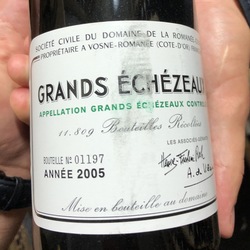
Cannot get enough of these magical Champagnes from Olivier Collin. Glad to snag this last bottle. The 2015 60 months sur lattes just dials everything up to 10. It’s deep and intense and radiates with energy and Burgundian flair. It has leesy richness, while at the same time shows impeccable purity and elegance. Swirls in a Burgundy glass unleash its core of caramelized stone fruit, curry leaf, rose oil and exotic spices along ripping citrus inflicted acids that lead to a long, tension filled and smoky mineral infused finish. Truly, like if Meursault could sparkle ✨ — 4 years ago
Azienda Agricola COS
Cerasuolo di Vittoria Classico Frappato Nero d'Avola 2017
I love these wines that are most definitely not playing to the masses. Medium garnet with a wide brim. The nose is highly attractive fresh out of the gate. A ridiculous amount of fruit here with blackberries, black cherries, and strawberries. Eucalyptus and smoke. Herbs and spice. Beautiful earth and foresty goodness with the suggestion of funk. Terrific aromas.
COS uses clay amphorae for storage and biodynamic viticulture to produce wines as naturally as possible. 60% Nero d’Avola, 40% Frappato di Vittoria. This is all about the terroir, it’s a glorious wine that truly speaks of a place and is driven by that. The acid is nice and vibrant and the tannins round. Plenty more fruit to be found on the palate with red and black fruits. More dusty earth, leather, and stones. A long finish that leaves you wanting more. And my friends, you do want more. — 5 years ago

Casa Caterina
Cuvée 60 Brut Nature Blanc de Blanc Chardonnay 2012

Beautiful bubbles, classy sparkling. Natural wine, classic pleasure. — 7 years ago
Bodegas Juan Gil
18 meses Jumilla Monastrell Blend 2015
Began 1916, when Juan Gil Giménez, great-grandfather of the present generation, built a winery in heart of Jumilla. Blue label spent 18 months in new oak barrels (wine formally known as 18 mos representing time in bottle, now “Blue Label.” Monastrell, Cab Sauv & Syrah blend (60/30/10), low yield, aromas of red berry and toasty oak. Palate shows flavors of dark berry fruits, espresso, cacao and hints of sweet spice. Big dusty tannins, well integrated with oak, lingering, ending with balanced oaky character. — 8 years ago
Château Calon-Ségur
Saint-Estèphe Red Bordeaux Blend 1953

Red fruit with a slightly drying orange peel. Some dark and tangy intense midpalate. All these are astonishing considering they’re 60 years old. Great bottles. — 9 years ago

Château Pichon-Longueville Baron
Baron de Pichon-Longueville Pauillac Red Bordeaux Blend 2004
I have to say this is my favorite Chateau to stand in front of and gaze. On the nose, spice, wild blackberries, dark cherries, blueberries, black plum, plum, leather, cedar, dark moist soil, wet stones, mint, tobacco leaf and dark fresh & dry flowers. It's drinking nicely with silty medium-medium + tannins & full bodied. Ruby, ripe wild blackberries, dark cherries, blueberries, black plum, plum, leather, cedar, dark moist soil, wet stones, crushed dry minerals, mint, tobacco leaf and violets, dark fresh & dry flowers. The acidity is round and mouthwatering. The long finish has great elegance, beauty, length, tension & balance. It's just starting to hit it's stride and has plenty of life ahead of it. Another 15-20 years. Who said 04 was a difficult vintage? This will continue to improve and will stun with another 10 years in bottle. Photos of the the exterior Chateau front & side, tasting room and Christian Seely Managing Director. Chateau Pichon Baron and Chateau Pichon Lalande were originally part of the same estate. Pichon Baron got it's name when Therese, daughter of the founder, received the estate as a dowry when she married Jacques de Pichon Longueville the first President of the Bordeaux Parliament. Chateau Pichon Baron changed because of the Baron Joseph de Pichon Longueville. He took over managing Pichon Baron when he was only 19 years old! When the Baron passed away at 90 in 1850, he divided his Pauillac estate. The sons were awarded what became Chateau Pichon Baron and the daughters were given what later became Chateau Pichon Lalande. Pichon Baron went through three rough decades in the 60's, 70's and 80's. Part of the issues were, lack of investment and they machine harvested. The first really great vintages for them were 89 & 90 after Jean Rene Matignon, Jean-Michel Cazes join them and AXA Insurance Company purchased them adding capital. The 73 hectare vineyard of Chateau Pichon Baron are planted to 65% Cabernet Sauvignon, 30% Merlot, 3% Cabernet Franc and 2% Petit Verdot. However, the Cabernet Franc and the Petit Verdot are reserved exclusively for the second wine. The terroir is mostly deep gravel, sand clay soils. Pichon Baron uses 80% new French oak and rests in barrel 18 months. @ FogoDeChao
— 9 years ago


Château Lynch-Bages
Grand Cru Classé Pauillac Cabernet Sauvignon Blend 2011

I love the Echo label made by Lynch, and this was a power house of a Bordeaux. Brick wall of tannin even 4 hours later and after 60, yes, 60 hours of decanting, the flavors being masked by high acidity and tannin of a young wine finally had their 15 seconds of fame. Dark rich flavors of creme-de-casis and blackberry tart, and gravelly minerality, with a toasty oak undertone and still finishing with a firm tannin but just more enjoyable than right out of the bottle. — 11 years ago
Billecart-Salmon
Cuvée Nicolas François Billecart Brut Champagne Blend 1999

It was a treat to get a visit from Antoine Billecart! The 1999 Nicholas Francois Billecart is composed of 60% Pinot, 40% Chardonnay and sees about 10% wood fermentation. This silky, refined Champagne has the kind of perfect texture that says "the expensive stuff!" — 11 years ago
Pierre Paillard
Brut Grand Cru Champagne Blend 2009

Very good Brut, 60% PN 40% C all from Bouzy Grand Cru - a lot of energy for 2009 — 12 years ago
Bodegas Amaren
Reserva Amaren 60 Rioja Tempranillo 2005

Pendiente de probar — 14 years ago
Château Pichon Longueville Comtesse de Lalande
Pauillac Red Bordeaux Blend 2019

The sample of 2019 Pichon-Longueville Comtesse de Lalande sent to me last year was an absolute show-stopper. The bouquet needs a few minutes to open up, delivering intense black fruit, crushed stone and incense with time in the glass. Yes, the nose does remind me of Latour! The medium-bodied palate is endowed with unerring symmetry and poise. This is a powerful, multi-dimensional Pichon-Lalande, extremely precise, very deep and long. The 60% new oak is seamlessly integrated and feels just right. It reminds me of the 1996 in some ways, but with more finesse on the finish. Stunning. 14.12% alcohol (Neal Martin, Vinous, February 2022)
— 5 years ago
Château Pape Clément
Pessac-Léognan Red Bordeaux Blend 2006

Initially a poor display on the nose with a powerful barnyard scent coming through and muting other aromas, after a 60-70 minute decant, the barnyard scent gave way to a more expressive nose with notes of cedar/wood spice, plum, and chocolate. On the palate, tobacco and leather dominated, a medium to long finish....big and bold! — 6 years ago
Château Léoville Poyferré
Saint Julien Red Bordeaux Blend 2008
Vegetal nose with leather and tobacco. 60 cab. 30 merlot. 7 pv — 7 years ago
Mascota Vineyards
Unánime Gran Vino Tinto Cabernet Sauvignon Blend 2014
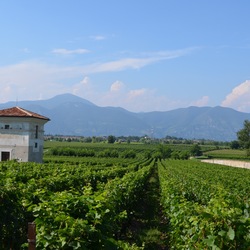
This wine was a gift from a friend and it is a nice surprise to me from Argentina. Known by the Malbec this Argentinian Cab blend (60% cab, 25% Malbec and 15% cab franc) has great notes of robusta coffee, tobacco and flower (hydrangea). In you chocolate and dark fruits. It’s higher alcohol level 14,5% ensures its long lasting flavour and a surprisingly round finish. — 8 years ago

Château Cos d'Estournel
Les Pagodes de Cos Saint-Estéphe Red Bordeaux Blend 2005
Is there anything better than Ribeye & Claret? From my perspective, no. This is the second wine from one of more prestigious Chateaus in St. Estephe. Bordeaux rule number 2, buy the hell out of good producers second wines in very good vintages, like 2005. You’ll get great wines at more affordable prices. Providing, you exercise patience; which is rule number 1. Decanted for 3 plus hours. On the nose, ripe; blackberries, dark cherries, black raspberries, baked strawberries, black plum & cherries pull up the rear. Incense, herbaceous character, anise, scorched dark earth, burnt ambers, anise, baking spices dominated by vanilla, black tea, black cherry cola, loamy dry soils, dry & fresh red florals with violets for days. It’s in a great phase with many years ahead. The body is full and round. The texture has you wanting more. It’s velvety and ripe. Tannins soft and powdery, around 65-70 resolved. The fruits are ripe & ruby...showing the excellence of the 05 vintage. Blackberries, dark cherries, black raspberries, baked strawberries, black plum & cherries pull up the rear. Incense, herbaceous character, anise, scorched dark earth, dry stones, leather, cigar with ash, burnt ambers, anise, baking spices dominated by vanilla, black tea, black cherry cola, loamy dry soils, dry & fresh red florals with violets for days. The acidity is dead on. The length, structure, length & balance is harmonizing like America on the album, “ Horse with No Name.” The long finish is; ruby, rich, elegant, round, beautiful and lasts a minute plus. Beautiful wine. 9.4 with the steak. 9.2 on its own. Photos of; Chateau Cos d’ Estournel, hosting/tasting area, private wine stock and barrel cellar. Producer notes and history...Chateau Cos d’Estournel has a long history in the appellation of St. Estephe. Louis Gaspard d’Estournel, gave his name to the estate after founding it in 1811. It only took a few years before Chateau Cos d’Estournel became famous with wine lovers and royalty all over the world. In the early days, the wines of Cos d’Estournel were not sold through the Negociant system. The owner preferred selling his wine directly to his customers. In fact, Chateau Cos d’Estournel was exported to numerous countries across the globe, with a large portion of the production being sold to India. It was that connection to India that inspired much of the unique, east Indian design we see at Cos d’Estournel today. Chateau Cos d’Estournel was one of the first Chateaus to bottle, label and sell their own wine. This practice continued until the death of Louis Gaspard d’Estournel in 1852. After his death, the estate was purchased by an owner that sold their wines on the Place de Bordeaux, using the negociant system. If the Chateau had not been selling their wines through the negociant system, it would never have been included in the 1855 Classification! Chateau Cos d’Estournel was sold to the Charmolue family, the owners of the neighboring Chateau Montrose. They continued to own the estate until 1917, when it was bought by Fernand Ginestet. The purchase was the next major step in the development of Cos d’Estournel. The next era in the development of Chateau Cos d’Estournel took place in 2000, when Chateau Cos d’Estournel was bought by Michel Reybier, who made his fortune in the food industry. Michel Reybier hired the son of Bruno Prats, Jean-Guillaume Prats to manage Cos d’Estournel. Things improved with the efforts of Jean-Guillaume Prats who helped design the most modern wine making facilities in the entire Bordeaux wine making appellation at the time. A complete renovation of Cos d’Estournel took place in the winemaking facilities and cellars. The wine making facilities are completely modern, using 100% gravity. On October 15, 2012, Jean Guillaume Prats announced he was leaving Chateau Cos d’Estournel to join LVMH. Jean Guillaume Prats was replaced by Aymeric de Gironde. Following the departure of Aymeric de Gironde in 2017, the owner, Michel Reybier took over managing the estate. In 2018, the estate released COS100, produced from their oldest Merlot vines that were 100 years of age. It was limited in production to a 100 Jeroboams, (3 litres) and 10 Balthazars (12 litres) and a few other sizes were produced from only 2 barrels of wine. The proceeds from COS100 go to the charity, Elephant Family, that is devoted to protecting and nurturing Asian elephants in their own, natural habitat. Cos d’Estournel’s new cellar is a joint reflection by the technical team, the architect Jean-Michel Wilmotte and Jean Guillaume Prats. It’s a marvel blend of simplicity and modern technology. Cos d’Estournel is unique to Bordeaux and the rest of world. What makes this special is that the cellars of Cos d’Estournel are entirely operated by gravity. There are no pumps of any kind to force the wine. The purpose is to allow a gentleness to the wine and improve its purity allowing for expression of their special terroir. It set a new benchmark for cellars not only in the Left Bank, but in all of Bordeaux. The new cellars at Chateau Cos d’Estournel include 72 isothermal cone shaped stainless steel vats. The vats are specifically designed for thermal inertia. The 72 vats have a wide range of capacities to correspond with the needs of each parcel of vines. The vats range in size from as small as 19 hectoliters all the way up to 115 hectolitres. 12 of the smaller vats that are designed to handle between 19 and 60 hectoliters that have two levels in each vat. In other words, this offers the technical equivalent of 24 separate vats. Each of the vats are double lined, which allows for more exact and temperature control. None of the vats use interior heat coils. Perhaps the most inventive part of the cellars is the four 100 hectoliter lift tanks or wine elevators that replace the pumps used in the traditional pumping over and racking off processes, which introduce air and often destabilize the marc. From the moment the grapes arrive, everything travels by the flow of gravity. Jean Guillaume Prats called this process a pumpless, pump over. What takes place is, the wine is released from the main vat where the skins remain. By gravity, the juice is then moved into smaller vats which are on wheels. These small vats are sent to the glass elevators where they are moved up one floor and returned back into the vat by gravity to cover the skins. At this point, the process is still unique to Chateau Cos d’Estournel. The wine production of Cos d’Estournel is labor intensive starting the moment the grapes enter their new facility. The berries travel through a tunnel that instantly lowers the temperature of the fruit to 3-5 degrees Celsius. This sudden chilling stops the loss of juice while also slowing oxidation. Next, the grapes are cold macerated at 7-9 degrees Celsius for about a week. Pump overs are done by gravity recycling. The juice from the top of the vat moves to the bottom of the vat entirely by gravity. The fermentation takes place at low temperatures to avoid over extraction or harsh tannins. The 91 hectare vineyard of Chateau Cos d’Estournel is planted to 65% Cabernet Sauvignon, 33% Merlot, 1% Cabernet Franc and 1% Petit Verdot. The vineyard is located close to the border of Pauillac and Saint Estephe at the southern tip of the Saint Estephe appellation. The vineyard has cultivated 84 hectares of vines. Even though the vineyard has been expanded over the years, the grape varietals planted here have remained consistent. The vineyard, located on the hill of Cos, has gentle elevations of up to 20 meters. On average, the vines are 35 years of age. However, the estate has very old Merlot vines as well, which date back more than 100 years. Part of the terroir is situated on the hill of Cos, which is at a high elevation for the Medoc at 20 meters. Cos d’Estournel is translated from old Gascon speech; which means the hill of pebbles. It describes the terroir along with clay, gravel, sand and limestone soil. However, there is a unique aspect to the soil at Cos d’Estournel, as you find more gravel and less clay here than you do at other neighboring vineyards. Because the fruit is grown close to the Atlantic ocean in a cool climate, Cos d’Estournel is often among the last of the properties in the Medoc to harvest. The vineyard is managed by teams and each team member is given 45,000 vines to look after. The vineyard, which is almost one large block, can be further divided into 72 separate parcels. — 9 years ago


Tikal
Patriota Mendoza Malbec Bonarda 2012

Nice peppery 60 Malbec 40 bonarda — 12 years ago
Orin Swift
Papillon Napa Valley Cabernet Sauvignon Blend

This wine is amazing! Medium bodied red wine. Papillon is the French word for butterfly. 60%cab, 37% merlot, 2% petit Verdot, 1% melbec. — 13 years ago
Sipping Fine Wine
A blend of 54% Cab Sauv, 38% Merlot & 8% Cab Franc, aged in 60% new oak, deep Ruby with aromas of dark berry fruits, floral and sweet notes. On the palate flavors of blackberry, currents and cacao with notes of violets, oak and spice. Fine gritty tannins, long finish ending with fruit, floral and mineral spice. Tasting well! — 4 years ago