Other Half Brewing Co.

Bedrock Wine Co.
Monte Rosso Vineyard Zinfandel 2016



The 2016 Zinfandel Monte Rosso Vineyard is utterly sublime. Lifted, aromatically precise and nuanced, the 2016 Zinfandel Monte Rosso Vineyard is fabulous. Rose petal, blood orange, cranberry and raspberry notes give the Monte Rosso striking aromatic presence and brightness. Unfortunately, Bedrock, like all the other wineries that purchased grapes at Monte Rosso, no longer have access to the fruit off this historic ranch. Morgan Peterson and Chris Cottrell certainly chose a strong vintage as their last. The 2016 is sublime. (Antonio Galloni, Vinous, April 2018) — 8 years ago
Other Half Brewing Co.
Space Dream India Pale Ale

Made in Other Half's signature "juicy" style, the Dream in the beer's name indicates the addition of lactose which results in a very pillowy texture, while adding some additional weight which isn't altogether welcome. — 9 years ago
The Other Wine Co.
McLaren Vale Grenache 2017

The versatility of this Wine knows no bounds. Pairs with Chinese cuisine naturally. — 9 years ago


Cruse Wine Co.
Valdigue Nouveau

Tangy and soda like. Took a few sips for me to warm up but loving it half a glass in. — 9 years ago
Badet Clément & Co.
Révélation Vin de Pays d'Oc Chardonnay 2015
Black Friday Thanksgiving redux, with relatives, mothers-in-law, various dogs and multitudinous small children. Will the ice cream freeze? Will turkey cook? Will everyone have a fun time? No worries, the Chardonnay will keep the uncles happy for another half hour. Cuz it's awesome, not buttery, not so sweet. Good stuff. Trader Joe's. — 9 years ago
Other Half Brewing Co.
Oh... Double Dry Hopped India Pale Ale
I think this is probably the best beer I've ever had. It is made in the New England IPA style, namely juicy and cloudy. Perfectly balanced, the Oh... from Other Half is extraordinary. — 9 years ago

Château Caronne Ste. Gemme
Haut-Médoc Red Bordeaux Blend 1998
1998 Château Caronne Sainte-Gemme, Bordeaux, France, Haut-Médoc. 1 Jeroboam. Dinner at Newport House, Newport, Co. Mayo, Ireland. 8/29/15. Fantastic dinner with great friends. Black berries taste with a pepper finish. The Jeroboam size allowed sharing of several decanters with other guests.
— 11 years ago

The Other Wine Co.
Adelaide Hills Pinot Gris 2015
Briney, textural, not oily but clean. A little side project for the crew here. — 11 years ago
Kühling-Gillot
Pettenthal Großes Gewächs Riesling 2009

Garage Wine Co.
Lot #37 Maipo Alto Cabernet Sauvignon 2011
Delicious and balanced cab. Slightly berry but mostly just grapes doing what they do best, giving me a delicate pillow of a classy ass buzz. Pairs well with sailors and other fine folk. — 12 years ago
La Jota Vineyard Co.
Howell Mountain Cabernet Sauvignon 2001

Love this when young...juicy and tight, but it's hung in there for 13 years, showing leather and dried flowers amongst other things. Very nice. — 12 years ago
Borgo Scopeto (Tenuta Caparzo)
Chianti Classico Sangiovese Blend 2007

I have been waiting more than a year and a half for this baby. When first open, it smells like the lumber department at a hardware store, but tastes like blueberry and. Other small berries. It's phenomenal. My judgement may be skewed by the excitement of opening a bottle I cannot buy anymore, but it's amazing stuff. It lingers, and is glorious. I'm going to do this again. — 12 years ago
Bouchard Finlayson
Kaaimansgat Chardonnay 2010
Produced from late picked grapes. Half the wine was fermented in new 225 French oak barrels. The other half not in wood at all. Portrays firm, clear peach and Limey flavors. — 13 years ago
Bedrock Wine Co.
Ode to Lulu California Old Vine Rosé Blend 2017

Consistently my favorite rose. I’ve already been through a half case of these this summer. The bottles are under screwcap so there is no variation, every sip from every bottle is just as delicious as the last. — 8 years ago
Bedrock Wine Co.
Esola Vineyard Zinfandel 2016

Ya know, not many quality vineyards are producing Zins any longer, but there does seem to be a movement back to them. Once again, thanks to my friends on Delectable for introducing me to Bedrock. 2016, 14.4 ABV. Lovely pepper and leather and minerals, along with blackberry and other dried dark fruits. Touch of tannin, appreciated. Won't knock your socks of, but a really nice wine overall, for a relaxing night with friends and pork chops. 9.2. — 9 years ago
Château Brane-Cantenac
Grand Cru Classé en 1855 Margaux Red Bordeaux Blend 2005
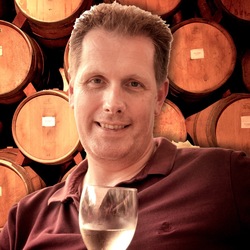
I have a six-pack of this 05. I thought after 10 years in bottle, it would be interesting to check in on its evolution. While tasty, I’ll wait another 8-10 to open another. Even after 2-3 hours in the decanter, it’s still a very young adolescent. On the nose, slightly sour blackberries & dark cherries, dark currants, baked black plum, haunting blue fruits, anise, whiff of spice, steeped tea, dry stones, dry crushed rocks with dry top soil, caramel, vanilla with fresh & dry red florals. The body is thick & full. Tannins are starting to round out. It’s velvety on the palate. The fruits are; bright, fresh & ripe and really show the greatness of the 05 vintage. Dark currants, blackberries, dark cherries, baked black plum, haunting blue fruits, baked strawberries, cherries, raspberries on the long set, dark spice, clay & loamy dry top soil with crushed rocks, dry stones, cigar with ash, graphite, dry stems, slight herbaceous character, mint, used leather, clove, caramel, vanilla, fresh & dry red florals with violets. The round acidity is about perfect. The structure and length are still strong. The balance is in harmony. As for the long finish, it’s lush, ruby, rich and well polished. Photos of; Chateau Brane Cantenac, large wood vats, Henri Lurton and Estate vines. Producer notes and history...Chateau Brane Cantenac began in the early 17th century. At the time, the estate was known as Domaine Guilhem Hosten. Even that far back, wine was produced from the property. In fact, the wine was so highly regarded it was one of the more expensive wines in Bordeaux. It sold for almost as much money as Brane Mouton. This is interesting because of who went on to buy the vineyard in the 1800’s. The Baron of Brane, also known as “Napoleon of the Vineyards”, purchased the Chateau in 1833. At the time of the sale, the estate was called Chateau Gorce-Guy. To get the funds needed to purchase the Margaux vineyard, the Baron sold what is now called Mouton Rothschild, which was at the time of the sale, known as Chateau Brane-Mouton. Not such a good move with hundreds of years in hindsight! In 1838, the Baron renamed property taking his name and the name of the sector where the vineyards were located and called it Chateau Brane Cantenac. The Chateau later passed to the Roy family, who were well-known in the Margaux appellation in those days, as they owned Chateau d’issan. Moving ahead to 1920, the Societe des Grands Crus de France, a group of merchants and growers that owned several chateaux located in the Medoc including; Chateau Margaux, Chateau Giscours, and Chateau Lagrange in St. Julien, purchased Chateau Brane Cantenac. Five years later, M. Recapet and his son-in-law, François Lurton, took over Brane Cantenac along with Chateau Margaux. Lucien Lurton (the son of François Lurton) inherited Brane Cantenac in 1956. Today, the estate is still in the hands of the Lurton family. Brane Cantenac is owned and run by Henri Lurton. After being given the responsibility of managing Brane Cantenac, it was under the direction of Henri Lurton that large portions of the vineyard were replanted. Vine densities were increased, the drainage systems were improved and the plantings were also, slowly changed. The vineyard of Brane Cantenac is planted to 55% Cabernet Sauvignon, 40% Merlot, 4.5% Cabernet Franc and .5% Carmenere. Carmenere was used for the first time in the 2011 vintage. The only other Chateau I know that still uses Carmenere is Clerc Milon. The 75 hectare Left Bank vineyard of Brane Cantenac is essentially unchanged since it earned Second Growth status in the 1855 Classification. At least that is the case with the 45 hectares used to produce the Grand Vin of Brane Cantenac. Those 45 hectares are planted surrounding the Chateau. Those vines are located just in front of the Cantenac plateau and are the best terroir that Brane Cantenac owns. They have other parcels, which are further inland and much of those grapes are placed into their second wine, Le Baron de Brane. Those additional hectares can be divided into 3 main sections. Behind the Chateau, they have 15 hectares of vines on gravel and sand, 10 hectares across the road with sand, gravel and iron and a 13 hectare parcel with gravel called Notton, which is used for their second wine. The vineyard is planted to a vine density that ranges from 6,666 vines per hectare on the plateau and up to 8,000 vines per hectare for the vines located behind chateau, in their sandier soils. The higher levels of vine density are always found in the newer plantings. The terroir of Brane Cantenac consists of deep gravel, sand and clay soil. Experiments in the vineyards are currently looking at becoming more organic in their vineyard management. Today, more than 25% of Brane Cantenac is farmed using organic farming techniques. It is expected that over time, the amount of hectares farmed with organic methods will be increased. Brane Cantenac has gone through 2 relatively recent modernization’s in 1999, when they added began adding the first of their smaller vats to allow for parcel by parcel vinification and then again in 2015 when they completed a much more complete renovation of their cellars and vat rooms. While Brane Cantenac is a traditional producer, they are no stranger to technology as they were one of the first estates to embrace optical grape sorting machines. In very wet vintages, they can also use reverse osmosis. To produce the wine of Chateau Brane Cantenac, the wine is vinified in a combination of temperature controlled, traditional, 22 oak vats, 18 concrete tanks and 20 stainless steel vats that vary in size from 40 hectoliters all the way up to 200 hectoliters, which allows for parcel by parcel vinification. 40% of the fermentation takes place in the oak vats. The oldest vines are vinified in vats that are selected to allow for separate parcel by parcel vinification. The younger vines are vinified more often together in the same vats. However, the Carmenere is entirely micro-vinified, meaning that those grapes were completely vinified in barrel, using micro-vinification techniques. This can also happen because the amount of grapes produced is so small. Some vats can be co-inoculated, meaning they go through alcoholic fermentation and malolactic fermentation simultaneously. At Chateau Brane Cantenac, malolactic fermentation takes place in a combination of French oak tanks and barrels. The wine of Brane Cantenac is aged in an average of 60% new, French oak barrels for 18 months before bottling. The initial 2 months of aging is done with the wine on its lees, which adds more depth to the wine. There second wine is Le Baron de Brane. Le Baron de Brane is not new. In fact, previously, the second wine went under the name of Chateau Notton, which took its name from one of the main parcels where the grapes were planted. During the late 1950’s and into the 1960’s, having a second wine was important as the estate declassified 3 vintages, due to extremely poor, weather conditions in 1956, 1960 and 1963. Production of Chateau Brane Cantenac is about 11,000 cases per year. — 9 years ago

Cruse Wine Co.
Rancho Chimiles Vineyard Valdiguié 2014

Reminds me a lot of the FH Mil Amores from the other night. Seems different than the 2013 version of this wine. Less tannin, more acid here. Really nice any way you slice it up. @Michael Cruse — 11 years ago
Bedrock Wine Co.
North Coast Syrah 2012

Bedrock Wine Co.
The Bedrock Heritage Sonoma Valley Red Blend 2013

So good, this is just a baby! Have had other vintages and this is going to be amazing in coming years! I have a bottle of the 2007 I will be opening this weekend. Any suggestions on decanting or opening early? @Morgan Twain-Peterson @Chris Cottrell — 11 years ago
Poderi Elia
Serracapelli Barbaresco Nebbiolo
Very interesting nose, which I am pondering (lots of spice). Should have decanted a half hour ago, as I think there is lots of room for note development. That written, I was hungry, which also translates to thirsty:). What's good food absent good wine? In any case, it is all here, @ VA Bch 'a Terrapin (groovy spot with a north end locals flare; crazy good oysters and other farm-to- table excellence). Oh yeah, the wine - well, there 's a strong cherry explosion that drifts making for a silky, deep finish. Back to eating and drinking..:) — 12 years ago
Clos du Val Wine Co.
Napa Valley Cabernet Sauvignon 2003

Wonderful Cab, drinking very well. After opening for about 10 minutes, the nose is full and fruity while the palatte is rich and chewy. Dark fruit predominates but there are other faint notes that add intrigue for the observant. — 14 years ago
Château Lynch-Bages
Grand Cru Classé Pauillac Cabernet Sauvignon Blend 2000
The 2000 is delicious but, it is evolving at a glacial pace. Out of magnum.
On the nose, touch of barnyard, glycerin, ripe; blackberries, dark cherries, black raspberries, plum, strawberries & cherries. Vanilla, dry clay, limestone, river stones, just a touch of pyrazines & bandaid, dark,,turned, moist earth, dry grass and dry & fresh dark florals.
The body is full, round & sexy. Dry softened, sweet tannins. ripe; blackberries, dark cherries, black raspberries, plum, strawberries & cherries. Vanilla, dry clay, limestone, river stones, just a touch of pyrazines & bandaid, fresh tobacco leaf, saddle-wood, dry underbrush, dark, turned, moist earth, dry grass and dry & fresh dark florals. The acidity is magnificent. The structure, tension, length and balance are sensational. The finish is drop dead gorgeous. I’d still hold mine another 5 years as long as you have 3-4 bottles for more 5 year increments.
Photos of, their Estate vines, Clyde Beffa-Owner of K&L Wine Merchants, Owner of Chateau Lynch Bages - Jean-Michel Cazes, guests of the dinner and a sunset view from their Estate.
Producer notes and history...Lynch Bages takes its name from the local area where the Chateau is located in Bages. The vineyard of what was to become Lynch Bages was established and then expanded by the Dejean family who sold it in 1728 to Pierre Drouillard.
In 1749, Drouillard bequeathed the estate to his daughter Elizabeth, the wife of Thomas Lynch. This is how the estate came to belong to the Lynch family, where it remained for seventy-five years and received the name Lynch Bages. However, it was not always known under that name.
For a while the wines were sold under the name of Jurine Bages. In fact, when the estate was Classified in the 1855 Classification of the Medoc, the wines were selling under the name of Chateau Jurine Bages. That is because the property was owned at the time by a Swiss wine merchant, Sebastien Jurine.
In 1862, the property was sold to the Cayrou brothers who restored the estate’s name to Chateau Lynch family.
Around 1870, Lou Janou Cazes and his wife Angelique were living in Pauillac, close to Chateau Pichon Longueville Baron. It was here that Jean-Charles Cazes, the couple’s second son, was born in 1877.
In the 1930’s, Jean-Charles Cazes, who was already in charge of Les-Ormes-de-Pez in St. Estephe agreed to lease the vines of Lynch Bages. By that time, the Cazes family had history in Bordeaux dating back to the second half of the nineteenth century.
This agreement to take over Lynch Bages was good for both the owner and Jean Charles Cazes. Because, the vineyards had become dilapidated and were in need of expensive replanting, which was too expensive for the owner. However, for Cazes, this represented an opportunity, as he had the time, and the ability to manage Lynch Bages, but he lacked the funds to buy the vineyard.
Jean-Charles Cazes eventually purchased both properties on the eve of the Second World War. Lynch Bages and Les-Ormes-de-Pez have been run by the Cazes family ever since. In 1988, the Cazes family added to their holdings in Bordeaux when they purchased an estate in the Graves region, Chateau Villa Bel Air.
Around 1970, they increased their vineyards with the purchase of Haut-Bages Averous and Saussus. By the late 1990’s their holdings had expanded to nearly 100 hectares! Jean-Michel Cazes who had been employed as an engineer in Paris, joined the wine trade in 1973. In a short time, Jean Michel Cazes modernized everything at Lynch Bages.
He installed a new vat room, insulated the buildings, developing new technologies and equipment, built storage cellars, restored the loading areas and wine storehouses over the next fifteen years. During that time period, Jean Michel Cazes was the unofficial ambassador of not just the Left Bank, but all of Bordeaux. Jean Michel Cazes was one of the first Chateau owners to begin promoting their wine in China back in 1986.
Bages became the first wine sent into space, when a French astronaut carried a bottle of 1975 Lynch Bages with him on the joint American/French space flight!
Beginning in 1987, Jean-Michel Cazes joined the team at the insurance company AXA, who wanted to build an investment portfolio of quality vineyards in the Medoc, Pomerol, Sauternes, Portugal and Hungary.
Jean-Michel Cazes was named the director of the wine division and all the estates including of course, the neighboring, Second Growth, Chateau Pichon Baron.
June 1989 marked the inauguration of the new wine making facilities at Lynch Bages, which was on of their best vintages. 1989 also marked the debut of the Cordeillan- hotel and restaurant where Sofia and I had one of our best dinners ever. A few years after that, the Village de Bages with its shops was born.
The following year, in 1990, the estate began making white wine, Blanc de Lynch Bages. In 2001, the Cazes family company bought vineyards in the Rhone Valley in the Languedoc appellation, as well as in Australia and Portugal. They added to their holdings a few years later when they purchased a vineyard in Chateauneuf du Pape.
In 2006, Jean-Charles Cazes took over as the managing director of Chateau Lynch Bages. Jean-Michel Cazes continues to lead the wine and tourism division of the family’s activities. Due to their constant promotion in the Asian market, Chateau Lynch Bages remains one of the strongest brands in the Asian market, especially in China.
In 2017, Chateau Lynch Bages began a massive renovation and modernization, focusing on their wine making, and technical facilities. The project, headed by the noted architects Chien Chung Pei and Li Chung Pei, the sons of the famous architect that designed the glass pyramid for the Louvre in Paris as well as several other important buildings.
The project will be completed in 2019. This includes a new grape, reception center, gravity flow wine cellar and the vat rooms, which will house at least, 80 stainless steel vats in various sizes allowing for parcel by parcel vinification.
The new cellars will feature a glass roof, terraces with 360 degree views and completely modernized reception areas and offices. They are not seeing visitors until it’s completion.
In March, 2017, they purchased Chateau Haut Batailley from Françoise Des Brest Borie giving the Cazes family over 120 hectares of vines in Pauillac!
The 100 hectare vineyard of Lynch Bages is planted to 75% Cabernet Sauvignon, 17% Merlot, 6% Cabernet Franc and 2% Petit Verdot. The vineyard has a terroir of gravel, chalk and sand soils.
The vineyard can be divided into two main sections, with a large portion of the vines being planted close to the Chateau on the Bages plateau. At their peak, the vineyard reaches an elevation of 20 meters. The other section of the vineyard lies further north, with its key terroir placed on the Monferan plateau.
They also own vines in the far southwest of the appellation, next Chateau Pichon Lalande, on the St. Julien border, which can be used in the Grand Vin. The vineyard can be split into four main blocks, which can be further subdivided into 140 separate parcels.
The average age of the vines is about 30 years old. But they have old vines, some of which are close to 90 years old.
The vineyards are planted to a vine density of 9,000 vines per hectare. The average age of the vines is about 30 years old. But they have old vines, some of which are close to 90 years old.
Lynch Bages also six hectares of vine are reserved for the production of the white Bordeaux wine of Chateau Lynch Bages. Those vines are located to the west of the estate. They are planted to 53% Sauvignon Blanc, 32% Semillon and 15% Muscadelle. On average, those vines are about 20 years of age. Lynch Bages Blanc made its debut in 1990.
To produce the wine of Chateau Lynch Bages, vinification takes place 35 stainless steel vats that vary in size. Malolactic fermentation takes place in a combination of 30% French, oak barrels with the remainder taking place in tank.
The wine of Chateau Lynch Bages is aged in an average of 70% new, French oak barrels for between 12 and 15 months. Due to the appellation laws of Pauillac, the wine is sold as a generic AOC Bordeaux Blanc, because Pauillac does not allow for the plantings of white wine grapes.
For the vinification of their white, Bordeaux wine, Blanc de Lynch-Bages is vinified in a combination of 50% new, French oak barrels, 20% in one year old barrels and the remaining 30% is vinified in vats. The wine is aged on its lees for at least six months. The white wine is sold an AOC Bordeaux wine.
The annual production at Lynch Bages is close to 35,000 cases depending on the vintage.
The also make a 2nd wine, which was previously known as Chateau Chateau Haut Bages Averous. However, the estate changed its name to Echo de Lynch Bages beginning with the 2007 vintage. The estate recently added a third wine, Pauillac de Lynch-Bages.
— 8 years ago

Stone Brewing Co.
IPA

Re-review of this classic landmark beer, why? New label, new description on label, this was and still is such a important beer in the craft beer Community, brewed since 1997 and still stands as one of the best IPA' s in the world, Centennial, Chinook and Magnum hops give it that classic base of West Coast IPA, that started the whole IPA movement in other beers and breweries, this was the beer that set the stage for what is now the great IPA 's in the west and east coast, such a monumental and important beer, The influence cannot be understated, still as I said, it holds its place as a great beer today — 11 years ago
Calicraft Brewing Co.
Buzzerkeley Sparkling Ale
Beer brewed in 2 batches with honey. One batch with champagne yeast. The other with Belgian duvel yeast. The 2 batches are blended before bottling. Nice notes of honey and yeasty aromas. Very balanced — 11 years ago
Domaine A. et P. de Villaine
Les Montots Mercurey Pinot Noir 2011
Domaine de Villaine is owned by none other than Aubert de Villaine, co-owner of that most illustrious estate, Domaine de la Romanee-Conti. The little house Villaine is located in Bouzeron, and offers fine quality for money for those looking for a good value. The 2011 is light on fruit, a notoriously difficult vintage, but it has some charm nevertheless with tart cherry notes, cranberry and rose hips on the palate. The acidity is quite high, and the wine begs for food. A nice cheese plate? Yes. — 11 years ago
Kosta Browne
Gap's Crown Vineyard Pinot Noir 2012

Approx $100 half bottle of the 2012 at Marea.
Splendid, probably my favorite transition from Chardonnay to Super Tuscan or any other bold red — 12 years ago
Claude Riffault
Les Boucauds Sancerre Sauvignon Blanc 2013
Claude Riffault's Sancerre Les Boucauds 2013 is sourced from old vines grown in clay and limestone rich soil. Half of the wine is vinified in stainless steel, the other half in oak, and the results are rather spectacular. Les Boucauds is one of the more intense Sancerre's I've tasted, the nose fairly explodes with star fruit, guava, mango, and ripe nectarine. Lean and racy on the palate, with sleek tension, staggering acidity and length accompanied by a full range of complex fruit notes and chalk. — 12 years ago
d'Arenberg
The Dead Arm McLaren Vale Shiraz 2008
The heady aroma is both powerful and pretty with notes of fennel, purple flowers and blossom mingling with ripe, varietal purple fruits and black pepper. The oak is hardly evident which allows fruit and soil complexities to emerge with edges of rhubarb and red mulberry and savoury characters of dried herbs, game and spice.
The palate opens with anise, black pepper, graphite and restrained dark cherries before it gives way to seductive mulberry, plum, licorice and spice. It has great power, depth and length with very vibrant, gritty fruit tannins providing immense structure. Notes of anise and spice linger for a long time after the last sip.
The Dead Arm 2008 strikes a rare balance of power, complexity and finesse with impressive structure that will reward those with patience to cellar it
Behind the label: Dead Arm is a vine disease caused by the fungus Eutypa Lata that randomly affects vineyards all over the world. Often vines affected are severely pruned or replanted. One half, or an ‘arm’ of the vine slowly becomes reduced to dead wood. That side may be lifeless and brittle, but the grapes on the other side, while low yielding, display amazing intensity.
— 13 years ago
James Forsyth
Greenish color for supporting Mexico in this morning's World Cup fixture. Ok a Mexican beer would have been more appropriate but I know what I prefer. — 8 years ago