Les Griffons De Pichon Baron
Château Pontet-Canet
Pauillac Red Bordeaux Blend 1996

I’ve had a number of PC 96’s over time, none quite this good. The fill line & cork perfect. Very little sediment. Some bottle neck tannin burn. For me, Pontet Canet didn’t really hit its consistent, quality stride until 2005. Doesn’t mean they didn’t make a few beauties before then. Pontet Canet is proof that the 1855 Bordeaux Classification needs to be redone. Unlikely it will in my lifetime.
This 96 maybe just short of its precipice. Stylistically a little better than 94.
The nose reminds me of everything I love about older Bordeaux. Dark core of currants/cassis. Ripe, floral; blackberries, dark, baked cherries, sweet, black plum, poached/strawberries, raspberries, hints of baked rhubarb & blueberries, mixed berry cola. Sweet forest floor w/ leaves, sweet mushrooms, sweet led pencil shavings, steeped tea w/ hints of fruit, charcoal, dry tobacco/leather, some dry herbs, withering dark, red flowers, red roses with violets.
The palate is also everything I love about older Bordeaux. Dark core of currants/cassis. Ripe, floral; blackberries, dark, baked cherries, sweet, black plum, poached/strawberries, raspberries, hints of baked rhubarb & blueberries, mixed berry cola/red vines. Everything I understood the first time standing in the estate vineyard of Pichon Baron. Tasting limestone, dry river stone, dark, rich soils with dry leaves, dry stems. In fact, I’ve tasted vineyards soils everywhere I have been in every world wine region. Basically, everywhere in the wine world that has reliance. Many multiple times. Sweet graphite, steeped tea w/ hints of dark fruit, understated, layered baking spices-clove, nutmeg, cinnamon and vanillin, dark cocoa, dark exotic spices, some anise to black licorice, charcoal, dry tobacco with ash/leather, some dry herbs-safe/bay leaf, limestone, dry river stone, dry crushed rocks, dark, rich, earth with dry leaves, dry topsoils, dry stems, withering/dry dark, red flowers, red roses with violets, excellent, rainfall acidity with an extremely well balanced/structured/tensioned, great length and an elegant finish that lasts minutes and falls nicely on dry earth and dark spices.
A very, very slow roll with my Ribcap. Definitely better with the steak than on its own.
This bottle tells me this 96 has plenty of good drinking ahead, another 8-10 yrs+.
ABV is 13%. Disappointing it ever changed. — 10 months ago
Robert Mondavi Winery
Vine Hill Ranch Cabernet Sauvignon 2003

This was served during my annual WWC hosting. Typical format of sparkler, three whites, four reds, one dessert, all served blind.
My goal was to compare this 2003 next to the 2003 Pichon Baron. I’ve had the 2002 Mondavi VHR a few times and have been floored how good they’ve been. Read a review from WA and it said the 2002 was a spitting image of the 2002 Pichon Baron, so I figured I’d see if the 2003 was worthy of the same comparison.
Decanted an hour. Whoa! Much more Bordeaux like than the ‘02, and a touch lighter. Mushroom, pipe tobacco and fig, with mineral/graphite note on the nose too. Mocha dusted red and black berries, currant, herbs and saddle leather. At the end of the lunch, this eventually turned to a more resolved (and deeper core of fruit) with the tannins integrating beautifully. Really enjoyable. Pop and enjoy. — 3 years ago
Domaine Eden
Santa Cruz Mountains Cabernet Sauvignon 2011

The 2011 vintage was less challenging in Santa Cruz than it was in Napa. This is a nice wine from a lean producer and opens up to pure cassis, like a blackcurrant pastille, a little vanilla that hasn’t quite integrated, and a nice overall mouthfeel that expands with a few hours of decanting. This was noticeably reduced on opening and that blew off over two hours. This reminds me of Corison. Also reminds me of an 88 Pichon Baron - what a good producer can do in a not-so-ripe year - good but definitely not epic.
Hanging out in Vero Beach with the in-laws and picked this bottle up locally for $60. — 7 years ago
Château Pibran
Cru Bourgeois Pauillac Red Bordeaux Blend 2014

Made to drink young. More fruit forward and jammy than typical Bordeaux. Tour guide at Chateau Pichon Baron said her Sommelier brother placed this as a Napa wine in a blind tasting. — 9 years ago

Château Cos d'Estournel
Saint-Estèphe Red Bordeaux Blend 2004
Great Wine probably with Pichon Baron one of the top Wine in this vintage 2004. Deep and ripe ripe and fresh long finish. Ready to drink but can be stored for longer. — 10 years ago
Château Palmer
Margaux Red Bordeaux Blend 1991
In every difficult vintage, anywhere, you will find producers that make exceptional wines. This 91 Palmer is such a wine. I have to thank Clyde Beffa owner of K&L Wine Merchants who has been traveling to Bordeaux for 35+ years for highly recommending two 91 Bordeaux's to me. The 91 Pichon Lalande; which he described as "heavenly." It's just the word I would have used to described it 5 or 6 years ago. Also, this 91 Palmer. He described as, "I love it-soft and silky." I would strongly agree. You see, critics gave the 91 vintage a horrific review as a whole. Bordeaux had two frosts in April and a cold growing season. These elements didn't prevent either of these producers from making beautifully elegant 1991 wines. I have said it many times and will say it again, taste wines even in difficult vintages. You'll find value and some excellent wines. As for this 91, it's in perfect form. Excellent on it's own and even better with the ribeye. It's so elegant, smooth, beautiful, ripe and well balanced with earth & fruit. The fruits are slightly stewed & baked. Blackberries, dark cherries, black plum, black raspberries, touch of rhubarb, cherries, strawberries. Dried florals, used leather, tobacco with ash, slight vegetal quality, anise, not too sweet black cherry licorice/cola, figs, dark earth with crushed rocks, dry stones, underbrush, understated spice and perfect acidity that drips over the palate. The length, structure, balance and finish are in perfect harmony & the finish goes on and on and on. As many times as we've been to Bordeaux, we never get tired of the drive on the D-2 through Margaux and Pauillac. Chateau Margaux & Palmer stand side by side in beautiful prodigious history to say nothing of Baron Pichon & Pichon Lalande. Every year, for my B-day, I have a great steak and an old Bordeaux. It just doesn't get any better than that. And as many of those nights I've had, B-day or not, this might have been the best. Perhaps topping or equaling the Ribcap at Bourbon Steak and the 91 Pichon Lalande. To quote Gary Westby, "it steak and claret night." 12% alcohol is so much more enjoyable than 15% plus. ❤🍷🎉🎂 — 10 years ago



Château Pibran
Pauillac Red Bordeaux Blend 2023
2023 vintage. 54% Cabernet Sauvignon and 46% Merlot, aged 18 months in barrels ( 50% new). This beauty is from the AXA Millésimes stable (also Pichon Baron and Suduiraut in Bordeaux), and it represents excellent Pauillac value (around 45 euro). Left bank 2023 Bordeaux wines seem to be very floral ( no idea why). Dark red with purplish rim. Flowers, cassis, blackberries, cedar, and dark chocolate. Power and elegance combined. Freshness, ripe tannins, and very good length. A beautiful Pibran that is hard to resist young, but should age beautifully. Abv. 13,5% — 2 months ago
Château Léoville Barton
Saint-Julien Red Bordeaux Blend 1990
1990 vintage. Excellent fill and halfway saturated cork. Used a Durand but surmise a regular waiter's friend, wielded carefully, could have done the trick with the cork. Decanted and tasted after 30 mins, one hour and two hours. Some obvious sed but not troublesome or overtly noticeable. Original owner-château direct on original release. Super cold cellar because this was lagging noticeably behind other '90's and LB's. Bigger tannic structure (for a generally feminine-styled house) than anything save a Latour, Mouton, Ducru Left Bank property. Even more guts than Lynch-Bages or Pichon-Baron '90's currently stored above 55 or so degrees. Surprising but made sense. Light-medium body. Appropriate color. 3-4 years left in this stage unless larger format in play. Slight, fleeting burst of richness in the frontal palate and a tad brickish and then it just flowed on, without speed bumps. A little cocoa powder and cedar/tobacco. Suspect 750ml specimens not stored as cold/religiously will be showing more in the 9.0-9.1 range and farther down the backside of the bell curve. 10.26.24. — 2 years ago



Château Pichon-Longueville Baron
Le Pauillac de Pichon Longueville Red Bordeaux Blend 2003
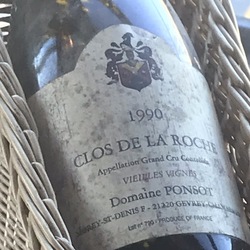
Tawny color. Not overly dark. Nice nose. Notes of black cherry, mocha, light tobacco and a hint of coffee. Very smooth and great mouth feel. Gave this 7 hours of air which was very much needed as this was closed and quiet at open. Everyone liked this. — 7 years ago
Chateau Suduirat
Premier Cru Sauternes Sémillon-Sauvignon Blanc Blend 1989
A little 89 Chateau Suduiraut to paIr with Hedy’s apple and toffee, toffee pudding, walnut, caramel dessert. The 89 was good but lacked the luster & beauty you get from this producers in their best vintages. Hedy’s dessert better. Still very nice. Marmalade, orange peel, honey, butterscotch, dried pineapple, toffee, nuts with skin, stone fruits, yellow & white flowers. The acidity was good & finish of course, was rich, elegant and long. @ Plate & Bottle. Photos of; Chateau Suduiraut outside & inside, Devil & Priest dinner couple guests and tasting bar at Suduiraut. Producer notes and history...Chateau Suduiraut’s history dates back to 1580 when Leonard de Suduiraut married Nicole d’Allard. The land that became Suduiraut was a dowry. Once their chateau was constructed, the property needed a garden and grounds of equal stature. The estate and vineyards were completely renovated at the end of the 17th century by the Count Blaise de Suduiraut. The Count, who was the grandson of the founder, hired the designer of the gardens at Versailles to create something truly special at Suduiraut. With its stunning park like grounds, lakes and greenery, there are few Bordeaux estates that are as beautiful as Chateau Suduiraut. Then in 1831, the property was passed to Nicolas Guillot who increased the size of the vast estate. As with many Bordeaux estates, Suduiraut passed through numerous hands for the next two centuries. During the 40’s, 50’s and 60’s, the property went through a difficult period. At that time, the wines were aged in vat, instead of oak. This practice did not help in the quality of the wine. The practice was fortunately discontinued. The wines had lost interest for many who enjoyed Sauternes during this period. This changed in 1992 when Suduiraut was sold to AXA, the large French insurance group who own several other Bordeaux wine properties. These estates include Chateau Pichon Baron in Pauillac and Chateau Petit Village in Pomerol. Suduiraut is located close to Chateau d’Yquem. Suduiraut’s full property is 200 hectares with 92 hectares under vine. Their terroir is mostly gravel, sand, limestone and clay soils that are on sloping hillsides. The best parcels are located close to the chateau. The vineyard of Chateau Suduiraut is planted to 90% Semillon and 10% Sauvignon Blanc. There is also a small amount of Sauvignon Gris planted as well. The average age of their vines are around 30 years. Chateau Suduiraut’s vinification takes place in French oak barrels. The wine is aged on its lees in 50% new, French oak barrels for 18-24 months, depending on the vintage. On rare occasions, Chateau Suduiraut has also produced a special wine from time to time called Cuvee Madame; which normally has much higher sugar levels. In 1982 and 1989, the property released a special wine made from their best vines, Suduiraut Creme de Tete. The property also makes a second wine called Castelnau de Suduiraut; which debuted in 1992. They also produce dry white Bordeaux wine, S de Suduiraut, that was first produced starting with the 2004 vintage. In 2015, they added a second dry white Bordeaux wine, meant to attract, younger consumers. It’s marketed as an entry level wine called Le Blanc Sec. They launched a third wine in 2011, again, designed to reach younger customers called Lions de Suduiraut, which is produced from almost 100% Semillon with a splash of Sauvignon Blanc. — 9 years ago

Château Pichon-Longueville Baron
Les Griffons de Pichon Baron Pauillac Red Bordeaux Blend 2020
Oak vanilla clove nutmeg black currant berry and cherry leather. Fruitiness M Sweetness M Acidity M Tannin M Gentle Smooth Silky Velvety. Bitterness M Body M Finish M+ % Elegant Balanced Concentrated Robust, ready to drink, aging potential Les Griffons de Pichon Baron Pauillac Red Blend Bordeaux 20 @1800, Eva, 260914-260926 — 2 months ago
Les Griffons de Pichon Baron
Pauillac Red Bordeaux Blend 2020
2020 vintage. An excellent introduction to the grand vin at a fraction of the price. Highly recommended. Abv. 14%. — 5 months ago
Château Pichon Longueville Comtesse de Lalande
Pauillac Red Bordeaux Blend 2000
With a 2 hour decant (needs 3) the 2000 Lalanden has noticeable Petit Verdot and pales in comparison to its sibling the Baron in this vintage. Still a very good wine! — 2 years ago
Spoto Wines
Family Reserve Cabernet Sauvignon 2018

Spoto Family wine dinner under the stars: always a fun night with Stuart and family!
DINNER WINES
2021 Spoto Oakville cabernet rose
2019 Spoto Godfather red....a blend you can't refuse.
2019 Spoto cuvee Christiane
2018 Spoto Beckstoffer amber Knolls malbec
2018 Spoto family reserve cabernet
2015 Spoto late harvest viognier
Also:
2004 Las Cases
2005 Pichon Baron
2009 Cos d'estournel
2012 La Mission Haut Brion
2005 Spottswood
1989 clerc milon
2005 Spoto private reserve
2001 clos du val
FOOD
Oysters, lamb lollipops, feta skewers
Tomato and nectarine panzanella
Ricotta, summer pea and corn agnolotti
Wood fired gulf prawns
Five spice grass-fed short rib, Yukon potato
Apricot and vanilla custard tartelette — 3 years ago


Château Lynch-Bages
Grand Cru Classé Pauillac Cabernet Sauvignon Blend 2000
The 2000 is delicious but, it is evolving at a glacial pace. Out of magnum.
On the nose, touch of barnyard, glycerin, ripe; blackberries, dark cherries, black raspberries, plum, strawberries & cherries. Vanilla, dry clay, limestone, river stones, just a touch of pyrazines & bandaid, dark,,turned, moist earth, dry grass and dry & fresh dark florals.
The body is full, round & sexy. Dry softened, sweet tannins. ripe; blackberries, dark cherries, black raspberries, plum, strawberries & cherries. Vanilla, dry clay, limestone, river stones, just a touch of pyrazines & bandaid, fresh tobacco leaf, saddle-wood, dry underbrush, dark, turned, moist earth, dry grass and dry & fresh dark florals. The acidity is magnificent. The structure, tension, length and balance are sensational. The finish is drop dead gorgeous. I’d still hold mine another 5 years as long as you have 3-4 bottles for more 5 year increments.
Photos of, their Estate vines, Clyde Beffa-Owner of K&L Wine Merchants, Owner of Chateau Lynch Bages - Jean-Michel Cazes, guests of the dinner and a sunset view from their Estate.
Producer notes and history...Lynch Bages takes its name from the local area where the Chateau is located in Bages. The vineyard of what was to become Lynch Bages was established and then expanded by the Dejean family who sold it in 1728 to Pierre Drouillard.
In 1749, Drouillard bequeathed the estate to his daughter Elizabeth, the wife of Thomas Lynch. This is how the estate came to belong to the Lynch family, where it remained for seventy-five years and received the name Lynch Bages. However, it was not always known under that name.
For a while the wines were sold under the name of Jurine Bages. In fact, when the estate was Classified in the 1855 Classification of the Medoc, the wines were selling under the name of Chateau Jurine Bages. That is because the property was owned at the time by a Swiss wine merchant, Sebastien Jurine.
In 1862, the property was sold to the Cayrou brothers who restored the estate’s name to Chateau Lynch family.
Around 1870, Lou Janou Cazes and his wife Angelique were living in Pauillac, close to Chateau Pichon Longueville Baron. It was here that Jean-Charles Cazes, the couple’s second son, was born in 1877.
In the 1930’s, Jean-Charles Cazes, who was already in charge of Les-Ormes-de-Pez in St. Estephe agreed to lease the vines of Lynch Bages. By that time, the Cazes family had history in Bordeaux dating back to the second half of the nineteenth century.
This agreement to take over Lynch Bages was good for both the owner and Jean Charles Cazes. Because, the vineyards had become dilapidated and were in need of expensive replanting, which was too expensive for the owner. However, for Cazes, this represented an opportunity, as he had the time, and the ability to manage Lynch Bages, but he lacked the funds to buy the vineyard.
Jean-Charles Cazes eventually purchased both properties on the eve of the Second World War. Lynch Bages and Les-Ormes-de-Pez have been run by the Cazes family ever since. In 1988, the Cazes family added to their holdings in Bordeaux when they purchased an estate in the Graves region, Chateau Villa Bel Air.
Around 1970, they increased their vineyards with the purchase of Haut-Bages Averous and Saussus. By the late 1990’s their holdings had expanded to nearly 100 hectares! Jean-Michel Cazes who had been employed as an engineer in Paris, joined the wine trade in 1973. In a short time, Jean Michel Cazes modernized everything at Lynch Bages.
He installed a new vat room, insulated the buildings, developing new technologies and equipment, built storage cellars, restored the loading areas and wine storehouses over the next fifteen years. During that time period, Jean Michel Cazes was the unofficial ambassador of not just the Left Bank, but all of Bordeaux. Jean Michel Cazes was one of the first Chateau owners to begin promoting their wine in China back in 1986.
Bages became the first wine sent into space, when a French astronaut carried a bottle of 1975 Lynch Bages with him on the joint American/French space flight!
Beginning in 1987, Jean-Michel Cazes joined the team at the insurance company AXA, who wanted to build an investment portfolio of quality vineyards in the Medoc, Pomerol, Sauternes, Portugal and Hungary.
Jean-Michel Cazes was named the director of the wine division and all the estates including of course, the neighboring, Second Growth, Chateau Pichon Baron.
June 1989 marked the inauguration of the new wine making facilities at Lynch Bages, which was on of their best vintages. 1989 also marked the debut of the Cordeillan- hotel and restaurant where Sofia and I had one of our best dinners ever. A few years after that, the Village de Bages with its shops was born.
The following year, in 1990, the estate began making white wine, Blanc de Lynch Bages. In 2001, the Cazes family company bought vineyards in the Rhone Valley in the Languedoc appellation, as well as in Australia and Portugal. They added to their holdings a few years later when they purchased a vineyard in Chateauneuf du Pape.
In 2006, Jean-Charles Cazes took over as the managing director of Chateau Lynch Bages. Jean-Michel Cazes continues to lead the wine and tourism division of the family’s activities. Due to their constant promotion in the Asian market, Chateau Lynch Bages remains one of the strongest brands in the Asian market, especially in China.
In 2017, Chateau Lynch Bages began a massive renovation and modernization, focusing on their wine making, and technical facilities. The project, headed by the noted architects Chien Chung Pei and Li Chung Pei, the sons of the famous architect that designed the glass pyramid for the Louvre in Paris as well as several other important buildings.
The project will be completed in 2019. This includes a new grape, reception center, gravity flow wine cellar and the vat rooms, which will house at least, 80 stainless steel vats in various sizes allowing for parcel by parcel vinification.
The new cellars will feature a glass roof, terraces with 360 degree views and completely modernized reception areas and offices. They are not seeing visitors until it’s completion.
In March, 2017, they purchased Chateau Haut Batailley from Françoise Des Brest Borie giving the Cazes family over 120 hectares of vines in Pauillac!
The 100 hectare vineyard of Lynch Bages is planted to 75% Cabernet Sauvignon, 17% Merlot, 6% Cabernet Franc and 2% Petit Verdot. The vineyard has a terroir of gravel, chalk and sand soils.
The vineyard can be divided into two main sections, with a large portion of the vines being planted close to the Chateau on the Bages plateau. At their peak, the vineyard reaches an elevation of 20 meters. The other section of the vineyard lies further north, with its key terroir placed on the Monferan plateau.
They also own vines in the far southwest of the appellation, next Chateau Pichon Lalande, on the St. Julien border, which can be used in the Grand Vin. The vineyard can be split into four main blocks, which can be further subdivided into 140 separate parcels.
The average age of the vines is about 30 years old. But they have old vines, some of which are close to 90 years old.
The vineyards are planted to a vine density of 9,000 vines per hectare. The average age of the vines is about 30 years old. But they have old vines, some of which are close to 90 years old.
Lynch Bages also six hectares of vine are reserved for the production of the white Bordeaux wine of Chateau Lynch Bages. Those vines are located to the west of the estate. They are planted to 53% Sauvignon Blanc, 32% Semillon and 15% Muscadelle. On average, those vines are about 20 years of age. Lynch Bages Blanc made its debut in 1990.
To produce the wine of Chateau Lynch Bages, vinification takes place 35 stainless steel vats that vary in size. Malolactic fermentation takes place in a combination of 30% French, oak barrels with the remainder taking place in tank.
The wine of Chateau Lynch Bages is aged in an average of 70% new, French oak barrels for between 12 and 15 months. Due to the appellation laws of Pauillac, the wine is sold as a generic AOC Bordeaux Blanc, because Pauillac does not allow for the plantings of white wine grapes.
For the vinification of their white, Bordeaux wine, Blanc de Lynch-Bages is vinified in a combination of 50% new, French oak barrels, 20% in one year old barrels and the remaining 30% is vinified in vats. The wine is aged on its lees for at least six months. The white wine is sold an AOC Bordeaux wine.
The annual production at Lynch Bages is close to 35,000 cases depending on the vintage.
The also make a 2nd wine, which was previously known as Chateau Chateau Haut Bages Averous. However, the estate changed its name to Echo de Lynch Bages beginning with the 2007 vintage. The estate recently added a third wine, Pauillac de Lynch-Bages.
— 8 years ago

Tom Garland
1/2 hour decant(decent sediment). A gorgeous still dark purplish magenta color. On the nose: seductive perfumed notes of dark fruit, smoked meat, funky earth, cigar box, pencil lead, vanilla oak. Taste: savory wine with dried dark fruit, graphite and gravel, iron, and a kinda astringent smokey tobacco finish. Not my cup of tea...maybe bottle flaw. — 25 days ago