What Lies Beneath
Château Mouton Rothschild
Pauillac Red Bordeaux Blend 2012



Château Lynch-Bages
Grand Cru Classé Pauillac Cabernet Sauvignon Blend 2000
The 2000 is delicious but, it is evolving at a glacial pace. Out of magnum.
On the nose, touch of barnyard, glycerin, ripe; blackberries, dark cherries, black raspberries, plum, strawberries & cherries. Vanilla, dry clay, limestone, river stones, just a touch of pyrazines & bandaid, dark,,turned, moist earth, dry grass and dry & fresh dark florals.
The body is full, round & sexy. Dry softened, sweet tannins. ripe; blackberries, dark cherries, black raspberries, plum, strawberries & cherries. Vanilla, dry clay, limestone, river stones, just a touch of pyrazines & bandaid, fresh tobacco leaf, saddle-wood, dry underbrush, dark, turned, moist earth, dry grass and dry & fresh dark florals. The acidity is magnificent. The structure, tension, length and balance are sensational. The finish is drop dead gorgeous. I’d still hold mine another 5 years as long as you have 3-4 bottles for more 5 year increments.
Photos of, their Estate vines, Clyde Beffa-Owner of K&L Wine Merchants, Owner of Chateau Lynch Bages - Jean-Michel Cazes, guests of the dinner and a sunset view from their Estate.
Producer notes and history...Lynch Bages takes its name from the local area where the Chateau is located in Bages. The vineyard of what was to become Lynch Bages was established and then expanded by the Dejean family who sold it in 1728 to Pierre Drouillard.
In 1749, Drouillard bequeathed the estate to his daughter Elizabeth, the wife of Thomas Lynch. This is how the estate came to belong to the Lynch family, where it remained for seventy-five years and received the name Lynch Bages. However, it was not always known under that name.
For a while the wines were sold under the name of Jurine Bages. In fact, when the estate was Classified in the 1855 Classification of the Medoc, the wines were selling under the name of Chateau Jurine Bages. That is because the property was owned at the time by a Swiss wine merchant, Sebastien Jurine.
In 1862, the property was sold to the Cayrou brothers who restored the estate’s name to Chateau Lynch family.
Around 1870, Lou Janou Cazes and his wife Angelique were living in Pauillac, close to Chateau Pichon Longueville Baron. It was here that Jean-Charles Cazes, the couple’s second son, was born in 1877.
In the 1930’s, Jean-Charles Cazes, who was already in charge of Les-Ormes-de-Pez in St. Estephe agreed to lease the vines of Lynch Bages. By that time, the Cazes family had history in Bordeaux dating back to the second half of the nineteenth century.
This agreement to take over Lynch Bages was good for both the owner and Jean Charles Cazes. Because, the vineyards had become dilapidated and were in need of expensive replanting, which was too expensive for the owner. However, for Cazes, this represented an opportunity, as he had the time, and the ability to manage Lynch Bages, but he lacked the funds to buy the vineyard.
Jean-Charles Cazes eventually purchased both properties on the eve of the Second World War. Lynch Bages and Les-Ormes-de-Pez have been run by the Cazes family ever since. In 1988, the Cazes family added to their holdings in Bordeaux when they purchased an estate in the Graves region, Chateau Villa Bel Air.
Around 1970, they increased their vineyards with the purchase of Haut-Bages Averous and Saussus. By the late 1990’s their holdings had expanded to nearly 100 hectares! Jean-Michel Cazes who had been employed as an engineer in Paris, joined the wine trade in 1973. In a short time, Jean Michel Cazes modernized everything at Lynch Bages.
He installed a new vat room, insulated the buildings, developing new technologies and equipment, built storage cellars, restored the loading areas and wine storehouses over the next fifteen years. During that time period, Jean Michel Cazes was the unofficial ambassador of not just the Left Bank, but all of Bordeaux. Jean Michel Cazes was one of the first Chateau owners to begin promoting their wine in China back in 1986.
Bages became the first wine sent into space, when a French astronaut carried a bottle of 1975 Lynch Bages with him on the joint American/French space flight!
Beginning in 1987, Jean-Michel Cazes joined the team at the insurance company AXA, who wanted to build an investment portfolio of quality vineyards in the Medoc, Pomerol, Sauternes, Portugal and Hungary.
Jean-Michel Cazes was named the director of the wine division and all the estates including of course, the neighboring, Second Growth, Chateau Pichon Baron.
June 1989 marked the inauguration of the new wine making facilities at Lynch Bages, which was on of their best vintages. 1989 also marked the debut of the Cordeillan- hotel and restaurant where Sofia and I had one of our best dinners ever. A few years after that, the Village de Bages with its shops was born.
The following year, in 1990, the estate began making white wine, Blanc de Lynch Bages. In 2001, the Cazes family company bought vineyards in the Rhone Valley in the Languedoc appellation, as well as in Australia and Portugal. They added to their holdings a few years later when they purchased a vineyard in Chateauneuf du Pape.
In 2006, Jean-Charles Cazes took over as the managing director of Chateau Lynch Bages. Jean-Michel Cazes continues to lead the wine and tourism division of the family’s activities. Due to their constant promotion in the Asian market, Chateau Lynch Bages remains one of the strongest brands in the Asian market, especially in China.
In 2017, Chateau Lynch Bages began a massive renovation and modernization, focusing on their wine making, and technical facilities. The project, headed by the noted architects Chien Chung Pei and Li Chung Pei, the sons of the famous architect that designed the glass pyramid for the Louvre in Paris as well as several other important buildings.
The project will be completed in 2019. This includes a new grape, reception center, gravity flow wine cellar and the vat rooms, which will house at least, 80 stainless steel vats in various sizes allowing for parcel by parcel vinification.
The new cellars will feature a glass roof, terraces with 360 degree views and completely modernized reception areas and offices. They are not seeing visitors until it’s completion.
In March, 2017, they purchased Chateau Haut Batailley from Françoise Des Brest Borie giving the Cazes family over 120 hectares of vines in Pauillac!
The 100 hectare vineyard of Lynch Bages is planted to 75% Cabernet Sauvignon, 17% Merlot, 6% Cabernet Franc and 2% Petit Verdot. The vineyard has a terroir of gravel, chalk and sand soils.
The vineyard can be divided into two main sections, with a large portion of the vines being planted close to the Chateau on the Bages plateau. At their peak, the vineyard reaches an elevation of 20 meters. The other section of the vineyard lies further north, with its key terroir placed on the Monferan plateau.
They also own vines in the far southwest of the appellation, next Chateau Pichon Lalande, on the St. Julien border, which can be used in the Grand Vin. The vineyard can be split into four main blocks, which can be further subdivided into 140 separate parcels.
The average age of the vines is about 30 years old. But they have old vines, some of which are close to 90 years old.
The vineyards are planted to a vine density of 9,000 vines per hectare. The average age of the vines is about 30 years old. But they have old vines, some of which are close to 90 years old.
Lynch Bages also six hectares of vine are reserved for the production of the white Bordeaux wine of Chateau Lynch Bages. Those vines are located to the west of the estate. They are planted to 53% Sauvignon Blanc, 32% Semillon and 15% Muscadelle. On average, those vines are about 20 years of age. Lynch Bages Blanc made its debut in 1990.
To produce the wine of Chateau Lynch Bages, vinification takes place 35 stainless steel vats that vary in size. Malolactic fermentation takes place in a combination of 30% French, oak barrels with the remainder taking place in tank.
The wine of Chateau Lynch Bages is aged in an average of 70% new, French oak barrels for between 12 and 15 months. Due to the appellation laws of Pauillac, the wine is sold as a generic AOC Bordeaux Blanc, because Pauillac does not allow for the plantings of white wine grapes.
For the vinification of their white, Bordeaux wine, Blanc de Lynch-Bages is vinified in a combination of 50% new, French oak barrels, 20% in one year old barrels and the remaining 30% is vinified in vats. The wine is aged on its lees for at least six months. The white wine is sold an AOC Bordeaux wine.
The annual production at Lynch Bages is close to 35,000 cases depending on the vintage.
The also make a 2nd wine, which was previously known as Chateau Chateau Haut Bages Averous. However, the estate changed its name to Echo de Lynch Bages beginning with the 2007 vintage. The estate recently added a third wine, Pauillac de Lynch-Bages.
— 8 years ago

Wild Ridge
Sonoma Coast Pinot Noir 2011

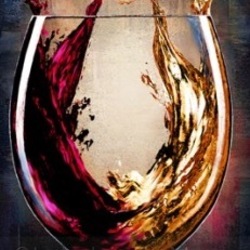
I didn't even know what exactly I had bought in this wine, but knew it looked like it was going to be a treat...and it was.
From my quick research I gathered that this is the inaugural vintage of this Jackson family's Pinot from their Annapolis vineyard: the furthest north a true Sonoma coast vineyard currently lies.
Charmingly boasting plenty dark fruit flavors, while smooth, soft culminating in a hefty 12 second finish. Definitely a treat! — 10 years ago
C.V.N.E. (Compañía Vinícola del Norte de España)
Imperial Reserva Rioja Tempranillo Blend 2010

The day the world realises what amazing value lies in Rioja will be a sad day for my wallet. What promises to be a classic vintage from one of THE classic Alta producers for $30? You don't get that anywhere else. Deliciously aromatic. Dried flowers and dried orange peel in a spice cupboard which is exactly where they belong. Surprisingly approachable for a young Reserva with such stuffing - fine tannins and great acidity in perfect balance with bitter cherry compote and dark chocolate on the finish. So good with the lasagne we paired it with. I ate so much bloody lasagne. I just didn't want it to end. This wine is ready to go right now but I will be buying a case and attempting to hold it until the ruby turns brick-orange and all the secondary complexities of this classic bottling come to fruition. Christ, I'm full! — 11 years ago
Roar
Santa Lucia Highlands Pinot Noir 2012
Slightly cloudy in the glass with some sediment. Very delicate and soft expression of an otherwise quite fruity wine. Complexity lies beneath its soft top layer. — 12 years ago
Alexandre D' Almeida
Palace Hotel-Bussaco Reservado Buçaco Branco 2008
The wine is lifting with complexity, spicy notes, citrus focus and elegant subtle oak notes bringing light vanilla 👏😗
Wines produced from the land and Palace estate of Portugal’s last King.
The whole process of making the wine from the beginning to the finished product is just as it was from the first vintage. The grapes are from private vineyards planted close to the hotel, and complete the final touches to what lies on your table are hand-blown bottles with an old-fashioned wax seal.
A cathedral transformed in a palace - — 12 years ago
Viuva José Gomes da Silva & Filhos
Collares Ramisco
2005. What an amazing discovery. Agree it's Sangiovese-like. This wine is still stern but shows a sweet leathery core and some delicious unidentifiable jammy smoked plum and some red fruits hiding beneath tannins. — 12 years ago
Leeuwin Estate
Prelude Vineyards Cabernet Sauvignon 2014
Dark ruby. Welcoming nose, provides curiosity for what lies under the cork. A blend of dark and red fruit, with notes of Chocolate throughout. — 8 years ago
Vols
Wiltinger Kupp Kabinett Riesling 2016

An austere, nervy Kabinett with good depth and persistence. Light pale hay. Smokey white flowers, burnt rubber, and Asian pear. What I imagine is a good dose of residual sugar hides beneath a blanket of integrated acid and flavors of sour pineapple, mango, and naval orange. Voluptuous. — 8 years ago
Antica Terra
Ceras Willamette Valley Pinot Noir 2013
It’s usually a good sign when the winemaker can articulate what the wine is about like this: “Ceras is Botanica’s counterpoint. Its color is more purple than red. It is more about minerals and herbs than fruit and flowers. It is a focused and elegant distillation of rock rather than an opulent cascade of fruit. It is an expression of the geology that lays beneath our land, the tart blue fruits of the coast range and the tender herbs that one finds amongst the trees and mushrooms of the Northwest forest.”
Her 2013 Ceras is yet another example of Maggie Harrison’s sorcery over the vines at Antica Terra. The focus and intensity of flavor is off the charts, yet it maintains an almost ethereal weightlessness, only emphasizing the layer of silk that separates you from the wine. The pungent rock is so on point and distinctive it instantly reminded me of the scent of lichen growing on rocks, which I experienced in Colorado when I was 7 or 8 years old. This sets the stage for the level of complexity exhibited. The fruit has both an extraordinarily high level of purity and yet the woven tapestry of herbs and spices and even fruit blending are impossible not to notice. The key being that nothing is forced.
The nuance of complexity only being noticed when desired is nearly an impossible feat. I can’t help but recall James Conaway quoting Andy Beckstoffer in his recently released book: Napa at Last Light: America’s Eden in an Age of Calamity. “If a wine was a model with a chipped tooth, you’d have to give her something to compensate with. If she needs better shoulders, better breasts, give her some. But her real charm is in how she carries the defect.”
After reading his book, I can tell you I’m definitely not certain whether you can accept his quotes verbatim. One thing is certain, though, Maggie Harrison’s Antica Terra wines carry the defect like no other. — 8 years ago

Feudo Montoni
Masso Catarratto

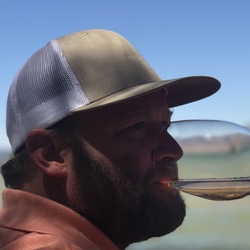
Subtle white and yellow bouquet, touch of mint and bay leaf, Mayer lemon and tangerine peel and apricot. Mineral with round mouthfeel. Med plus acidity. What a lovely white. Rocky, sandy soil, iron rich. 55 yr old vine. Sur lies with botonnage in cement containers for 6 month.
Had porcini and truffle risotto with the wine. Heaven! — 8 years ago
Pierre Gonon
Saint-Joseph Syrah 2015

Felt lucky to find this youthful and robust bottle. Extremely tight and backwards but revealing of what grace lies ahead. Some castelvetrano olives, Comte and rustic baguette helped tease out the beauty from this beast. — 9 years ago
Olivier Rivière
Ganko Viñedos de Cardenas Rioja Tempranillo Blend

Still youthful and unleashed, yet there's no denying on what qualities lies within. Layered and intense with a mix of red and blue berries and a responsible freshness shining through, a small portion of undergrowth is taking the wine even deeper, and the longer you wait the more defined the nose gets. If you're not convinced already the taste definetley will, with its structure, fine tannins, intense mid palate and balanced and long finish.
Day 2 and the wine is singing! A new favorite!
— 9 years ago
Saxum Vineyards
James Berry Vineyard Rocket Block Grenache Syrah 2014

What else are you going to drink beneath a meteor shower. Perfect dark and thoughtful powerhouse to contemplate the galaxy. I saw stars. — 9 years ago
Fontanafredda
Vigna la Delizia Lazzarito Barolo Nebbiolo 1998

Here's a free lesson for you - the three fundamental things you look for in a vintage Barolo are curry powder, gun powder, and baby powder. This '98 vintage is a testament to why more producers should go back to the fundamentals. What makes this wine particularly unique is the producers ability to include MDMA without altering the mouthfeel. Excellent to pair with an overly cooked Trump steak showered in ketchup and lies. — 9 years ago

Bodegas Godelia
Bierzo Mencia

Nice organic earth lies beneath black and red fruit. The alcohol is restrained on the palate, despite being high on the label. Well balanced and enjoyable for the money. — 11 years ago
Rhys Vineyards
Swan Terrace Santa Cruz Mountains Pinot Noir 2010
One of my more recent realizations on Rhys is that when they shut down, they shut down hard, so I'm trying to enjoy some more of my stash in the early window of opportunity. This one is definitely still there, so rich at first that it's practically saucy though without any candied flavors. Rhys always benefits from a long decant but this one was so primary it needed even more time than most to show its underlying contours and reveal some of the rocks beneath the fruit. What I love about the house style is here even though this flirts with being too much of a good thing - for all that dense, saturating, luscious fruit, there is still a whole lot of energy and vibrancy here too. — 11 years ago
Château du Cayrou
Cahors Malbec Merlot 1990

A LOT more austere than I expected, tastes almost young. Nose took time to develop, even with lots of air. I'm a little suspicious about how this bottle was stored. There's almost zero penetration of the cork suggesting lots of upright storage? The ulage was normal-seeming, just a small visible gap beneath the foil. What nose there is has hints of mint, cedar and something candied, like dates. On the palate, surprisingly moderate intensity (12.5% pre-fruit-bomb era), tannic structure still very evident at 24 years, but considerably softened down to fine grain. Plummy, black cherry flavored, with that confected undercurrent. Finishes long and tannic. Cut through very rich lamb shank stewed in red wine, caramelized onions, shallots, and rosemary. Still developing with dark chocolate dessert. — 12 years ago
Joseph Phelps Vineyards
Insignia Estate Grown Napa Valley Cabernet Sauvignon Blend 2006

Great surprise, this 95 CS 5 PV blend has really expressed with VC and vintage quality well. Spiced, nuanced, and loaded with herbal and earthy notes beneath the sheen of rich Napa fruit. Love the tannin structure this has, almost yielding a more Bordeaux-like texture to the wine. ‘06 always has a savory side that I admire, so it was fun to taste what I would normally describe as a “stylized and polished wine” that really brought forth that element. — 8 years ago
Ankida Ridge
Pinot Noir 2015

This is my first review of the 2015 vintage it was released in the spring of this past year (2018). This vintage has personality disorder syndrome. It doesn’t endeavored to taste distinctly like Pinot Noir, however it is a tasty wine. In its current youthfulness, it has angles in aspects that remind us of previous vintage is, but it has a happy accountants that is worth selling for years to see if it morphed into something more varietally correct. There is a touch of a cherry soda component that seems to be the hallmark of this warm vintage. What I am missing is that exceedingly crisp tannin and tartness. Vintages 12 and 14 had that elegant orange rind/floral rose dance going on...there in lies the dichotomy. — 8 years ago
Tenuta dell'Ornellaia
Bolgheri Red Bordeaux Blend 2012
Opened 4-5 hours. The nose and palate were so dominated by oak that it was difficult for me to get past, YMMV.
Very polished and high quality fruit that is buried beneath the surface , will it integrate with the oak at some point and reach its full potential? I am not totally convinced to what degree it will. — 8 years ago


Mount Veeder Winery
Napa Valley Cabernet Sauvignon 2013

Fresh copious amounts of eucalyptus inhaled, as my nose is encapsulated by my glass.
First sip is elusive. Cannot quote pick which dark fruit/ deep memory I can impart in this review, so I return quickly for another.
Eucalyptus cigars, blackberry seed, tamarind, cedar, cedar, pine box and cedar!
Lingering, is the sadness of winter, in the darkness of this wine, and the acidity that is tempered by that damn lovely cedar.
A touch of heat, yet one has to get burnt every now and then, to see what lies beyond, eh?
— 8 years ago
What Lies Beneath
What Lies Beneath Marlborough Sauvignon Blanc

Bowen Home - Full of fruits and floral tones. — 9 years ago
Marc Hébrart
Prestige Brut 1er Cru Champagne Blend

A great example of what a sur-lies wine should taste like. At first very mineral on nose and palate with grapefruit peel and yogurt notes; green apple and apricot seed. Then pineapple notes started to emerge always with a strong lies aroma. Elegant blanc de blancs. — 9 years ago
Hirsch Vineyards
East Ridge Pinot Noir 2014
Elegance to the absolute extreme! Perhaps a bit youthful and unleashed, yet so sexy and ever so convincing. A potpourri of fresh and perfectly ripe, almost electrical fruit, with a teasing glimpse (soubois) on what is lying beneath on the nose. A mesmerizing flavor intensity that is coming in waves, and the length… well it is still liingering. Beautiful! — 9 years ago
Domaine Pierre Gelin
Fixin Pinot Noir

What a beautiful thing. The rose-petal & velvety color hints at the depth that rests beneath it. Fine tannins gently underline a lush and chewy mid-palate composed of truly bright & slightly smokey notes that rhyme with a joyful and juicy mouthfeel. #BurgundianDelight — 10 years ago
Il Marroneto
Brunello di Montalcino Sangiovese 2001
Laser-like blue fruit. Like blueberry sherbet in intensity, but bottomless. Surrounded by smoke and brick. Just a little bit of something confected, like the baked blueberries on the edge of a cobbler. Outstanding with butter sautéed rib-eye. The depth really feels like a trap door has been pulled beneath you. This is what it's supposed to taste like! — 11 years ago
Biltmore Estate
Sur Lies Chardonnay 2012
Lots of Apple and pear. Exact opposite of a French Chardonnay which was what I wanted — 12 years ago
Association of Burgundy Estates
Jean Saìnt Honoré Beaujolais Nouveau Gamay 2014

I ain't proud. Yeah it is roughly that time of year again. A time of dread (why I don't know; after all it is only Gamay, unlikely to hurt you). This one is good, though. Showing a richness and depth unlikely in the typical corporate offering. Plum jam, and blueberry jelly, even a little strawberry, and toasted marshmallow nose. The palate is grapey with a tangerine note beneath; raspberry soda pervades. That signature Brouilly or Morgon powdered grape persistence. For what it is: a winner! What it tells us about Pinot, I have no f---ing idea! — 12 years ago
Gemello
Saratoga Ranch Cabernet Sauvignon 1968
One from the archives. Lucky to have been graced with the presence of this great wine. 1968 vintage. The vineyard now lies beneath a multi million dollar housing estate. — 14 years ago

Gregory Fulchiero
Sneak peek of what lies ahead for this sleeping giant. Tightly wound pencil lead blue and blackberry essence and earth — 7 years ago