Grazing Cattle
Seavey Vineyard
Estate Grown Cabernet Sauvignon 2013

Maison Champy (Domaine Champy)
Corton Grand Cru Pinot Noir 2009

A peppery, meaty mist settles on rosemary and cedar nettle,dried red cherry, until the whole resembles a salami of substance. There is a slight mustard dust as well as a dry, cattle patch with leather and dried cranberry. Medium mouthfeel with exquisite complexity, a pointed violet wrapped in sage and exploding with dried raspberry and underripe strawberries. There are solid citrus suggestions, allspice, white pepper, chalky and charcoal combo, black olive and cinnamon-dusted cardamom. #corton #bourgogne #champy #burgundystudy #burgundypairswithphish #pinotnoir #organicwine #frenchwine #hurricanewine #ohmygod #irma #sofla #theresnoeyeinpinot #luxe #happybirthday #happybirthdaycokocash — 9 years ago
Failla
Hudson Vineyard Syrah 2012


Damn, sunshine and Syrah in good hands makes a great wine. Bold but balanced, this is well made Syrah that if I had the patience could go another 5-10 years easy. Great nose, violets, leather, dusky rose and a hint of earth. Palate is a really lovely match of acid and tannin. Slight sweetness gives way to a lingering deep berry fruit and a sense of measured power. Held up well against my smoked Highland Cattle brisket in Pendleton Whiskey BBQ sauce. Didn't over power was a pretty spot on match. — 9 years ago
Domaine du Pegau
Château Pégau Cuvée Setier Côtes du Rhône Villages Red Rhone Blend 2013

60% Grenache, 20% Syrah, 20% Mourvedre
Eggplant purple. Looks fresh and young.
Complex aromas showing earthiness, manure, a bit of cattle ranch, medicinal, with some flowery/lavender/violet undertone.
Med plus dusty tannin, medium plus acid. Expressing more fruits on the palate than its bouquet. Cassis, dark cherry, blackberry. Mineral and gravelly soil tone.
This is almost ready now. Drink within 5 years. 89. — 9 years ago
Domaine Henri Milan
Le Vallon Vin de Table Grenache Noir Blend

Выпито 20.08.2016 в пабе Grazing goats по случаю бракосочетаниях Анны и Паоло. В такой день любое вино покажется великим. Это было достойным!
— 10 years ago

Veuve Clicquot Ponsardin
La Grande Dame Brut Rosé Champagne Blend 2004

Terrific. A bit edgy. Perhaps the "biggest" of the 25 at our BYO tasting and grazing. — 11 years ago


Ruinart
Brut Rosé Champagne
Light orange. 9gm/ltr dosage, but sharply focused. Spicy and smoky. At home, BYO tasting and grazing. — 11 years ago
Hawk and Horse Vineyards
Red Hills Lake County Petite Sirah 2011
Planted in 2001 2200 feet enervation and Heidi Peterson Barrett said plant ps a very fresh style only 1 acre 4yh leaf 42 cases 2004 was first harvest 42 cases won international gold medals and the rest is history. Ick was a mentor the dot sell any fruit today. Mitch Hawkins is winemaker and has tied to sf. Wine club free shipments 3 times a year. 90 cases if magnums everything total is 2200 cases. Highland cattle on the property amino acids on these cattle are similar to Kobe beef. — 11 years ago
Stéphane Cossais
Le Volagré Montlouis-sur-Loire Chenin Blanc 2007
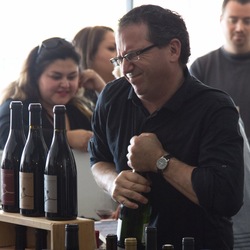
Well, this just keeps getting better, which is a shame because there will never be any more. Astonishing acidity that comes without sacrificing weight or extraction. Wooly/cirtus/honey/laserbeam. A cattle prod to my Chenin pleasure center. — 8 years ago
Château d`issan
Margaux Red Bordeaux Blend 1985
Celebrating two newly mint doctors in the family!
Bricked garnet. Transparent, clear. Medium width rim.
Bouquet of espresso, cassis, blackberry, potpurri, dry rose petal.
Structurally resolved. Smooth, agreeable traces of tannin. Med plus acidity. Medium bodied. Dry. Complex notes of cassis, blackberry, dark cherry, cattle range, newly ploughed paddy field, mineral high tone, light touched, floral perfume. Delicate but very much present.
Superb old school Margaux. No heaviness, no excess. A birth year wine that delivers. 93. — 9 years ago
Domaine des Roches Neuves (Thierry Germain)
La Marginale Saumur-Champigny Cabernet Franc 2009
100% Cabernet Franc
Deep, ruby, garnet-tinted purple. Opaque and youthful.
Superb bouquet, unmistakably Loire cab franc. Raspberry, wild strawberry, slightly herbaceous with distinct barnyard funk of cattle range, sheep meadow, and grazing field.
Smooth integration of tannin but still very much present. Med plus acidity, dry. Domineering red fruits with some compote like profile, leafy, minty with some sage and thyme.
Another birthday bottle. A surprise package. Very much smack right in the prime drinking window. Only short decanting necessary. I am also quite convinced that this is still on its upward trajectory. 91+ — 9 years ago
Château Beychevelle
Saint-Julien Red Bordeaux Blend 2011
Tasted at Chateau
CS 47% M 47% CF 4% PV 2%
Deep almost inky with slight sign of development on the rim, some bricking but still youthful.
Classic Bordeaux bouquet of savory infused black fruit. Complex nose of enticing barnyard funk, seabreeze, new leather, cooking spice.
On the palate, still very structured. Mouth stainingly full tannin, med body, dry. Cassis, blackberry, dark cherry commingling with mature signs of development. Sage, thyme, cattle range, forest floor, mushroom, smoky, and nutty new oak.
Impressively classic. Will need at least 10 years more to not be accused of committing infanticide. 90++ — 9 years ago
Château Clos L'Eglise
Pomerol Merlot - Cabernet Franc Blend 2005
3000th post. 🎉 On the nose; sweet, lush; black cassis, liqueur notes, sweet tarry notes, rich, lush; blackberries, dark cherries, black plum, plum, caramel, mocha, caramel, baking spices, warm, moist, rich, dark soils and fresh dark florals. The body is M and the tannins are round and soft. She is a beauty. Ripe, rich; blackberries, black plum, plum, dark cherries, black raspberries & poached strawberries. liqueur notes, sweet tarry notes, dark chocolate, mocha, caramel, baking spices, menthol, warm, moist dark earth, soft leather, dry rock powder, sweet black tea, fresh violets, dark, red florals, perfect round acidity and a rich, round, elegant fruit driven finish that last and lasts. Photos of; Clos E'Lgise and estate vines, signage, Helen Garcin-Leveque and her husband Patrice Leveque and their barrel cellar. Producer history and notes...Clos L’Eglise is one of the older chateaux in Pomerol dating back to the 18th century. The same time the farmhouse that is still in use was constructed. At the time, Chateau Clos L’Eglise was a larger estate. It once had been apart of the Gombaude Guillot. Eventually the estate was split in half. On one side of the street, you had Chateau Clos l’Eglise; which was owned by the Rouchut family. Across the street sat Chateau Clos l’Eglise-Clinet, which was owned by the Mauleon family. After awhile, Clos l’Eglise Clinet eventually changed its name to Chateau l’Eglise Clinet which also simultaneously gave birth to what we know today as Clos L’Eglise. While the wines are now produced by Helene Garcin that was not always the case with Clos L’Eglise. At one point, the estate produced wines under a leasing arrangement held by the Rouchut family. The modern era of Clos L’Eglise began in 1975, when the property facilities were all redesigned and modernized by the Moreau family. The Moreau’s also owned Chateau Plince. The old, non temperature controlled wood tanks were replaced by stainless steel. The vineyards were also expanded. Instead of buying more vines, the owners simply planted land that was being used as a pasture. Imagine now, Pomerol land being used to feed cattle. In the past, the property was planted with a much larger percentage of Cabernet Sauvignon, near 20%. All the Cabernet Sauvignon vines were eventually ripped out and replaced by Merlot. The next step of it's evolution took place in 1997 when the Right Bank estate was sold to Sylvaine Garcin Cathiard by the Moreau family. If the Cathiard name sounds family, she is the sister of Daniel Cathiard, the owner of Chateau Smith Haut Lafitte. The sale set a new benchmark price for Pomerol when it sold for 12 million Euros! Today that price would be laughable! Prior to 2000, that was considered a huge price for Pomerol. Further investment was needed to replace the aging concrete vats and again modernize the facilities. In fact, the first vintage of Clos L’Eglise made by Helene Garcin was produced at Haut Bergey in Pessac Leognan. Helene Garcin also manages two estates in St. Emilion, Chateau Barde Haut, Chateau Poesia (Mendoza, Argentina) and Branon, which is situated in Pessac Leognan. Helene Garcin was put in charge of the property. She hired Michel Rolland as a consultant and a complete renovation of the facilities took place. Michel Rolland was eventually replaced by Alain Raynaud. Starting with the 2015 vintage, Thomas Duclos recently replaced Alain as the consultant. Their property is nearly 6 hectares. L’Eglise soils are rich clay, gravel and iron. It's located on a sloping hill near Chateau Clinet, Chateau L’Eglise Clinet and Chateau Trotanoy. Clos L’Eglise is planted to 80% Merlot and 20% Cabernet Franc. On average, the vines are 35 years of age. There is one old parcel of Cabernet Franc that was planted in the 1940’s. Vinification of Clos L’Eglise takes place in 55 hectoliter, insulated, stainless steel tanks. The new steel tanks replaced the oak vats in 2012. Malolactic fermentation takes place in barrel. Clos L’Eglise is aged in 100% new French oak for between 16 and 18 months. The property also has a second wine, Esprit de L’Eglise. On average, about 1,200 cases of Clos L’Eglise are produced every year. — 9 years ago

Pascal Doquet
Horizon Blanc de Blancs Grand Cru Champagne Chardonnay 2004
Another strong contender for WOTN of the 25 at our BYO tasting and grazing. — 11 years ago
Moët & Chandon
Grand Vintage Brut Champagne Blend 2006
Round and toasty yet focused. One of 25 at our BYO tasting and grazing. — 11 years ago
Domaine Sergent
Madiran Cuvée Elevé en Futs de Chêne Tannat 2011

Great Madiran with some Duck and raw meat( charolais cattle) — 11 years ago
Emilio Hidalgo
Fino Seco Jerez-Xérès-Sherry Palomino Fino
Very nice Fino with a deeper body and complexity than many have. Nice balance of flavor and acidity. A nice way to start the evenings grazing. — 11 years ago

Dominio do Bibei
Lacima Ribeira Sacra Red Blend 2012

This wine is from NW Spain, just E of Rias Baixas, made predominantly of hand-picked mencia grapes of >50-year-old vines. The color is light purple with a brick tinge; nose is full and round with dark berries, a flinty salinity, mediterranean spices, and a hint of cabernet-like pyrazines; taste is also round with mild small tannins and medium alc. and acidity, dark fruits, no hint of new oak, and a pleasant elegant finish. Paired with spanish hams, dried pata negra filé, and French Beaufort ”gruyere-comté”-type cheese from the milk of high-altitude grazing cows. Yum! — 9 years ago
K Vintners
The Hidden Northridge Vineyard Syrah 2014

Regusci
Estate Grown Block 3 Cabernet Sauvignon 2009
Fresh, ripe nose of; huckleberries, boysenberries, dark cherries, black raspberries, raspberries, black plum, plum, mocha/milk chocolate, caramel, baking spices, sweet rich clay soils, very light presence of herbs and fresh red flowers with violets. The body is full, rich and nicely resolved with round M+ tannins. The fruits are big and ripe; huckleberries, boysenberries, dark cherries, black raspberries, raspberries, black plum, plum with strawberries dancing in the background. Caramel, mocha/milk chocolate, chocolate pudding, vanilla, cinnamon, nutmeg, hints of clove, sweet rich clay soils, darker spices, crumbled volcanic minerals, touch of dry herbs, suede/velvety leather, mouthwatering, fresh round acidity and a long, rich, elegant, smooth as silk, balanced finish that lasts over a minute. Photos of; the the tasting room/bar, the fresh vegetable honor stand in front of the winery, picnic area and the view onto the valley floor from their terrace. Producer notes and history...born near the Italian-Swiss border, Gaetano Regusci journeyed to the Napa Valley in 1891 working at a dairy along today's Silverado Trail. In 1932, Gaetano cashed in his entire life insurance policy and purchased a foreclosed property across the road, known today as Regusci Ranch. For the next 30 years, Gaetano lived off the land, farming; corn, hay, walnuts, plums and grapes. He ranched cattle, ran a dairy and opened a retail market. They survived prohibition and the great depression. Gaetano held onto the Ranch, passing along the historic Stags Leap District property to his son Angelo in the 1960s. Regusci long before making wine were excellent farmers...a nice resume for growing grapes. Through five generations, they were commited to agriculture. Gaetano Regusci purchased a 289-acre estate in the Stags Leap District; which included one of the preeminent wineries of its time, the Grigsby-Occidental Winery established in 1878. At that time, the wine industry was not what it is today. Aside, from growing and making homemade wine and selling grapes. When Gaetano's son Angelo took over the family Ranch in the 1960s, he began planting Bordeaux varieties on the estate. His decision would prove to be visionary within a few decades. As the wine industry flourished so did their vineyards. They planted a 160 acres of grapes that reside on the estate today. Angelo's (Angelo's Vineyard, is perhaps their best bottling) son Jim became a farmer as well, taking over Ranch duties in the 1990's. Having farmed for many of Napa Valley's most notable vineyards, Jim decided to establish Regusci in 1996. Their first crush amounted to 1,900 cases. Today, they produce 6,500 total cases spilt under several different wines designations. It's a fun place to visit and taste. Behind the tasting bar, they have a two foot piece of the cable that was used to make the Golden Gate Bridge. Ask them to see it. However, it's as heavy as a large dumbbell. When you make an appointment, see about reserving one of their picnic tables after the tasting. If you get a table purchase your lunch before you get to the winery as they do not sell prepared food. However, during the growing season, they have a honor system cart for the fruits and vegetables they still grow as shown in the photos. It's a must stop along the Silverado Trail...a beautiful setting with amazing vistas. — 9 years ago

Joseph Phelps Vineyards
Freestone Vineyards Chardonnay 2013
A family-owned winery founded in 1973 when Joe Phelps purchased a former cattle ranch near St. Helena in the Napa Valley, the winery now farms about 375 acres of vines on 8 estate vineyards. Beautiful aromas of ripe stone fruits, citrus and honey. On the palate crisp ripe apple and pear flavors with lemon zest nicely balanced acidity. Lingering finish ending with creamy oak. — 9 years ago
Agricola Querciabella
Camartina Toscana Super Tuscan Blend 2011
Stunner from our Querciabella visit. Could have waited but too good with Italian rare cattle on the bbq — 9 years ago
Pierrick Harang Wine
Le Petit Balthazar Pays d'Oc Viognier Sauvignon Blanc 2015

This wine is me, sitting alone and unobtrusively in the middle of a savanna on a breezy day, surrounded by grazing bison. Grassy, sunny, slightly salty, and delicious. For an introverted nature lover, best feeling ever. Got this at Wine Sense. — 10 years ago
Domäne Wachau
Terrassen Federspiel Grüner Veltliner 2012
I love the prickly acidity and round mouthfeel of this wine. I don't get much of a fruit character other than maybe some lime peel but very restrained to me. White pepper notes, really almost like dried alfalfa and grass. Reminiscent of a working cattle farm from youth. — 11 years ago
Philipponnat
Clos des Goisses Brut Champagne Blend 2000
One of the faves of 25 at our BYO tasting and grazing. — 11 years ago
Château de Beaucastel
Coudoulet de Beaucastel Blanc Côtes du Rhône White Rhône Blend 1995
Hazy blood orange in color smells of preserved plum dried flowers and cattle feed lean on the palate with a firmness on the back end and a medium finish a great wine to have with cassoulet not bad for a 1995 — 11 years ago
Foss Marai
Extra Dry Valdobbiadene Prosecco

Super bubbly, very light but not as effervescent as others I've drank. Serviceable for grazing with light creamy cheeses — 12 years ago

Domaine Faiveley (Joseph Faiveley)
Les Cazetiers Gevrey-Chambertin 1er Cru Pinot Noir 2007

Delicious :) sooo earthy and rustic. As if a heard of cattle walking in front of you. A beauty . 2007. — 13 years ago
Somm David T
Independent Sommelier/Wine Educator
The nose reveals; dark currants, blackberries, heavy black plum, black raspberries, dark cherries and some blueberries. Black tea, expresso roast, anise, crushed dry rocks, big vanilla, clove, a little nutmeg, dry underbrush, sweet tarry notes, leather, woody notes with dark fresh & withering flower bouquet.
The body is big and lush. The tannins are big, meaty and tarry. Very dark currants. Blackberries, heavy black plum, black raspberries, dark cherries and some blueberries & strawberries as they open up. Black tea, expresso roast, steeped fruit tea, anise, crushed dry rocks, dry clay, big graphite, big vanilla, dark spice, clove, light dry herbs, a little nutmeg, dry underbrush, sweet tarry notes, leather, cedar with violets dark fresh & withering flower bouquet. The acidity is round, fresh and beautiful. The big, long, well balanced finish is excellent and look forward to having this in 15-20 years. This one will be a stunner!
Photos of, the barn where they make wine and hosts tastings, our private tasting area inside William’s old office. William desk and their outside terrace area.
Producer history & notes...Seavey Vineyard is located along Conn Valley Road in the eastern hills of Napa Valley, about 15 minutes from the valley floor.
This historical property was originally a cattle ranch. However, records indicate grapes were planted on some of the hillsides as early as the 1870’s. The stone dairy barn, still in existence, was built in 1881.
William & Mary Seavey purchased this property in 1979. The estate was originally founded by the Franco-Swiss Farming Company in 1881 which, closed down when Phylloxera destroyed their grape vines and the Volstead Act (Prohibition) went into effect. At the time of their purchase, they were a horse and cattle ranch. They quickly planted the slopes with grapes and initially sold their fruit to Raymond Vineyards. They have never purchased grapes, all their wine is made from estate grapes. Their vineyards are separated into 20 plus individual blocks.
Today, the property is about 200 total acres of which, 40 acres are planted to vine. Their hillside vineyards produce low yields of rich concentrated fruit. A small block of Chardonnay grows in a cooler lower part of their property. Besides grapes, they also raise cattle which are used to graze the hillsides. They feed the vineyard with the cattle cuttings. In 2003, they were one of the first Napa wineries to install solar.
Mary passed away in 2008 and William died in 2016. There daughter Dorie returned to the family business and now oversees the winery operations. Her brother Arthur also handles national and some small international sales, primarily to restaurants. However, most of their wine is sold direct to consumers.
Seavey’s first commercial vintage was released in 1990 a year after they renovated the stone dairy barn into a working winery. Today this stone building is the centerpiece of the property and is where tastings are hosted.
Since 2011, Jim Duane has been their day to day Winemaker. He’s worked at Robert Mondavi and Stag’s Leap Wine Cellars. It should also be noted that Philippe Melka Winemaker/Consultant has been with Seavey since 1995...one of Philippe’s two initial wine making jobs in the Napa Valley were with Seavey and Lail Vineyards.
Seavy makes about 3,200 cases annually depending on what mother nature brings. They make around two hundred cases of Chardonnay, slightly more Merlot and the rest is of the production is comprised of their Caravina and Estate Cabernets.
— 8 years ago