Departed Soles Brewing
Louis Jadot
Domaine Gagey Le Clou D'Orge Ladoix Chardonnay 2015


A one year departed check in since our last bottle.
Nose has buttered pineapple, ripe mango, toasted bread, ripe plantain and white flowers.
Palate has buttery ripe peach, over-ripe pineapple and a touch of flinty minerality. Medium acidity. Overall lacking some concentration that will come together with longer aging.
This wine should be ready for 93-95 points in 2021-23, all the pieces are there, just youthful today.
Decanted ~3 hours. — 7 years ago
Southold Farm + Cellar
Love Habit Cabernet Franc 2015


Château Pichon Longueville Comtesse de Lalande
Pauillac Red Bordeaux Blend 1982
Explosive and exotic black fruit aromas and flavors, so balanced, with great length and complexity, a near perfect wine, dedicated to my dearly departed friend, George Malyj, who I wish I could have shared this with!! — 9 years ago
Argyle
Grower Series Willamette Valley Pinot Noir 2015
Since 1987, winemaker Rollin Soles and viticulturist Allen Holstein have teamed up to produce wines from low-yielding vines, receiving11 Wine Spectator Top 100 designations. Aromas of berry fruit and herb citrus notes. On the palate cherry and blackberry with orange citrus, spice and toasty oak notes. Fine earthy tannins, lingering ending with earthy mineral notes. — 9 years ago
Long Shadows Vintners
Sequel Columbia Valley Syrah 2014
This Syrah is made in conjunction with Consultant, John Duval of Penfolds fame. John has also been making his Duval private label wines since he departed Penfolds back in Barossa. Gorgeous nose of sweet dark currants, dark moist soils, licorice, smoke, grilled meats, violets and fresh florals. The palate is rich, round, thick, sexy and elegant. Blackberries, liqueured, dark cherries, cherries, strawberries, lots blue fruits, smoke, grilled meats, cinnamon, vanilla, rich scorched earth, loamy soils, touch of crushed dry rocks, liquid violets, dark fresh flowers and full, mellow acidity. The structure, length, tension and balance are drop dead gorgeous. The finish is thick, full and flat out mouthwatering and jaw dropping gorgeously sexy. Photos of the Long Shadows logo, one of their vineyards and beautiful tasting room. — 9 years ago


Château d'Yquem
Sauternes Sémillon-Sauvignon Blanc Blend 1990
So damn good. 26 years old and vibrant AF. A tremendous end to an evening honoring our departed friend @Alec White who was as classy, intuitive and prescient a man as you'll ever find. He will be missed but never forgotten. — 10 years ago

Lioco
La Marisma Vineyard Chardonnay 2013

On taking this wine for a second spin I'm convince she has diamonds on the soles of her shoes and she's tappin out puttin on the Ritz! Anyone who doubts American chard should get the chance to smell this wine followed by an immediate slap in the face from Homie the Clown's sock — 11 years ago
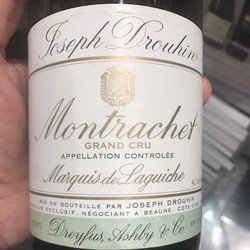
Nicolas Potel
Clos de Vougeot Grand Cru Pinot Noir 2005

2005. Great wine from a departed ( and missed) chateau . — 11 years ago
Red Soles Winery
Zinfandel Blend 2011

Nice bold Zin — 13 years ago
Cu4tro Soles
Vino Tinto Afrutado Red Blend
Love it ! — 7 years ago
Roco Winery
Chardonnay Gravel Road 2016
Rollin Soles new project. Chalky minerality with nice citrus rind. Old world stylistically. Interesting and delicious. — 8 years ago
Sami-Odi
Mahe & Ribo Syrah 2015

2015 Sami-Odi Mahe & Ribo Syrah. I’ll sum it up in one sentence. This wine rivals the SQN Piranha Waterdance I tasted last night. I believe that the Fraser McKinley train has officially departed from the station. My condolences to all left standing on the platform. Very much looking forward to the new release! @Fraser McKinley — 9 years ago

Chapel Down
English Rosé Blend 2016

Approached with scepticism, departed with a smile. Remarkably good rosé, lovely sweet bouquet & nicely balanced acidity. Just what you want from a rosé. Highly recommended. — 9 years ago
Black Dog Hill Vineyard
Classic Cuvee Sparkling Blend 2013

👻 A spooky fizz where for more than 1k yrs the locals have spoken of a ghostly black dog that roams, bearing the souls of the departed to their resting place in the next world!
I loved the 1st release 2011 @ 92-94
This 2013 @ £29 is a good 91-93
🍷 Ghostly howling moon straw
👃 Eerie biting green apple & pear, minerals & citrus w/ dog shortbread biscuit
👄 Crisp refreshing balanced med tart sour sweet green fruits w/ biscuity citrus - 🐶 soft foaming mouth
🎯 Long creamy tart green fruit howl 🌙 — 10 years ago

Louis Roederer
Brut Premier Champagne Blend
This is my champagne of choice, from New Years to promotions to toasting the departed. Smooth and crisp, perfectly balanced. — 11 years ago
Red Soles
Lot 2 Monkeyshine Paso Robles Petite Sirah

Tried the Red Soles Monkeyshine, their dessert wine. Full of rich flavors similar to a good port. More please! — 11 years ago
Cuantro Soles
Blanc de Zinfandel
En nariz, vainilla y frutos rojos. En boca ligero sabor a tabaco y cuero. — 11 years ago
Anne Claude Leflaive
Clau de Nell Anjou Cabernet Franc 2012
A tasteful au revoir to France; final vintage of sadly departed Anne-Claude #Leflaive's Anjou Cabernet Franc Clau de Nell a perfect match with turmeric chicken & pureed carrot at Restaurant Chardenoux — 11 years ago



Domaine Comte Georges de Vogüé
Chambolle-Musigny 1er Cru Pinot Noir 2016

The 2016 Chambolle-Musigny 1er Cru has a very different nose than the Village Cru, here, more red fruit, nicely pixelated, certainly more mineral-driven and with more spice. The palate is medium-bodied with fine tannin, good body, focused and animated with a dash of white pepper and clove towards the finish, the mouth tingling long after it has departed. This oft overlooked label should not be. Tasted at the Domaine. (Neal Martin, Vinous, October 2019) — 7 years ago
Mount Pleasant Wines
Maurice O'Shea Hunter Valley Shiraz 2000
In memory of one of Australia’s finest winemakers, Maurice O’Shea, who made memorable, medium weight long living wines in the Hunter Valley in the 1940s and 50s under primitive conditions. This particular wine has departed from medium weight to be reasonably full bodied. Aromas of earth, minerals Spice and chocolate. Also wood Spice notes. Not typically Hunter Valley. A little unbalanced even at 18 years with a slightly bitter finish. Overall a good wine with a while to go yet. — 8 years ago

St. Supéry Estate Vineyards
Napa Valley Cabernet Sauvignon 2013

This is a pretty decent Cab and was much better the second time around as opposed to my first time trying it over a year ago. This time my wife opened it, poured it into one of our decanters, and then left it to its own devices while we departed for a 2 hour dinner. When we came back it was highly expressive and very pronounced on the nose. Clove, licorice, blackberries, and plums. Solid juice. — 9 years ago

Château Cheval Blanc
St. Émilion 1er Grand Cru Classé Red Bordeaux Blend 2001
On the nose, it's pure elegance. Kirsch cherries, ripe blackberries, dark cherries, plums, poached strawberries, raspberries haunt the background, vanilla, very light and soft spice, candied moist black earth, fresh violets and liquid, fresh, slightly perfumed red/dark florals. The full body is smooth, sexy and silky elegance. The tannins are round, beautiful and 65-70% resolved. The dark cherries and cherries roll the eyes back in the head. OMG! The fruits are simply garden of Eden beautiful. Poached strawberries, creamy black and regular raspberries, ripe black plum, overly extracted pomegranate, dry cranberries, soft, delicate top soil/dry clay, limestone, crushed dry rock powder, dry stones, black cherry cola/licorice, hint of anise, light notes of dry herbs, fresh tobacco leaf, sweet, dark, moist, turned earth, lead pencil shavings, rich, round mouthwatering acidity and a rich, elegant cherry driven finish that doesn't stop and I will not forget. Cheval Blanc is not a classified First Growth but on my palate it qualifies as such. Glorious bottle! I've had the 05 & 10 early. It will certainly out do this 2001 but not today. Photos of; the historical Cheval Blanc; which I prefer. I love the Bordeaux history. The new and modern 20 Million dollar addition. Shots of the cellar...the new concrete and stainless state of the art fermentation tanks. Producer notes and history...The name Cheval Blanc translates into white horse. The Chateau's history in St. Emilion traces back to 1832. It was the year the Ducasse family purchased land from Chateau Figeac. Prior to it being know as Cheval Blanc, the vineyard was better known as Le Barrail de Cailloux, which loosely translates into "barrel of tiny stones." Of course, the inspiration from the terroir's unique gravely soils. The original vines purchased from Figeac became what many people think is the best wine of St. Emilion, Chateau Cheval Blanc. For the most part, I agree with that. Back in 1832, Chateau Figeac was owned by Countess Felicité de Carle-Trajet. At that time, Chateau Figeac had grown to a massive 200 hectare estate; which is huge by St. Emilion standards. It was the Countess who decided to sell portions of their holdings. The breakup of the larger Figeac estate helped create a myriad of new St. Emilion wine making estates; which explains why so many Chateauxs include the word Figeac as part of their name. However, the owners of what was to become Cheval Blanc wanted to establish their own identity that was separate from Figeac. In 1838, the Ducasse family purchased what was to became the majority of Cheval Blanc. Some of the vines were previously part of Figeac. They began buying more St. Emilion vineyard land to create Chateau Cheval Blanc. In 1852, Mille Ducasse married Jean Laussac-Fourcaud, she came with a dowry that included their recently acquired Bordeaux vineyards that included 2 of the 5 gravel mounds running through the vineyards of Cheval Blanc and Figeac. Pretty amazing dowry! The Laussac-Fourcaud family built the chateau that is still in use today. The Laussac-Fourcaud continued to add holdings and increasing the size of the Cheval Blanc vineyards. By 1871, they accumulated a total of 41 hectares of vineyards in Saint Emilion. Chateau Cheval Blanc remains that same size to this day. A number of years ago, Cheval Blanc spent a boat load of money on updating and renovating to a modern facility in a true modern fashion that drastically departed from its original existing historical structure. Cheval Blanc has always tried to be innovative. Around 1860, when the chateau for Cheval Blanc was being built, extensive work was also being done in the vineyards. In fact, even then, Chateau Cheval Blanc was at the forefront of vineyard management techniques when they added a vast network of drains in their vineyards. Chateau Cheval Blanc was probably the first estate in the Right Bank to install this type of drainage system. At first, Chateau Cheval Blanc sold their wine under the Figeac label. Once Chateau Cheval Blanc began winning medals for the quality in their wine, they changed their label. That change included placing pictures of their medals on the label, which is still featured on their label today. More importantly, the wines were now sold under the name of Chateau Cheval Blanc. Cheval Blanc continued gaining in popularity by producing some of the best wines in all of Bordeaux during the 1920’s, 1940’s and 1950’s. In 1998 Cheval Blanc was purchased by Bernard Arnault and Baron Albert Frere for a 135 million Euros. They asked Pierre Lurton to manage the property for them. Today, Pierre Lurton also manages their other estates, Chateau d’Yquem, Chateau La Tour du Pin and Quinault l’Enclos. 1991 was one of the most difficult vintages in Bordeaux history, Cheval Blanc did not produce a wine. #RESPECT! In 2009, LVMH purchased the shares owned by Bernard Arnault in a private transaction. There was no official announcement of the price. However, rumors placed the price at close to 15 Million Euros per hectare (€615,000,000), making this the most expensive transaction yet, on a per hectare purchase price in the history of Bordeaux. 2000, 2005, 2009 & 2010 were near perfect or perfect vintages for Cheval Blanc and again in 2015, they produced candidates for wine of the vintage. In that same year at an auction held by Christie’s, a scarce, six-liter bottle of the legendary 1947 Cheval Blanc, (Probably the only real bottle in existence) sold for a record setting price of $304,375 dollars! In 2011, with the help of famed architect and Pritzker Architecture Prize winner, Christian de Portzamparc, Chateau Cheval Blanc completed a major construction and renovation project. This remodeling included; building a new winery, barrel cellars, vinification room, tasting area and efforts with the landscaped gardens. Even though the structure is modern in design (sigh), this new cellar cost over $20,000,000. The 39 hectare vineyard of Cheval Blanc has a complex terroir that consists of 3 different soils. Even though the vineyards are in one large parcel, this can be divided up as follows: 40% of their soils are gravel over multiple types of clay, including blue clay. Another 40% of their terroir has deep gravel soils, while the remaining 20% of their soils consists of sandy clay in the soil. The vineyard of Chateau Cheval Blanc is planted to 49% Cabernet Franc, 47% Merlot, and 4% Cabernet Sauvignon today, but the goal is to return to the original mix of 55% Cabernet Franc, 40% Merlot and 5% Cabernet Sauvignon. The vines at Cheval Blanc are old, averaging 45 years of age. They have 8 hectares of Cabernet Franc planted in the 1950’s. However, some of the older parcels of Cabernet Franc are close to 100 years of age, as they were planted in 1920. Cheval Blanc vinification takes place in 52 different temperature controlled, cement vats that vary in size, due to the needs of specific parcels to allow for each parcel being vinified in its own tank. Malolactic Fermentation takes place in tank. The wines are aged in 100% new, French oak barrels for close to 18 months before bottling. @ FL Yountville — 9 years ago

Brittany Lynn
Light and fruity — 7 years ago