55 Cartas
Bevan Cellars
Sugarloaf Mountain Proprietary Red Blend 2015


Drappier
Grande Sendrée Brut Champagne 2008
Christmas Day Fizz. A new Cuvée for me from the highly touted 2008 vintage. 55% Pinot Noir, 45% Chardonnay. Difficult to do disciplined notes on Christmas Day but the family liked it. Light on its feet but plenty of refreshment, and power from the Pinot Noir. — 8 years ago
Rene Rostaing
Ampodium Côte-Rôtie Syrah 2010
For me, this 2010 Rene Rostaing Ampodium was the wine of the night. As much as I love the Krug Rosé and score it higher, this wine is so well made, balanced and simply lush in the mouth with just the right amount of savory meat and earth. It’s velvety on the palate, ripe fruits, savoriness are excellently balanced. This is pound for pound, dollar for dollar, one of the very best Northern Rhône Syrahs on the market. The 15 is around $55 dollars and case worthy. However, do not think this is a wine that you should drink without 5-7 years in bottle first. If you are not acquiring this producer and letting it age appropriately, you not only missing out on a beautiful wine but an extraordinary value. My full notes are in a previous post from last weekend. What a great night of; friends, food & wine. Thanks to Hedy & Jeff for hosting & in part cooking, Jenny for her food, Ron for always preparing the environment, Jeremy for sharing his wines as well and most of all Christina & James for arranging the evening. Happy 5-0! — 9 years ago
Blackbird Vineyards
Arise Proprietary Napa Valley Merlot Blend 2013

55% Merlot/30% Cab Sav/15% Cab Franc. Vanilla. Licorice. Dark fruits. A smooth, long lingering finish. Great stuff! — 9 years ago





Château Margaux
Premier Grand Cru Classé Margaux Red Bordeaux Blend 1959
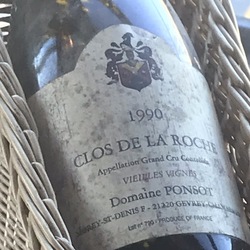
From magnum with low shoulder fill. Dark ruby and opaque. Black cherries, forest floor, warm berry pie fruit in the nose. Very heavy and rich in the mouth. Everyone guessed 82 Bordeaux. If I'm judging, the perfectly balanced 55 Mouton tonite gets the slight edge because the fruit in the 59 Margaux was a bit more dominant than the less evident tannins, structure and acidity. Really good wine experience. — 11 years ago
Huchu Homare Brewery
Watari Bune Shiboritate Namazake Genshu Junmai 55 Ginjo Sake
Well balanced and complex with some sweetness. Delicious! — 11 years ago
River Road Vineyards
Un-Oaked Sonoma County Chardonnay 2013

This an unoaked Chardonnay with lots of fruit. River Road is sold only at Total Wine stores and is made by the Dutton family west is Santa Rosa, CA. The wine is aged in stainless steel and has no oak flavor. The nose is fresh and filled with fruit. Drink with a light white fish such as fresh cod or the mildest white cheese you can find. This is a very good wine at a reasonable price. Serve at 55 degrees and enjoy the trip to the Russian River flatlands. — 12 years ago
A.A. Badenhorst Family Wines
Secateurs Red Rhône Blend 2012

I love this stuff. Bright, good acidity. Shiraz (55%), cinsault (32%), Cabernet Sauvignon (4%), tinta Barocca (4%) pinotage (2%), Mourvèdre & carignan & Grenache (1% each) — 12 years ago
Red 55 Winery
Cuvée Miranda Lambert Texas Cabernet Sauvignon 2015

Smooookkkkkkyyyyy. Very tasty. Needs a ribeye and this would really shine. — 7 years ago
Prime Cut 55
California Cabernet Sauvignon 2012

Nice easy drinking wine on the sweeter side. Paired well with pesto chicken — 8 years ago
Tenuta di Capraia
Gran Selezione Effe 55 Chianti Classico Sangiovese Blend 2011
Quite closed and tightly woven with great purity & depth. Dark fruit, some spice, a touch of liquorice. Excellent tannin management and a long finish. . A very, very fine wine.
100% Sangiovese aged 18m in tonneaux and botte. — 8 years ago
Château Smith Haut Lafitte
Grand Cru Classé Pessac-Léognan Cabernet Sauvignon Blend 2012

It is Friday night and what better way to celebrate the start of the weekend then with a Bordeaux. I can't think of one. This 2012 Château Smith Haut Lafitte is a fine example of what I have come to love about Bordeaux. The blend is 55% Cabernet Sauvignon, 40% Merlot, 4% Cabernet Franc and 1% Petit Verdot.
The nose has that rich black fruit of black plum, black cherry, blueberry, black currant, a touch of strawberry, violet, black pepper, sweet tobacco leaf, graphite and some nice soil.
Upon entry onto the palate there is a smooth creamy sweetness, black cherry, blackberry, blueberry, black currant, tobacco, spice, graphite and a rich earthy soil.
The wine is full has a full body mouth feel, a medium + fresh acidity with medium + round mouth coating tannins that transitions right into a long lasting finish. My kind of Bordeaux setting up a start to an expected beautiful weekend. Please enjoy yourselves this weekend and be safe. Nostrovia! 🍷🍷🍷🍷 — 9 years ago
Robert Mondavi Winery
BDX Oakville Cabernet Sauvignon Blend 2012
A special wine not produced every vintage, BDX presents a different expression of Oakville in a Bordeaux blend of 91% Cabernet Sauvignon, 8% Cabernet Franc and 1% Petit Verdot. The wine sat on French oak (55% new) for 28 months. Aromas of rich ripe berry fruit with oak spice and floral notes. On the palate blackberry and cherry flavors with cacao and cedar spice, great balance and structure. Smooth tannins with matching acidity on a lingering finish ending with a slight tangy character. — 9 years ago
The Prisoner Wine Company
The Prisoner Napa Valley Zinfandel Blend 2015
Love this wine - robust and bursting with raspberry and tobacco. A steal on the wine list at $55! — 10 years ago
Viña Ventisquero
Las Cartas Alto Cachpoal Red 2013

Good, $10 from bottle king. — 10 years ago
Hidden Ridge
55% Slope Impassable Mountain Reserve Cabernet Sauvignon 2007


Wyndham Estate
Wydam Estate Wines, Dalwood Bin 55 Shiraz 2012
One of the best wines around, the best in aromatic and taste — 12 years ago
Château Les Carmes Haut-Brion
Pessac-Léognan Red Bordeaux Blend 2014

55% Cabernet Franc, 30% Merlot, beautifully round and fruity, will be fantastic in 10 years — 12 years ago

Lindeman's
Bin 55 Shiraz-Cabernet Blend 2011
Beat wine so far — 14 years ago
Viña Vik
Millahue Apalta Red Blend 2011

A new upcoming Chilean icon blend @ £100-£120 that’s becoming a favourite of mine 😍 Did you know they play relaxing music to the wine in the barrel whilst it develops 💗 I reviewed the 2012 a few weeks back 😉 and can’t wait for 2013 to come out! I’ve still not tried their first 2010 release ... yet
📍 Vina VIK 2011
🏵 94 points w/ much more potential 👍
🍇 55% Cabernet Sauvignon, 29% Carmenere, 7% Cabernet Franc, 5% Merlot & 4% Syrah 😍
🍷Opaque blackened ruby
👃 Chocolatey spicy rich blackcurrant & dark plum w/ soft oak, vanilla, blackberry, raspberry, dark cherry, wet leaves, herbs, a hint of purple flower, blueberry & minerals
👄 Full body of rich silky intense but balanced black fruits in oozy melted chocolate & creamy blueberry w/ a raspberry liquorice backbone in fine rock minerals
🎯 Long black fruit, raspberry, touch dry mineral & cocoa linger w/ a lasting purple teeth stain 😁 — 8 years ago
Château Palmer
Margaux Red Bordeaux Blend 1970
Tasted blind. Light tawny but there's a nice brightness in the color. Great old Bordeaux nose. Notes of black raspberry, cherry, moist forest floor, gravel and a little mocha. Amazing complexity in the mouth. This has more going for it in the mouth/finish when compared to the 55 Palmer next to it. The 55 Palmer overall was a better experience, but this was best in class for its complex mouthfeel. Guessed 1961 Palmer. — 8 years ago
Château Brane-Cantenac
Grand Cru Classé en 1855 Margaux Red Bordeaux Blend 2005
I have a six-pack of this 05. I thought after 10 years in bottle, it would be interesting to check in on its evolution. While tasty, I’ll wait another 8-10 to open another. Even after 2-3 hours in the decanter, it’s still a very young adolescent. On the nose, slightly sour blackberries & dark cherries, dark currants, baked black plum, haunting blue fruits, anise, whiff of spice, steeped tea, dry stones, dry crushed rocks with dry top soil, caramel, vanilla with fresh & dry red florals. The body is thick & full. Tannins are starting to round out. It’s velvety on the palate. The fruits are; bright, fresh & ripe and really show the greatness of the 05 vintage. Dark currants, blackberries, dark cherries, baked black plum, haunting blue fruits, baked strawberries, cherries, raspberries on the long set, dark spice, clay & loamy dry top soil with crushed rocks, dry stones, cigar with ash, graphite, dry stems, slight herbaceous character, mint, used leather, clove, caramel, vanilla, fresh & dry red florals with violets. The round acidity is about perfect. The structure and length are still strong. The balance is in harmony. As for the long finish, it’s lush, ruby, rich and well polished. Photos of; Chateau Brane Cantenac, large wood vats, Henri Lurton and Estate vines. Producer notes and history...Chateau Brane Cantenac began in the early 17th century. At the time, the estate was known as Domaine Guilhem Hosten. Even that far back, wine was produced from the property. In fact, the wine was so highly regarded it was one of the more expensive wines in Bordeaux. It sold for almost as much money as Brane Mouton. This is interesting because of who went on to buy the vineyard in the 1800’s. The Baron of Brane, also known as “Napoleon of the Vineyards”, purchased the Chateau in 1833. At the time of the sale, the estate was called Chateau Gorce-Guy. To get the funds needed to purchase the Margaux vineyard, the Baron sold what is now called Mouton Rothschild, which was at the time of the sale, known as Chateau Brane-Mouton. Not such a good move with hundreds of years in hindsight! In 1838, the Baron renamed property taking his name and the name of the sector where the vineyards were located and called it Chateau Brane Cantenac. The Chateau later passed to the Roy family, who were well-known in the Margaux appellation in those days, as they owned Chateau d’issan. Moving ahead to 1920, the Societe des Grands Crus de France, a group of merchants and growers that owned several chateaux located in the Medoc including; Chateau Margaux, Chateau Giscours, and Chateau Lagrange in St. Julien, purchased Chateau Brane Cantenac. Five years later, M. Recapet and his son-in-law, François Lurton, took over Brane Cantenac along with Chateau Margaux. Lucien Lurton (the son of François Lurton) inherited Brane Cantenac in 1956. Today, the estate is still in the hands of the Lurton family. Brane Cantenac is owned and run by Henri Lurton. After being given the responsibility of managing Brane Cantenac, it was under the direction of Henri Lurton that large portions of the vineyard were replanted. Vine densities were increased, the drainage systems were improved and the plantings were also, slowly changed. The vineyard of Brane Cantenac is planted to 55% Cabernet Sauvignon, 40% Merlot, 4.5% Cabernet Franc and .5% Carmenere. Carmenere was used for the first time in the 2011 vintage. The only other Chateau I know that still uses Carmenere is Clerc Milon. The 75 hectare Left Bank vineyard of Brane Cantenac is essentially unchanged since it earned Second Growth status in the 1855 Classification. At least that is the case with the 45 hectares used to produce the Grand Vin of Brane Cantenac. Those 45 hectares are planted surrounding the Chateau. Those vines are located just in front of the Cantenac plateau and are the best terroir that Brane Cantenac owns. They have other parcels, which are further inland and much of those grapes are placed into their second wine, Le Baron de Brane. Those additional hectares can be divided into 3 main sections. Behind the Chateau, they have 15 hectares of vines on gravel and sand, 10 hectares across the road with sand, gravel and iron and a 13 hectare parcel with gravel called Notton, which is used for their second wine. The vineyard is planted to a vine density that ranges from 6,666 vines per hectare on the plateau and up to 8,000 vines per hectare for the vines located behind chateau, in their sandier soils. The higher levels of vine density are always found in the newer plantings. The terroir of Brane Cantenac consists of deep gravel, sand and clay soil. Experiments in the vineyards are currently looking at becoming more organic in their vineyard management. Today, more than 25% of Brane Cantenac is farmed using organic farming techniques. It is expected that over time, the amount of hectares farmed with organic methods will be increased. Brane Cantenac has gone through 2 relatively recent modernization’s in 1999, when they added began adding the first of their smaller vats to allow for parcel by parcel vinification and then again in 2015 when they completed a much more complete renovation of their cellars and vat rooms. While Brane Cantenac is a traditional producer, they are no stranger to technology as they were one of the first estates to embrace optical grape sorting machines. In very wet vintages, they can also use reverse osmosis. To produce the wine of Chateau Brane Cantenac, the wine is vinified in a combination of temperature controlled, traditional, 22 oak vats, 18 concrete tanks and 20 stainless steel vats that vary in size from 40 hectoliters all the way up to 200 hectoliters, which allows for parcel by parcel vinification. 40% of the fermentation takes place in the oak vats. The oldest vines are vinified in vats that are selected to allow for separate parcel by parcel vinification. The younger vines are vinified more often together in the same vats. However, the Carmenere is entirely micro-vinified, meaning that those grapes were completely vinified in barrel, using micro-vinification techniques. This can also happen because the amount of grapes produced is so small. Some vats can be co-inoculated, meaning they go through alcoholic fermentation and malolactic fermentation simultaneously. At Chateau Brane Cantenac, malolactic fermentation takes place in a combination of French oak tanks and barrels. The wine of Brane Cantenac is aged in an average of 60% new, French oak barrels for 18 months before bottling. The initial 2 months of aging is done with the wine on its lees, which adds more depth to the wine. There second wine is Le Baron de Brane. Le Baron de Brane is not new. In fact, previously, the second wine went under the name of Chateau Notton, which took its name from one of the main parcels where the grapes were planted. During the late 1950’s and into the 1960’s, having a second wine was important as the estate declassified 3 vintages, due to extremely poor, weather conditions in 1956, 1960 and 1963. Production of Chateau Brane Cantenac is about 11,000 cases per year. — 9 years ago

Equipo Navazos
La Bota de Manzanilla Nº 55 Jerez-Xérès-Sherry Palomino Fino

Finally got my hands on the best of the new Jerez movement. Delicious Manzanilla crisp, lengthy in mouth, fresh and thick. — 12 years ago
Delamotte
Le Mesnil-Sur-Oger Brut Champagne Blend

NV. Blend of all three varieties. 55% Chardonnay. 12 base wines. 35% Pinot Noir. Medium lemon. Meunièr for fruity roundness is 10%. Creamy notes, Granny Smith apples, vanilla, partial MLF undertaken. On the palate, very clean, some concentration, acidity is high and not fully integrated. 7g of dosage. — 12 years ago

Champagne Lallier
Grand Cru Brut Champagne Blend 2005

55% Pinot noir, 45% Chard. — 13 years ago
Paul T, Missing My Beautiful Wife 24/7
Sat on this for about a year & a half, better than my first bottle obviously.Can actually smell it this time.
Jeb 💯
55% Cab franc & 45% Merlot — 7 years ago