Rock Wall Wine Co.
La Jota Vineyard Co.
Howell Mountain Cabernet Sauvignon 2019


Lucky Rock Wine Co.
County Cuvée Pinot Noir 2019

Cherry, blackberry, raspberry, cranberry, vanilla and oak. Light-bodied and soft tannins. — 6 years ago
Cade
Reserve Howell Mountain Cabernet Sauvignon 2017
We drove up Howell Mountain to get to Cade two Sundays ago. What we witnessed was a horror show of fire damage. It’s hard to see nature destroyed in such a fashion. What was worse were all the brick chimneys only standing where there were once a home or a winery building.
Glass fire note. The fire investigation revealed the fire was started by a Cakebread electric fence short. An additional saddening note is Dolores Cakebread, the co-founder of Cakebread Cellars died shortly after the Glass Fire started. She was 90. No way to know if the stress of the fire factored into her passing.
With the first taste, you could immediately sense the step up from the Howell Mtn. The fruit much more ruby and while the tannins still big but are more well rounded & soft. It’s decadent. The structure, tension less astringent and the length/balance more beautiful over the Howell Mtn. The fruits, ripe juicier & ruby; dark cherries, blackberries, black raspberries, black plum, fresh roast, leathery, graphite, herbaceous quality, tobacco, dry stems, some dark spice, softly layered baking spices, crushed rocks with florals that are fresh & candied; dark, red, purple framed in a field of understated lavender & brilliant violets. The acidity is excellent. The long, lush, elegant, well knitted & balanced finish is truly special persisting into dry, powdery tannins, earth & spice.
This will flirt with a 95-96 with ten years in bottle.
Photos of; Cade Estate vines, outside patio tasting area, infinity wall and their Estate Cabernet fruit unharvested. Sadly, about 80-85% of the 2020 Napa Valley Cabernet fruit will never see bottling. — 6 years ago

Paul T, Missing My Beautiful Wife 24/7
95 on a 17😳 I think thats the highest score I’ve seen from you for that vintage.
Rock Wall Wine Co.
Papa's Syrah 2015

We like very much. Still very good several days later. — 7 years ago
Château Brane-Cantenac
Grand Cru Classé en 1855 Margaux Red Bordeaux Blend 2005
This is the first 2005 I’ve opened that was truly impressive this young. It’s untypical for most Margauxs. Bright mid red fruits on the palate with elegance and dripping acidity. Impressive bottling!!! Wish that I had bought a case in futures vs. four bottles. FYI, I never buy more than 6 bottles of almost anything.
The nose reveals, ripe; dark cherries, blackberries, black plum, black raspberries, strawberries, cherries, baked plum, high glass blue fruit hues, dry cranberries and pomegranate. Vanilla, light cinnamon, hint of clove, dash of nutmeg, pinch of white pepper, very dark, rich soil, limestone, pee gravel, cherry cola, fruit tea, black/red licorice, dry top soil/clay, a faint whiff of mint, some red fruit liqueur notes, bright red florals, blue flowers and fresh dark and fresh slightly withering florals.
The body is medium to just barely pushing full. The tannins are well rounded, soft and a bit dusty. The wine gently glides beautifully over the palate. The red fruits shine. Dark cherries, strawberries, cherries, pomegranate, blackberries, black raspberries, plum and blue fruit hues on the long set. Vanilla, light cinnamon, hint of clove, dash of nutmeg, very dark, rich soil, limestone minerals, pea gravel, some crushed dry rock powder, cherry cola, dark fruit tea, black/red licorice, dry top soil/clay, a faint whiff of mint, some red fruit liqueur notes, used leather, saddle-wood to light cedar, light cigar with ash, bright red florals, blue flowers and fresh dark and fresh slightly withering florals. The acidity is like a rain shower. The structure, length, tension and balance are magnificent. The long, elegant, well balanced, polished finish is delicious and goes on and on. This wine has really hit its stride, yet will continue to improve for another 10 years and perhaps beyond. After two hours in the the decanter, the wine put on weight and showed more dark fruits on the long palate set.
Photos of, Chateau Brane Cantenac, Owner Henri Lurton, field-hand doing the back breaking work of picking and their oak vat room.
Producer history and notes...Chateau Brane Cantenac started out in the early 17th century. At the time, the small estate was known as Domaine Guilhem Hosten. The vineyards and estate was developed by the owner in the late 1700’s by the Gorce family.
Their wine was so highly regarded back then, it was one of the more expensive wines in all of Bordeaux, selling for almost as much money as Brane Mouton. This is interesting because of who went on to buy the vineyard in the 1800’s.
The Baron of Brane, also known as “Napoleon of the Vineyards”, purchased the chateau in 1833. At the time of the sale, the estate was called Chateau Gorce-Guy. To get the funds to purchase the Margaux vineyard, the Baron sold what is now called Chateau Mouton Rothschild, which was at the time of the sale, known as Chateau Brane-Mouton.
In 1838, the Baron renamed property, taking his name and the name of the sector where the vineyards were located, calling it Chateau Brane Cantenac. The chateau later passed to the Roy family, who were well-known in the Margaux as they owned Chateau d’Issan as well.
Jumping to the next century, in 1920, the Societe des Grands Crus de France, a group of merchants and growers that owned several chateaux located in the Medoc including; Chateau Margaux, Chateau Giscours, and Chateau Lagrange in St. Julien, purchased Chateau Brane Cantenac.
Five years later, M. Recapet and his son-in-law, François Lurton, took over Brane Cantenac along with Chateau Margaux. Lucien Lurton (the son of François Lurton) inherited Brane Cantenac in 1956.
Today, the estate is still in the hands of the Lurton family. Brane Cantenac is currently owned and more than ably managed by the capable, Henri Lurton.
After being given the responsibility of managing Brane Cantenac, it was under the direction of Henri Lurton that large portions of the vineyard were replanted. Vine densities were increased, the drainage systems were improved and the plantings were also, slowly changed to their current plantings.
The 75 hectare vineyard of Brane Cantenac is planted to 55% Cabernet Sauvignon, 40% Merlot, 5% Cabernet Franc, 5% Carmenere and .5% Petit Verdot. Carmenere was used for the first time in the 2011 vintage. The Petit Verdot was planted in 2008. 2017 is the first vintage where Petit Verdot was added to the blend.
The 75 hectare Left Bank vineyard of Brane Cantenac is essentially unchanged since it earned Second Growth status in the 1855 Classification of the Medoc.
At least that is the case with the 45 hectares used to produce the Grand Vin of Brane Cantenac. Those 45 hectares are planted close to and surrounding the chateau. Those vines are located just in front of the Cantenac plateau and are the best terroir that Brane Cantenac owns. This parcel is the heart and soul of their wine.
They have other parcels, which are further inland, but much of those grapes are placed into their second wine. Those additional hectares can be divided into 3 main sections.
Behind the chateau, they have 15 hectares of vines on gravel and sandy soils. They have 10 hectares across the road with sand, gravel and iron and a 13 hectare parcel with gravelly clay called Notton, which is used for their second wine. More than vineyards, the property maintains beautifully, manicured gardens and verdant parkland.
Today, more than 25% of Brane Cantenac is farmed using organic farming techniques. It is expected that over time, the amount of hectares farmed with organic methods will be increased. 12 of those hectares are farmed using biodynamic techniques as well.
3 hectares of vines they own in the Haut Medoc appellation are planted to white Bordeaux wine varietals due to the the cooler terroir in that part of the appellation. The soils are gravelly clay. The vines are planted to 80% Sauvignon Blanc and 20% Semillon.
Chateau Brane Cantenac is vinified in a combination of temperature controlled, traditional, 22 oak vats, 18 concrete tanks and 20 stainless steel vats that vary in size from 40 hectoliters all the way up to 200 hectoliters, which allows for parcel by parcel vinification.
40% of the fermentation takes place in the oak vats. The oldest vines are vinified in vats that are selected to allow for separate parcel by parcel vinification.
The younger vines are vinified more often together in the same vats. However, the Carmenere and Petit Verdot are entirely micro-vinified, meaning that those grapes are completely vinified in their own barrels, using micro-vinification techniques. This takes place with the Carmenere and Petit Verdot because the amount of grapes produced is so small. Some vats of Brane Cantenac can be co-inoculated, meaning they go though alcoholic fermentation and malolactic fermentation simultaneously.
Malolactic fermentation takes place in a combination of French oak tanks and barrels. The majority of the Grand Vin goes through malolactic in barrel. The wine of Brane Cantenac is aged in an average of 60% new, French oak barrels for 17 months before bottling. The initial 2 months of aging is done with the wine on its lees, which adds more depth to the wine.
There is a second wine, Le Baron de Brane. The use of a second wine at Brane Cantenac is not new. In fact, previously, the second wine went under the name of Chateau Notton, which took its name from one of the main parcels where the grapes were planted. There is a third wine, Margaux de Brane, which is usually Merlot dominated.
Production of Chateau Brane Cantenac is about 11,000 cases per year depending on weather conditions. — 8 years ago
Diamond Creek Vineyards
Red Rock Terrace Napa Valley Cabernet Sauvignon 1988
One of the bottles I provided for a co-hosting with Mark at the City Club wine group.
Always a treat to open a birth year wine. I had this last year and this bottle seemed to have more stuffing. It was less muddled/clay driven and more distinctly black fruit and spice heavy. Next to a ‘79 Montelena, it wasn’t as full-bodied, but it certainly had more tannin. The tannic finish was quite pronounced and bolstered throughout the lunch. Mid-palate was herbal and black currant with faint tart red fruit and tobacco. Fun to drink. — 4 years ago
Rock Wall Wine Co.
Yolo County Sparkling Rosé Blend 2018
If you need to make peace this will bridge the gap betwixt bitter and sweet. — 6 years ago


Rock Wall Wine Co.
Baydeaux Red Blend
Great nose, tons of ripe cherry. Well balanced with a nice lingering finish. Lots of dark fruit. A really nice wine. — 6 years ago


Rock Wall Wine Co.
Hendry Vineyard Zinfandel 2015

V15. Very good. Cherry and rose nose. Thick blackberry fruit. Dry, anise finish. Nicely balanced. — 7 years ago
Rock Wall Wine Co.
Monte Rosso Reserve Zinfandel 2014

Legs, 10/10. Very fruity nose, almost like jelly or pie. Strawberry and raspberry apparent in taste, light body, minimal texture, subtle finish. — 8 years ago
Rock Wall Wine Co.
Monte Rosso Vineyard Zinfandel 2016
V16. Worth decanting 30 minutes. Smokey, cedar nose. Nice strawberry, blueberry and blackberry fruit. Earthy , mocha finish. Well done. — 9 years ago
Rock Wall Wine Co.
Rigg Vineyard Cabernet Sauvignon 2019

Big fan. Best aired and even good a day or two later providing u recork it — 4 years ago
Lucky Rock Wine Co.
County Cuvée Sauvignon Blanc 2020
Grapefruit, lemon, peach, apple and hints of dried apricot. Great acidity and minerality — 5 years ago
Rock Wall Wine Co.
Lake County Sparkling Zinfandel
Sparkles! Fruit! But also herbs and savory fruit pie were there such a thing. Enjoyed sporting pigtails because one must venture outside the box, time to time. — 6 years ago
Rock Wall Wine Co.
Harris-Kratka Zinfandel 2017
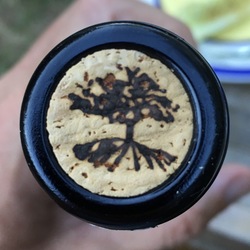
Dark, deep purple color. Lovely aroma of roses, ripe red/black plums and wood-stove. Flavors are elegant and meaty. Some savory, chewy parts and plenty of bing cherry. Also has an inky streak. This is a great cooler climate Zin. Drinks a bit like Merlot, but has a hazelnut or chestnut thing that sings pure Zin. — 6 years ago
Rock Wall Wine Co.
The Palindrome California Tannat 2014
V14. Maybe it had time to open? Very nice and enjoyable! Soft olive and cedar nose. Rich black cherry fruit. Slightly chewy, black pepper and soft leather finish. Liked! — 7 years ago
Rock Wall Wine Co.
Romancer Heringer Vineyard Red Blend 2016
Wonderful Mourvèdre. Smooth, crisp, soft tannins. Will search for this from now on! — 8 years ago
National Brewing co
National Bohemian Beer

Baltimore: Local beer. Oysters. And the harbor. Not a crack rock in sight. — 8 years ago
White Rock Vineyards
Napa Valley Claret Cabernet Sauvignon Blend 2015

OW styled to me, great restraint, savory and earthiness co-mingle with classic Napa fruit and ripe tannin. — 8 years ago
Brian S
Black and blue fruit, coffee, black rock, dried herb, mint, dark chocolate and tobacco. — 7 months ago