Born
Cerveja Independente Musa
Born In The IPA

Refreshing, light — 7 years ago

The Calling Wines
Single Vineyard Series Pinot Noir
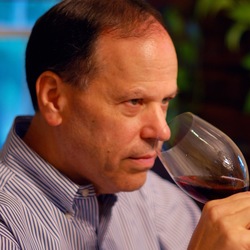

By chance, sports commentator Jim Nantz and wine industry entrepreneur Peter Deutsch were together at a restaurant in Greenwich, CT, each having dinner with friends, things developed and The Calling was born. Dark Ruby with aromas of nice ripe berry fruits with earthy herb spice. On the palate cherry and blackberry fruit with candied apple spice and earthy notes. Good balance with fine tannins more time would benefit. Lingering finish ending with earthy spice notes. — 9 years ago
Katoukichibee Shouten
Born Special Junmai Daiginjo Sake

Very sweet. Clean taste. Slight bite at the end. — 9 years ago

Charles Wagner Family
Conundrum 25 Anniversary Sparkling White Blend
In the summer of 1989, in the culinary world, traditional dishes were being reinvented by chefs exploring adventurous new cuisine. At Caymus, they were similarly inspired to break free of the norm and began to redefine white wine. And in 1989, Conundrum was born. Light straw with tropical and citrus aromas. Tiny bubbles explode with added floral notes. On the palate peachy melon flavors with lemon zest. Generous minerality show up on the lingering crisp finish. — 10 years ago

D'Oliveiras
Vintage Madeira Boal 1908

A tasting experience. $110 a glass. Parents born that year. Hard to describe. Still has fruit. Soft. Plenty of acidity — 11 years ago
Veuve Clicquot Ponsardin
Yellow Label Brut Champagne Blend
In its Nebuchadnezzar format born in the late 1970s this scintillating wine is terrific. Still fruity to be sure but with good stature it is nicely balanced. Now whiskered and wizened it remains great company at any wine tasting. — 11 years ago
Dom Pérignon
Brut Champagne Blend 1993

Today we are celebrating Andrea's college graduation. She was born in 1993, I feel this appropriate for drinking today! — 12 years ago
Malvirà
Langhe Favorita 2010
They started import company in 2008 these are Giorgione friends and all are farmers they are organic they are all friends working toward a similar goal. This is a typical grape of the piedmont has a unique aromas of pretty flowers chalk like mineral. Contrato was the first producer to make sparkling methode champenoise producer in it's 7000! Square foot cellar all products are vintage organic 90% vineyard Born in piedmont everything is done naturally no additives all natural. — 13 years ago
Cantina Luigi Pira
Vigna Marenca Barolo Nebbiolo 2004


Loads of dark fruit, tar, gravel, dried herbs and espresso with massive tannins still! This bottle, despite being 15 years old, seems like it was born yesterday. I wish I had more because this would be a treat to try again in 2034. Decades of life left, obviously. This is what I love about Cru Barolo. — 7 years ago
Château Lynch-Bages
Grand Cru Classé Pauillac Cabernet Sauvignon Blend 2000
The 2000 is delicious but, it is evolving at a glacial pace. Out of magnum.
On the nose, touch of barnyard, glycerin, ripe; blackberries, dark cherries, black raspberries, plum, strawberries & cherries. Vanilla, dry clay, limestone, river stones, just a touch of pyrazines & bandaid, dark,,turned, moist earth, dry grass and dry & fresh dark florals.
The body is full, round & sexy. Dry softened, sweet tannins. ripe; blackberries, dark cherries, black raspberries, plum, strawberries & cherries. Vanilla, dry clay, limestone, river stones, just a touch of pyrazines & bandaid, fresh tobacco leaf, saddle-wood, dry underbrush, dark, turned, moist earth, dry grass and dry & fresh dark florals. The acidity is magnificent. The structure, tension, length and balance are sensational. The finish is drop dead gorgeous. I’d still hold mine another 5 years as long as you have 3-4 bottles for more 5 year increments.
Photos of, their Estate vines, Clyde Beffa-Owner of K&L Wine Merchants, Owner of Chateau Lynch Bages - Jean-Michel Cazes, guests of the dinner and a sunset view from their Estate.
Producer notes and history...Lynch Bages takes its name from the local area where the Chateau is located in Bages. The vineyard of what was to become Lynch Bages was established and then expanded by the Dejean family who sold it in 1728 to Pierre Drouillard.
In 1749, Drouillard bequeathed the estate to his daughter Elizabeth, the wife of Thomas Lynch. This is how the estate came to belong to the Lynch family, where it remained for seventy-five years and received the name Lynch Bages. However, it was not always known under that name.
For a while the wines were sold under the name of Jurine Bages. In fact, when the estate was Classified in the 1855 Classification of the Medoc, the wines were selling under the name of Chateau Jurine Bages. That is because the property was owned at the time by a Swiss wine merchant, Sebastien Jurine.
In 1862, the property was sold to the Cayrou brothers who restored the estate’s name to Chateau Lynch family.
Around 1870, Lou Janou Cazes and his wife Angelique were living in Pauillac, close to Chateau Pichon Longueville Baron. It was here that Jean-Charles Cazes, the couple’s second son, was born in 1877.
In the 1930’s, Jean-Charles Cazes, who was already in charge of Les-Ormes-de-Pez in St. Estephe agreed to lease the vines of Lynch Bages. By that time, the Cazes family had history in Bordeaux dating back to the second half of the nineteenth century.
This agreement to take over Lynch Bages was good for both the owner and Jean Charles Cazes. Because, the vineyards had become dilapidated and were in need of expensive replanting, which was too expensive for the owner. However, for Cazes, this represented an opportunity, as he had the time, and the ability to manage Lynch Bages, but he lacked the funds to buy the vineyard.
Jean-Charles Cazes eventually purchased both properties on the eve of the Second World War. Lynch Bages and Les-Ormes-de-Pez have been run by the Cazes family ever since. In 1988, the Cazes family added to their holdings in Bordeaux when they purchased an estate in the Graves region, Chateau Villa Bel Air.
Around 1970, they increased their vineyards with the purchase of Haut-Bages Averous and Saussus. By the late 1990’s their holdings had expanded to nearly 100 hectares! Jean-Michel Cazes who had been employed as an engineer in Paris, joined the wine trade in 1973. In a short time, Jean Michel Cazes modernized everything at Lynch Bages.
He installed a new vat room, insulated the buildings, developing new technologies and equipment, built storage cellars, restored the loading areas and wine storehouses over the next fifteen years. During that time period, Jean Michel Cazes was the unofficial ambassador of not just the Left Bank, but all of Bordeaux. Jean Michel Cazes was one of the first Chateau owners to begin promoting their wine in China back in 1986.
Bages became the first wine sent into space, when a French astronaut carried a bottle of 1975 Lynch Bages with him on the joint American/French space flight!
Beginning in 1987, Jean-Michel Cazes joined the team at the insurance company AXA, who wanted to build an investment portfolio of quality vineyards in the Medoc, Pomerol, Sauternes, Portugal and Hungary.
Jean-Michel Cazes was named the director of the wine division and all the estates including of course, the neighboring, Second Growth, Chateau Pichon Baron.
June 1989 marked the inauguration of the new wine making facilities at Lynch Bages, which was on of their best vintages. 1989 also marked the debut of the Cordeillan- hotel and restaurant where Sofia and I had one of our best dinners ever. A few years after that, the Village de Bages with its shops was born.
The following year, in 1990, the estate began making white wine, Blanc de Lynch Bages. In 2001, the Cazes family company bought vineyards in the Rhone Valley in the Languedoc appellation, as well as in Australia and Portugal. They added to their holdings a few years later when they purchased a vineyard in Chateauneuf du Pape.
In 2006, Jean-Charles Cazes took over as the managing director of Chateau Lynch Bages. Jean-Michel Cazes continues to lead the wine and tourism division of the family’s activities. Due to their constant promotion in the Asian market, Chateau Lynch Bages remains one of the strongest brands in the Asian market, especially in China.
In 2017, Chateau Lynch Bages began a massive renovation and modernization, focusing on their wine making, and technical facilities. The project, headed by the noted architects Chien Chung Pei and Li Chung Pei, the sons of the famous architect that designed the glass pyramid for the Louvre in Paris as well as several other important buildings.
The project will be completed in 2019. This includes a new grape, reception center, gravity flow wine cellar and the vat rooms, which will house at least, 80 stainless steel vats in various sizes allowing for parcel by parcel vinification.
The new cellars will feature a glass roof, terraces with 360 degree views and completely modernized reception areas and offices. They are not seeing visitors until it’s completion.
In March, 2017, they purchased Chateau Haut Batailley from Françoise Des Brest Borie giving the Cazes family over 120 hectares of vines in Pauillac!
The 100 hectare vineyard of Lynch Bages is planted to 75% Cabernet Sauvignon, 17% Merlot, 6% Cabernet Franc and 2% Petit Verdot. The vineyard has a terroir of gravel, chalk and sand soils.
The vineyard can be divided into two main sections, with a large portion of the vines being planted close to the Chateau on the Bages plateau. At their peak, the vineyard reaches an elevation of 20 meters. The other section of the vineyard lies further north, with its key terroir placed on the Monferan plateau.
They also own vines in the far southwest of the appellation, next Chateau Pichon Lalande, on the St. Julien border, which can be used in the Grand Vin. The vineyard can be split into four main blocks, which can be further subdivided into 140 separate parcels.
The average age of the vines is about 30 years old. But they have old vines, some of which are close to 90 years old.
The vineyards are planted to a vine density of 9,000 vines per hectare. The average age of the vines is about 30 years old. But they have old vines, some of which are close to 90 years old.
Lynch Bages also six hectares of vine are reserved for the production of the white Bordeaux wine of Chateau Lynch Bages. Those vines are located to the west of the estate. They are planted to 53% Sauvignon Blanc, 32% Semillon and 15% Muscadelle. On average, those vines are about 20 years of age. Lynch Bages Blanc made its debut in 1990.
To produce the wine of Chateau Lynch Bages, vinification takes place 35 stainless steel vats that vary in size. Malolactic fermentation takes place in a combination of 30% French, oak barrels with the remainder taking place in tank.
The wine of Chateau Lynch Bages is aged in an average of 70% new, French oak barrels for between 12 and 15 months. Due to the appellation laws of Pauillac, the wine is sold as a generic AOC Bordeaux Blanc, because Pauillac does not allow for the plantings of white wine grapes.
For the vinification of their white, Bordeaux wine, Blanc de Lynch-Bages is vinified in a combination of 50% new, French oak barrels, 20% in one year old barrels and the remaining 30% is vinified in vats. The wine is aged on its lees for at least six months. The white wine is sold an AOC Bordeaux wine.
The annual production at Lynch Bages is close to 35,000 cases depending on the vintage.
The also make a 2nd wine, which was previously known as Chateau Chateau Haut Bages Averous. However, the estate changed its name to Echo de Lynch Bages beginning with the 2007 vintage. The estate recently added a third wine, Pauillac de Lynch-Bages.
— 8 years ago


Maine Beer Company
King Titus Porter
Born only 3 weeks ago. Delicious without being overhopped. Can't wait to put it on the list! — 12 years ago



Château Lynch-Bages
Blanc de Lynch-Bages White Bordeaux Blend 2017
Born in 1990, "Blanc de Lynch-Bages" is the fruit of joining the 3 white varietals of Bordeaux appellation, from 8 parcels of Lynch-Bages terroir. Pale lemon-green with aromas of tropical fruits with floral notes. Palate flavors of melon, citrus with sweet spice. Medium+ length, balanced acidity, ending with a fruit and floral spice character. Very good! — 7 years ago
Domaine de Terrebrune
Bandol Mourvedre Blend 2013

Domaine de Terrebrune's Bandol Rouge tastes of the arid landscape from which it is born. Aromas of rosemary, garrigue, fennel, and dried violet waft from the glass, before presenting a pure, stoic pillar of more earthly flavors on the palate. Terrestrial and ethereal at once, Terrebrune embraces both Bandol's more regal and gratifyingly rustic characters. 85% Mourvèdre, 10% Grenache, 5% Cinsaut. — 8 years ago
Bodegas Emilio Moro
Malleolus Ribera del Duero Tempranillo 2015
Winery is family-run & has links with the wine world going back 3 generations. Founded by Emilio Moro who was born in Pesquera de Duero, a prominent Spanish wine area. Made from grapes of old vineyards, between 25 and 75 years old, from the Camino Viejo estate. Malleolus is a Latin word meaning “small hammer or mallet” used in planting, and “majuelo” Spanish for “young vine” a traditional way of referring to a vineyard in Pesquera del Duero. Deep red subtle fruit aromas with espresso and smoky notes. Blackberry & cherry with vanilla spice on full lush tannins needing more time. Well balanced, complex, lingering with earthy finish. — 9 years ago
Cakebread Cellars
Napa Valley Chardonnay 2015
Over 30 years ago, Jack Cakebread came to photograph Napa for a book & bought a vineyard, Cakebread Cellars was born. I always liked Cakebread’s wine offerings, Chardonnay is no exception, consistent quality year/year. This was an early harvest showing aromas of green fruits, citrus & honey scents. On the palate complex flavors of apple, melon & lemon zest, balanced with good acidity & great mouthfeel. Lingering finish ending with sweet mineral spice. Nice now but a few years in cellar will benefit. — 9 years ago
Charles Krug
Napa Valley Cabernet Sauvignon 2014
Established in 1861 as the first winery in the Napa Valley by Prussian-born Charles Krug. Today the winery remains under the stewardship of the Peter Mondavi Sr Family, who purchased the historic winery in 1943. A blend of 90% Cabernet Sauvignon, 9% Petit Verdot, 1% Merlot, dark red with ripe dark berry scents and sweet spice. On the palate sweet blackberry and cherry flavors with leather and cacao notes. Firm tannins are a bit tight but opened up by the time the bottle was empty. — 9 years ago
Katoukichibee Shouten
Born Nihon no Tsubasa (Wing of Japan)
Aged for two years in freezing temperatures. Complex. Broad on the palate. Fennel and rainwater. Velvety feel. — 10 years ago


Katoukichibee Shouten
Born Premium Sparkling Junmai Daiginjo Sake
Wow... Born Sparkling Sake Junmai Daiginjo... Increíble — 11 years ago
Habit Wine Company
Jurassic Park Vineyard Chenin Blanc 2013

It was born as a heavy weight Jurassic indeed, tidal waves of flavor stoney fruit as hell, fresh young white peach pith, with clarified butter accents , quince paste texture, baked golden apple skins! Lemon chiffon cake dry backside, it lures me in paired well w/
Ahi , but might pair better with cake or lighter fish barramundi or tilefish — 12 years ago


DarDell
Pepe fuster Garnacha Syrah 2011

Purchased at the Born store, drank with the Gordons — 14 years ago
Conrad Green

Riper but still balanced one the nose. Chalkiness, then born, sweet lemon. Good minerals. — 7 years ago