Liquid Rock 'n' Roll
Craft wine Co.
Minimus RedWhitePink Willamette Valley Rosé Blend


There’s this girl
Let’s call her Tanya
She’s got a heart of gold
She don’t cook like Buddy Holly
But she knows how to rock n roll
Confidence is frightening, struck by lightning
she'll never let her heart go cold
Gonna be a thunderstorm
She can feel it hours before
She sits down with a drink at the piano
Starts playing freaky
Freaky (freaky) freaky feedback blues (feedback blues)
Freaky (freaky) freaky freaky feedback blues (feedback blues)
“Freaky Feedback Blues” Benji Hughes — 7 years ago
Gerard Schueller
Réserve Pinot Gris 2011

Gritty n pretty-- a lil bit country, a lil bit rock n roll-- white grapefruit rind, almost running a red light and your first kiss on your second date. Happy days :) — 8 years ago

Sleight Of Hand Cellars
The Psychedelic Stoney Vine Estate Vineyard Syrah 2014

Sleight of Hand Cellars gets it's name from Winemaker/Co-owner Trey Busch’s favorite Pearl Jam song, Sleight of Hand. He started the winery with partners Jerry and Sandy Solomon in 2007 after meeting at an auction. Since then, Sleight of Hand has become somewhat of a cult winery in Washington. The tasting room is decorated with an old jukebox and hipster inspired by rock albums. You only need to walk into the winery to see their love of Rock n' Roll. The winery also has a magic theme; which grew out of their name. All of their bottles have imagery of vintage magic posters that inspired their labels and names. It’s easy to see that the tasting room has great music and good vibe. While they make serious wines, the owners are fun, humble and only wish to make the best wine in Washington. They're on a good track. Photos of; a wide shot of the main tasting area, Trey Busch-Co-owner/Winemaker, the cover of the Pearl Jam album "Binaural"...the album that the song "Sleight of Hand" is on and the sitting area of their private tasting room. On the nose; a touch of funk, dark currants, tarry notes, savory grilled meats, pepper, iodine, blood, herbs & dark, candied, floral with violets. The palate has M+ body & tannins. Black currants, black plum, blackberries, blue fruits, dark cherries, black raspberries & raspberries. Pepper, blood, iodine, grilled meats, black licorice, cinnamon, nutmeg, vanilla, clove, black cherry cola, fresh, red florals & violets, crushed rocks, loamy soils and big, round acidity with a beautiful, rich, elegant finish.
— 8 years ago
Market Vineyards
Acquisition Cabernet Sauvignon 2011

My favorite out of all of MV's wines. Like The Who's Quadrophenia, it's the perfect balance of world-class song writing and simple rock n roll. Ruby garnet with aromas of black licorice, black current, cherry cola, vanilla and toffee. Refined, feminine elegance dancing around in the smooth mouthfeel, while still being full bodied with a burly and masculine richness. An assortment of cherries are on the palate, along with plums, driftwood and caraway. Finishes with a little visit from the tannin, but not overwhelming, and a higher acidity than you would expect. — 9 years ago
Domaine Ghislaine Barthod
Les Véroilles Chambolle-Musigny 1er Cru Pinot Noir
2012 Rock n roll wine. So feminine and attractive. Roses, herbs and a subtle earthy base. Just gorgeous. — 10 years ago

Liquid Rock 'N' Roll
Nebbiolo 2013

Rocked me! Then rolled me. — 10 years ago
Tobin James
Rock N Roll Paso Robles Syrah 2014

Another excellent Tobin James everyday wine. Aromas of fruit and berries, inky black, well balanced. Very nice — 7 years ago
Palivou Estate
Reserve Single Vineyard Selection Terra Leone Agiorgitiko 2014

Second wine of our Greece exploration. Nemea region, Agiorgitiko grape. Loaded with fruit, very tannic, low in acidity. Defenitly a great wine but less my palate (while my wife scored this one higher than the Naoussa). Nevertheless, up 'till now Greece is still rock 'n roll! — 7 years ago
Château Mouton Rothschild
Pauillac Red Bordeaux Blend 1994

In today's Oasis of fine wine, this 1994 was Definitely Maybe a Rock 'n' Roll Star that was clearly made by a Shakermaker to Live Forever. Whether Up in the Sky or in Columbia, people will recognize this as a Supersonic wine, particularly for the otherwise difficult vintage where the rains did indeed Bring It on Down, driving winemakers to Cigarettes & Alcohol. The soft tannins would make for flexible pairing choices for Digsy's Dinner; this Mouton Rothschild could be Married with Children's chicken nuggets and be just great. — 8 years ago


Bodegas El Nido
Clio Jumilla Monastrell-Cabernet Sauvignon Blend 2004

Explosive blackberry liqueur, caramel, toasted oak, licorice, and plenty of heat even after 13 years. But unlike newer vintages, the rock n roll tannins have mellowed, leaving a creamy and smooth finish but still layered and a mild bite. Just proves these wines need age... lots of it. But in a great year, worth the wait. — 9 years ago
Cliff Lede Vineyards
Stags Leap District Cabernet Sauvignon 2013

Love Goose and Gander and of course, what's not to love about rock n roll winery Cliff Lede. Nice depth for so young an age. Deep fruit and balance on tanin and finish. — 9 years ago


T-Vine Cellars
Frederick Block 9 Chiles Valley Zinfandel 2012
Showing its rhythmic licks and groovy colors (Deep Purple and bold) presciently savvy to a rock-n-roll world well before its time and blasting some bright-lights bling showing bing cherry gradually toned down by dried fruit right out the archer bag (often strapped across my back) while on brisk hike along wet leaf-lined trail through a late-evening forest (think musky mossy spice) as a 3/4 moon shines its magic over a distant blue pacific as the Zin unctuously offers a bigger-yet blueberry coating, front to back, and soft tannins bring back the dried fruit and a leisurely downhill creep to that distant ocean thereafter rewarded by a sit down on the seaward primary dune gazing at the moon and, of course, another hit. It's a rock-n-roll love affair in a bottle, top to bottom. Get some...😎 — 10 years ago
Cornwall Vineyard
Devil of a Red Pinot Noir 2008
Woah. A lot of power here. Gorgeous red fruits. Subtle French oak give an edge to the incredible depth of flavour. Great balance. This is a rock n roll pinot — 10 years ago
Turkovich Family Wines
The Boss Yolo County Petite Sirah Blend 2016
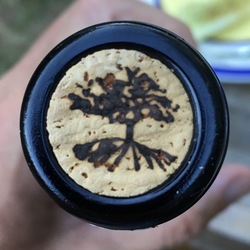
Little bacon on the nose. Nice blackberry pie too. Rich and ripe. Black strap molasses. Full. Extracted. Bombastic. But tasty too. All the fruit and oak come together for a harmonious experience. Like loud rock n roll in your car. Turn it up and sing along... — 7 years ago
Laurent-Perrier
Cuvée Rosé Brut Champagne

Tastes like Prince's solo during the 2004 Rock n' Roll Hall of Fame induction of George Harrison on While My Guitar Gently Weeps, demeanor and all. Also kinda tastes like an Axl Rosé though too. This champ reminds me that some of my favorite things on this planet are pink. — 8 years ago
Artifice
Canary Islands Listan Negro

The first time I had felt it was a fun, funky, sour notey rock n roll ride, as if Tierry Germain set up shop in the Canary Islands. I still think this, second time around, but has more depth & second gears than I first thought, cause w air...... David Bowler imp. — 8 years ago
Château Cheval Blanc
St. Émilion 1er Grand Cru Classé Red Bordeaux Blend 2001
On the nose, it's pure elegance. Kirsch cherries, ripe blackberries, dark cherries, plums, poached strawberries, raspberries haunt the background, vanilla, very light and soft spice, candied moist black earth, fresh violets and liquid, fresh, slightly perfumed red/dark florals. The full body is smooth, sexy and silky elegance. The tannins are round, beautiful and 65-70% resolved. The dark cherries and cherries roll the eyes back in the head. OMG! The fruits are simply garden of Eden beautiful. Poached strawberries, creamy black and regular raspberries, ripe black plum, overly extracted pomegranate, dry cranberries, soft, delicate top soil/dry clay, limestone, crushed dry rock powder, dry stones, black cherry cola/licorice, hint of anise, light notes of dry herbs, fresh tobacco leaf, sweet, dark, moist, turned earth, lead pencil shavings, rich, round mouthwatering acidity and a rich, elegant cherry driven finish that doesn't stop and I will not forget. Cheval Blanc is not a classified First Growth but on my palate it qualifies as such. Glorious bottle! I've had the 05 & 10 early. It will certainly out do this 2001 but not today. Photos of; the historical Cheval Blanc; which I prefer. I love the Bordeaux history. The new and modern 20 Million dollar addition. Shots of the cellar...the new concrete and stainless state of the art fermentation tanks. Producer notes and history...The name Cheval Blanc translates into white horse. The Chateau's history in St. Emilion traces back to 1832. It was the year the Ducasse family purchased land from Chateau Figeac. Prior to it being know as Cheval Blanc, the vineyard was better known as Le Barrail de Cailloux, which loosely translates into "barrel of tiny stones." Of course, the inspiration from the terroir's unique gravely soils. The original vines purchased from Figeac became what many people think is the best wine of St. Emilion, Chateau Cheval Blanc. For the most part, I agree with that. Back in 1832, Chateau Figeac was owned by Countess Felicité de Carle-Trajet. At that time, Chateau Figeac had grown to a massive 200 hectare estate; which is huge by St. Emilion standards. It was the Countess who decided to sell portions of their holdings. The breakup of the larger Figeac estate helped create a myriad of new St. Emilion wine making estates; which explains why so many Chateauxs include the word Figeac as part of their name. However, the owners of what was to become Cheval Blanc wanted to establish their own identity that was separate from Figeac. In 1838, the Ducasse family purchased what was to became the majority of Cheval Blanc. Some of the vines were previously part of Figeac. They began buying more St. Emilion vineyard land to create Chateau Cheval Blanc. In 1852, Mille Ducasse married Jean Laussac-Fourcaud, she came with a dowry that included their recently acquired Bordeaux vineyards that included 2 of the 5 gravel mounds running through the vineyards of Cheval Blanc and Figeac. Pretty amazing dowry! The Laussac-Fourcaud family built the chateau that is still in use today. The Laussac-Fourcaud continued to add holdings and increasing the size of the Cheval Blanc vineyards. By 1871, they accumulated a total of 41 hectares of vineyards in Saint Emilion. Chateau Cheval Blanc remains that same size to this day. A number of years ago, Cheval Blanc spent a boat load of money on updating and renovating to a modern facility in a true modern fashion that drastically departed from its original existing historical structure. Cheval Blanc has always tried to be innovative. Around 1860, when the chateau for Cheval Blanc was being built, extensive work was also being done in the vineyards. In fact, even then, Chateau Cheval Blanc was at the forefront of vineyard management techniques when they added a vast network of drains in their vineyards. Chateau Cheval Blanc was probably the first estate in the Right Bank to install this type of drainage system. At first, Chateau Cheval Blanc sold their wine under the Figeac label. Once Chateau Cheval Blanc began winning medals for the quality in their wine, they changed their label. That change included placing pictures of their medals on the label, which is still featured on their label today. More importantly, the wines were now sold under the name of Chateau Cheval Blanc. Cheval Blanc continued gaining in popularity by producing some of the best wines in all of Bordeaux during the 1920’s, 1940’s and 1950’s. In 1998 Cheval Blanc was purchased by Bernard Arnault and Baron Albert Frere for a 135 million Euros. They asked Pierre Lurton to manage the property for them. Today, Pierre Lurton also manages their other estates, Chateau d’Yquem, Chateau La Tour du Pin and Quinault l’Enclos. 1991 was one of the most difficult vintages in Bordeaux history, Cheval Blanc did not produce a wine. #RESPECT! In 2009, LVMH purchased the shares owned by Bernard Arnault in a private transaction. There was no official announcement of the price. However, rumors placed the price at close to 15 Million Euros per hectare (€615,000,000), making this the most expensive transaction yet, on a per hectare purchase price in the history of Bordeaux. 2000, 2005, 2009 & 2010 were near perfect or perfect vintages for Cheval Blanc and again in 2015, they produced candidates for wine of the vintage. In that same year at an auction held by Christie’s, a scarce, six-liter bottle of the legendary 1947 Cheval Blanc, (Probably the only real bottle in existence) sold for a record setting price of $304,375 dollars! In 2011, with the help of famed architect and Pritzker Architecture Prize winner, Christian de Portzamparc, Chateau Cheval Blanc completed a major construction and renovation project. This remodeling included; building a new winery, barrel cellars, vinification room, tasting area and efforts with the landscaped gardens. Even though the structure is modern in design (sigh), this new cellar cost over $20,000,000. The 39 hectare vineyard of Cheval Blanc has a complex terroir that consists of 3 different soils. Even though the vineyards are in one large parcel, this can be divided up as follows: 40% of their soils are gravel over multiple types of clay, including blue clay. Another 40% of their terroir has deep gravel soils, while the remaining 20% of their soils consists of sandy clay in the soil. The vineyard of Chateau Cheval Blanc is planted to 49% Cabernet Franc, 47% Merlot, and 4% Cabernet Sauvignon today, but the goal is to return to the original mix of 55% Cabernet Franc, 40% Merlot and 5% Cabernet Sauvignon. The vines at Cheval Blanc are old, averaging 45 years of age. They have 8 hectares of Cabernet Franc planted in the 1950’s. However, some of the older parcels of Cabernet Franc are close to 100 years of age, as they were planted in 1920. Cheval Blanc vinification takes place in 52 different temperature controlled, cement vats that vary in size, due to the needs of specific parcels to allow for each parcel being vinified in its own tank. Malolactic Fermentation takes place in tank. The wines are aged in 100% new, French oak barrels for close to 18 months before bottling. @ FL Yountville — 8 years ago

E & K G
A funky end to our France trip. Color was in between a light red and orange with some orange wine type dry-ness. Tons of funk so not for everyone but went well with different food. As the caviste described it “ca c’est plus rock n roll!” — 6 years ago