Early Times Bourbon
Château Lafite Rothschild
Carruades de Lafite Pauillac Red Bordeaux Blend 2003



903 Brewery
Sasquatch Balcones Barrel Aged Stout
This, is 903 brewery's sasquatch Balcones barrel aged stout.. this is probably the best texas beer I've had the pleasure of consuming.. has everything the original chocolate stout has to offer and about 100 times more. Very dark, thick and viscous, creamy, smells of roasted coffee beans, and a Bourbon soaked sweetness at the tail end, in perfect marriage with the chocolatey finish! Enjoying this the first day it was released on 1/28/2016, and I plan to age one for at least a year, maybe the full 5.. we shall see! — 11 years ago


Julien Sunier
Morgon Gamay 2013
Great fruit forward, with out the bitter early strawberry flavor you some times get. — 11 years ago
Domaine Faiveley (Joseph Faiveley)
Mazis-Chambertin Grand Cru Pinot Noir 1995
On potential, this could be very good. Right now, it's pretty shut down, and shows the typical Faiveley wait-a-little-longer style. Opened early and decanted a few times, stash this for another 20 years. — 11 years ago
Old Rip Van Winkle Distillery
Pappy Van Winkle's 20 Years Old Family Reserve Kentucky Straight Bourbon Whiskey

On the bourbon scale this is great...nice balance and intensity....although I don't get the hype...this is not as interesting or complex as the billboards would preach and honestly I would take some "relaxing times" over this most days of the week.... — 12 years ago
Château Potensac
Médoc Red Bordeaux Blend 1997
I’ve had at least two cases of the 97 over the last eight years or more. Our friends Jeff & Hedy brought this bottle of 97 to dinner tonight. It’s the best bottle of this wine I’ve had. We drank our last bottle roughly two years ago. The wine continues to improve. Tonight it’s so lush, ruby, elegant with blue & dark & mid red fruits. Great balance of fruit & earth. So beautiful & easy to drink. The 97 vintage was one no one wanted to buy as it was critically panned. I have said this many times, “in every difficult vintage, there are always producers that make good wine.” In the case of the Potensac, it took 15+ years to fully spread its wings and it continues to improve with another 10 years left ahead. No critic would have told you in 98 & 99 when the initial reviews came out to buy this wine. Potensac is made by the same technical team as Leoville Las Cases. Always follow good producers, even in difficult years. K&L bought 5,000 cases of this wine 10+ years after the fact. They are Masters in Bordeaux wines for this kind of value. Clyde took the shipments in two blocks of 2500 cases and sold through them in about a year or less at $24.99 a bottle. It remains the bargain of a lifetime! @Shay A This is the wine you want to buy to keep you from opening your 09’s & 10’s too early. So delicious tonight!!! Photos of; Potensac, concrete tanks, fruit near harvest and their barrel room. — 8 years ago

Sanford
Barrel Select Sanford & Benedict Vineyard Pinot Noir 1991

OMG! this is the Sanford & Benedict Signature Series bottling from Sanford. Richard Sanford I believe initiated a project whereby the six most highly-regarded winemakers in the area would each take a sampling of the Sanford & Benedict grapes in 1991 and make their own bottling and then those six people would gather together and blend to create the "signature" bottling which they felt would represent the best that that long time vineyardhad to offer. I have had this wine several times early after release with Richard Sanford in attendance at an event on my patio in Alta Dena and several times since and virtually none of the bottlings had ever overwhelmed me . . but this bottling at this time is delicious and evolved and balanced and and and and . . . way beyond my expectations. if you have this wine in your Cellar open a bottle now and reconfirm why you bought it in the first place . . Good s*** Maynard'! 😀 — 9 years ago
Cliff Creek Cellars
Cabernet Franc

Smooth texture. Has a smokey taste that is reminiscent of Early Times. Would be paired beautifully with fish. — 9 years ago
Château Palmer
Margaux Red Bordeaux Blend 1991
In every difficult vintage, anywhere, you will find producers that make exceptional wines. This 91 Palmer is such a wine. I have to thank Clyde Beffa owner of K&L Wine Merchants who has been traveling to Bordeaux for 35+ years for highly recommending two 91 Bordeaux's to me. The 91 Pichon Lalande; which he described as "heavenly." It's just the word I would have used to described it 5 or 6 years ago. Also, this 91 Palmer. He described as, "I love it-soft and silky." I would strongly agree. You see, critics gave the 91 vintage a horrific review as a whole. Bordeaux had two frosts in April and a cold growing season. These elements didn't prevent either of these producers from making beautifully elegant 1991 wines. I have said it many times and will say it again, taste wines even in difficult vintages. You'll find value and some excellent wines. As for this 91, it's in perfect form. Excellent on it's own and even better with the ribeye. It's so elegant, smooth, beautiful, ripe and well balanced with earth & fruit. The fruits are slightly stewed & baked. Blackberries, dark cherries, black plum, black raspberries, touch of rhubarb, cherries, strawberries. Dried florals, used leather, tobacco with ash, slight vegetal quality, anise, not too sweet black cherry licorice/cola, figs, dark earth with crushed rocks, dry stones, underbrush, understated spice and perfect acidity that drips over the palate. The length, structure, balance and finish are in perfect harmony & the finish goes on and on and on. As many times as we've been to Bordeaux, we never get tired of the drive on the D-2 through Margaux and Pauillac. Chateau Margaux & Palmer stand side by side in beautiful prodigious history to say nothing of Baron Pichon & Pichon Lalande. Every year, for my B-day, I have a great steak and an old Bordeaux. It just doesn't get any better than that. And as many of those nights I've had, B-day or not, this might have been the best. Perhaps topping or equaling the Ribcap at Bourbon Steak and the 91 Pichon Lalande. To quote Gary Westby, "it steak and claret night." 12% alcohol is so much more enjoyable than 15% plus. ❤🍷🎉🎂 — 9 years ago


Coattails
Unfined & Unfiltered Willamette Valley Pinot Noir 2015

A very early peek on this small production Oregon Pinot Noir which I've only tasted a few times before.
Big and bold at this point and the vintage is probably still some time away from being released but people should blindly buy anything they can get their hands on....
Very impressive and 94+ pts for me this evening. — 10 years ago

Ridge Vineyards
Lytton Springs Dry Creek Valley Zinfandel Blend 2010
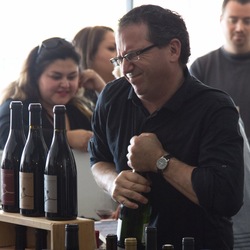
Early times yet for this bottle. The pieces are all there, but not yet knit into the seamless whole that these get with a few more years inn the cellar. Easy to drink, but will give so much more in five years. — 10 years ago
Four Roses
Single Barrel Limited Edition Release Barrel Strength Kentucky Straight Bourbon Whiskey

Good times in Nashville. — 10 years ago
Buffalo Trace Distillery
Old Weller Antique Original 107 Brand Wheated Kentucky Straight Bourbon Whiskey

Really great. Huge fan of the wheat bourbons. There is no way pappy tastes ten times better than this whiskey. — 10 years ago
Breckenridge Distillery
Bourbon Whiskey
Smooth an delicious. Mild oak with early burn and fantastic end — 11 years ago
Jim Beam
Signature Craft Quarter Cask Finished Straight Bourbon
Brandy Finish - at times the brandy is over powering. Also, cheap medicine bottle cap. — 11 years ago
La Spinetta
Vürsù Vigneto Valeirano Riserva Barbaresco Nebbiolo 2001

Black olive, cola, tar, Amaro and violets. Evolved numerous times over a 3 hour drinking window. Tannins make themselves apparent early in the mid and they were deliciously chewy and expansive without becoming overbearing or clumsy. Would've loved to see how the fruit looked and how the ferments were conducted to craft this wine! — 12 years ago

Booker Vineyard
My Favorite Neighbor Syrah Blend 2015

Another great wine from Paso Robles with fantastic fragrance and a flavour profile to rival some Napa big boys which sell for 2,3 even 4 times the price. Fantastic aromas straight out of the bottle with blackberry and black currant combined with vanilla, oak and violet perfume. Taste develops by the minute in the decanter and early dry minerality smooths into a long and rich finish. Really enjoyable now and no doubt will get better and better. Note: there is no Syrah in this vintage despite the title of the page. 2015 is Cabernet Sauvignon and Petit Verdot. New high score for me. — 8 years ago
Jermann
Vintage Tunina Venezia Giulia White Blend
8 times the best wine of Italy, sounds very promising. This is a perfect field blending , as it contains influences of international grapes and it is felt clearly in the nose. At blind testing I might confused it with Savinion. Very well integrated, but it is still early to drink , 4 years after would be grate to drink, good potential. Average acidic, aftertaste average+, good aftertaste. — 8 years ago
Early Times Bourbon
Malt

My late father was a shot and a beer guy. His shooter of choice was always Early Times Kentucky Whiskey. In his honor, I always keep a bottle in my liquor cabinet. It is exported to over 40 country's as bourbon, but because its aged in used oak barrels rather than new ones, Kentucky law states it must be marketed in the U.S.A. as Kentucky whiskey. Aged for 36 months, it is exceptionally smooth, easy to sip straight up, on the rocks, or old school shooter style. 40% alc/vol. 80 proof. Distilled and bottled in Louisville Kentucky. — 9 years ago


Château Puygueraud
Francs-Côtes de Bordeaux Red Bordeaux Blend 2005
Wanted one more glass tonight so thought this might do the trick. Usual drama with the cork even though this has been perfectly stored since 2007 in this house! Have had this a couple times the last few years and have always been impressed with how dark it is. Surprisingly fruit driven tonight, some gritty tannin hanging on leads me to believe this one could go one for years. It isn’t particularly special, but good. Originally bought to get some of the 05s in the cellar in my early days of collecting. 92 Spectator, I believe, on release. — 9 years ago
J. Davies
Diamond Mountain District Cabernet Sauvignon 2010
91% CS, 9% Malbec.
I've been a fan from early on but think these guys have really been on a stride beginning with their 2012-vintage.
I re-visited this wine several times throughout the evening and didn't think it budged much (over 4+ hours) from my initial impression.
That should speak more to the quality (and age ability) of this wine than to my tastebuds and I would certainly love to taste it again in 5+ years as my rating then may seem quite conservative.
— 9 years ago



Clos de Mez
Chateau Gaillard Morgon 2012
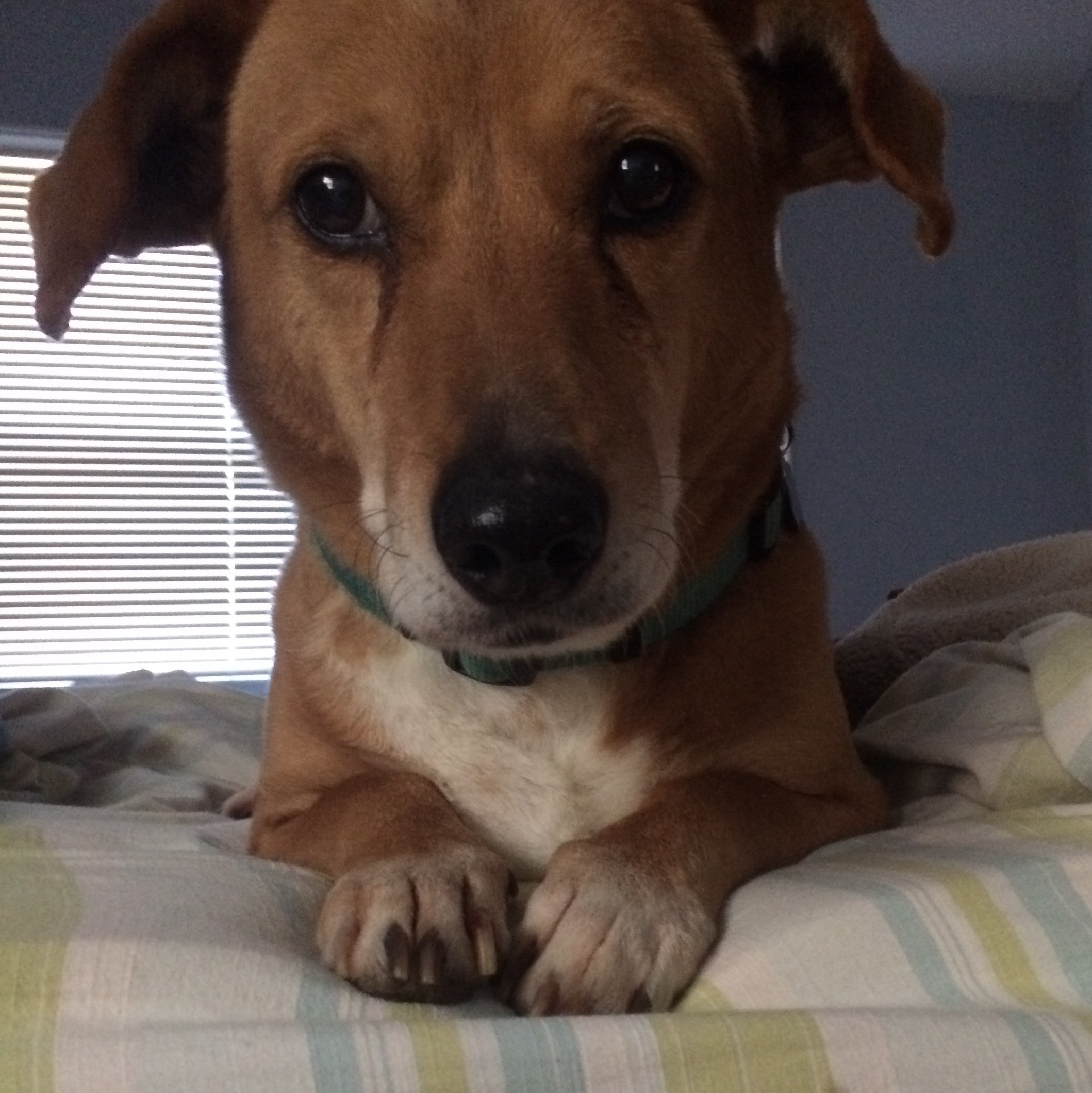
I am hard-pressed to rate this wine. It's so atypical, but this estate's wines are reputed to take years to round into form. Right now, I mostly get a sense of highly-extracted minerality, with only a little fruit showing-- although it's interesting, highly-confectionary red fruit. And that's on the SECOND NIGHT!. As an unabashed fan of traditionally-styled Bojos, I really don't know where this will end up. But from reputation, I guess it's early in that journey. Right now it's intellectually interesting but not that pleasurable.
UPDATE (night 4): I left about 1/4 of the bottle until now, and, as reputed, it is more pleasurable and demonstrative now. Very pure, confectionary plum/ripe cherry juice fruit in the nose, and there's even a whiff of Bourbon (without the alcohol). Minerality still there but playing a supporting role now. Plus there's a feral/animal tang. Still tannic, but they've softened. This is sui generis, so don't compare it to anything, especially Beaujolais, or you're doing it a disservice. Day 4 rating 9.2. Age this puppy for several years. — 10 years ago


Camus Pere & Fils
Chambertin Grand Cru Pinot Noir 2007

Not as closed as this producer can be at times. High acidity but we tried to open this one early. Lots of volume, structure and fruit. Take your time enjoying this one. — 10 years ago
Schola Sarmenti
Roccamora Nardò Negroamaro

Soft and slow at first but rapidly embraces the essences of smoke, leather and spice while dark coca and cherries kiss your lips, and taste buds. Not over powering, opens just slow enough for you to divulge into all of it tannins before it suddenly explodes with full flavors dancing all the way down...enjoy it early, often and multiple times — 10 years ago
Early Times Bourbon
Kentucky Straight Bourbon Whisky
Tastes substantially wheated. Such a treasure found at dad's house. Thinking it is circa 1965 but not quite sure. Definitely very old — 10 years ago

Early Mountain
Muscat Dolce 2009
A great dessert wine. Has notes of Bourbon, Cognac, Wood, with a gently sweet finish. Great after a meal or any other excuse to open it! — 11 years ago

Old Rip Van Winkle Distillery
15 Years Old Family Reserve Kentucky Straight Bourbon Whiskey
Maker’s Mark Distillery
Cask Strength Kentucky Straight Bourbon Whisky

Oooooo... Very very good. Early ting/burn but smooth in the finish. — 12 years ago
Somm David T
Independent Sommelier/Wine Educator
On the nose, ripe; blackberries, sweet & sour dark cherries, cooked cherries & strawberries & hues of blueberries. Black tea, cola, soft baking spices; vanilla, light clove & cinnamon. Crushed rocks, stones, limestone, turned, moist black earth, tobacco leaf, saddle-wood, soft leather, dry & fresh dark red florals.
The body is medium edging toward full. The tannins pretty well resolved. The ripe fruits show the hot, ripe vintage. Blackberries, sweet & sour dark cherries, cooked cherries & strawberries & hues of blueberries black tea, cola, soft baking spices; vanilla, light clove & cinnamon. Crushed rocks, stones, limestone, tobacco with ash, some graphite, soft medium dark spice, turned, forest floor, powdery but edgy minerals, saddle-wood, soft leather, dry & fresh dark red florals with some violets on the finish.
This showed better with Ribeye. The Ribeye brought out a fuller, richer wine with even more complexity. 9.35-9.4 with the Ribeye. It just missed 9.2 on its own. It’s big brother the 03 “Lafite” is 💯 point Parker wine.
Photos of; Chateau Lafite, their oak vat fermenters, Estate wine and their magnificent barrel room.
Interesting history and producers notes...Lafite Rothschild has a long and interesting history dating back to 1234, even though the property was not in the Bordeaux wine business at that time.
It is has been largely believed that vines were already planted on their terroir. The owner of the estate at the time, Gombaud de Lafite left his mark, his name. Almost 1,000 years after he owned it, the Chateau is still named after him! The vines were probably in existence at Lafite for over a century, it was not until around 1680, the majority of vineyards of what we know of as Lafite Rothschild today were created. This is because on the 1680 estate manifest, there are six mentions of their Bordeaux vineyards. Jacques de Segur, earns credit for cultivating the vineyard as I wrote in my Colon Segur post last weekend. In 1695, Alexandre de Segur married Marie-Therese de Clauzel, heiress to Chateau Latour. So to dovetail that write up, within a generation, the Segur family married into two of the greatest Bordeaux vineyards, Chateau Lafite and Chateau Latour! When their son, Nicolas-Alexandre passed away, Chateau Lafite and Chateau Latour were separated.
In 1797, Chateau Lafite was sold again. In the deed of sale, Chateau Lafite was described as a Premier Cru of Medoc. This is one of the earliest mentions of what we know of today as Lafite Rothschild producing wines of what would later be classified as an 1855 First Growth.
At that time, of Lafite were managed by the Goudal family. The Goudal family were wine historians and were able to read accurate records and details of the viticulture and marketing plans for Chateau Lafite in the estates formative years. The Goudal family gets the credit for creating the cellar and saving many of the oldest bottles that remain in the cold, dark cellars, including their oldest bottle, the 1797 Lafite!
The start of the famous Rothschild family begins in 1744, with the birth of Amschel Meyer. Amschel Meyer began creating his fortune while working as a merchant at “Zum Roten Schild,” which eventually became the family name of Rothschild.
In 1798 his sons were sent to various cities to create their fortunes. Needless to say, his sons all prospered as did their children in turn. This eventually led to them wanting to own a Chateau in Bordeaux. So in 1853, Baron Nathaniel de Rothschild, an English member of the Rothschild family, purchased Chateau Brane-Mouton. As was the custom of the day, the new owner renamed it using his name and Chateau Mouton Rothschild was born.
This was followed in 1868, when James Rothschild, another member of the family purchased Chateau Lafite, which was now a coveted First Growth.
On 8 August, 1868, Baron James d’Rothschild purchased Chateau Lafite, which was sold at a public auction in Paris. It’s assumed, he bought the property for family competitive reasons looking to one up his brother, the owner of Mouton Rothschild. At that time, Mouton Rothschild was only a Second Growth at the time. But, that does not paint the entire picture. The 1855 Classification had not taken on the importance associated with it the we see it today. Plus, buying Lafite was a reasonable investment as the vineyard sold for about 8 times its earning potential.
The actual Chateau is one of the older structures in Bordeaux, as part of the building dates back to the later part of the 16th century. In 1868, the vineyard took up 135 hectares, of which 74 hectares were cultivated with vines. Production was much smaller in those days than it is today as it was between 4,000 and 5,000 cases.
Just three months after the purchase, Baron James d’Rothschild passed away and Chateau Lafite Rothschild became the joint property of his three sons; Alphonse Rothschild, Gustave Rothschild & Edmond Rothschild. Since 1868, Chateau Lafite Rothschild has remained in the hands of the of Rothschild family. The new owners renamed the estate Chateau Lafite Rothschild.
Jumping ahead to the modern age, in 1962, the Rothschild family added to their holdings when they purchased Chateau Duhart-Milon, a Fourth Growth vineyard also located in Pauillac. It was owned by the Casteja family for more than a century, Chateau Duhart Milon suffered from neglect and was in a awful condition. By the time Duhart Milon was obtained by the Rothschild family, the vineyard was down to only 17 hectare which required extensive renovations.
Baron Eric Rothschild, nephew of Baron Elie Rothschild, took over the management of Lafite Rothschild in 1974. Baron Eric Rothschild was part of the fifth Rothschild generation to inherit Chateau Lafite Rothschild. In 1984, the Rothschild family added to their holdings in Bordeaux with the purchase of Chateau Rieussec in Sauternes.
1987 was a difficult vintage, but because that was the year Lafite celebrated the inauguration of their wine new cellar, they had a lot to be excited about.
The new cellars were built under the supervision of Catalan architect Ricartdo Bofill, is both underground and circular, with a vault supported by 16 columns, giving the structure a majestic architectural style. The cellar holds 2,200 barrels, which is about 55,000 cases of wine. The construction took two years to finish and was completed in 1988.
Domaines Baron Rothschild became one of the first Bordeaux properties to invest in South America when they purchased Vina Los Vascos from a Chilean family. The owners of Lafite Rothschild continued expanding their holdings with the purchase of Chateau lEvangile in Pomerol from the Ducasse family, who owned the property for almost 100 years.
The wine making at Chateau Lafite Rothschild was managed by Charles Chevallier, who began his position in 1994. Charles Chevallier was replaced by Eric Kohler in January 2016. 2017 saw another change at the estate when Jean Guillaume Prats replaced Christopher Salin as the President of Domaines Baron Rothschild.
Perhaps, it’s the most refined of the First Growth. The wine, like all First Growth’s takes decades to mature. It has remarkable staying powers. Bottles of 1870 Lafite Rothschild discovered in the Glamis castle remain profound at more than 140 years of age! It is consider by many Master Sommeliers to be the best wine in the world.
Chateau Lafite Rothschild is one of the earliest major Bordeaux estates to bottle their own wine. In 1890, they bottled a large portion of the wine and again in 1906. Part of the estate bottling was due to requests from Negociants who were willing to pay more for Chateau bottled wines. Also, bottling was primarily done to combat piracy. At the time, it was known that merchants in some countries, like Russia were bottling cheap wine and placing labels from Lafite Rothschild on the bottles. The Koch’s famous Jefferson bottles were not the first attempt at counterfeiting.
Prior to 1996, some would say the property had its share of ups and downs. The 1960’s and 1970’s were not great for Chateau Lafite Rothschild. But since 1996, Lafite Rothschild has been producing some of the best wine in their history!
Sadly, only the wealthy can afford to purchase it. Price aside, there is no denying the level of quality. In 2003 Lafite Rothschild produced a wine that is possibly unequaled by the estate at any time in their long history. Hence, my purchase of their 03 second wine. 2009, 2010 and 2016 are not far behind.
Starting in about 2008, Lafite Rothschild became the most collectible wine from Bordeaux. Prices exploded due to demand from China as Chinese businessmen bought them as gifts or bribes depending on you look at it.
The reason this started was Lafite Rothschild paid for product placement on the number one rated Chinese soap opera on television. Characters in that show were pictured enjoying life with Lafite Rothschild and since then demand went through the roof as did priced.
However, Issac Newton had it right when he declared “What goes up, must come down.” Prices for Lafite Rothschild plummeted after 2011. By the difficult 2013, prices were finally starting to hold firm, but many of the vintages that were setting price records on a daily basis had lost close to 50% of their value.
Starting with the 2012 vintage, Chateau Lafite Rothschild began instituting anti-counterfeiting measures. From 2012 forward, to help fight, rampant counterfeiting, the estate places a seal of authenticity on the capsules of both Lafite Rothschild and Carruades de Lafite. The seal features a unique, numbered code that can be checked on their website, to verify if the wine is real.
The 112 hectare vineyard of Chateau Lafite Rothschild is planted to 70% Cabernet Sauvignon, 25% Merlot, 3% Cabernet Franc and 2% Petit Verdot. This shows a slight change in the vineyard.
While Cabernet Sauvignon remained at 70%, today there is slightly more Merlot, less Cabernet Franc and the Petit Verdot has been added since the mid 1990’s.
Located in the far north of the Pauillac appellation, only the small, Jalle de Breuil stream separates the vineyards from St. Estephe. You could divide the vineyards of Chateau Lafite Rothschild into three sections with 100 separate parcels in all. The estate has close to 50 hectares of vines located close to the Chateau, on both sides of the D2, which offers gentle rises in elevations of up to 27 meters. They also have about 50 hectares vines planted on the plateau in the Carruades sector, where they have two blocks of vines, one of which is inside the vineyard of Chateau Mouton Rothschild. It is interesting to note that even though the parcels in the Carruades sector give their name to the second wine of the estate, those vines are almost always placed in the Grand Vin.
There are also vines adjacent to, and interspersed with the vineyards of Chateau Duhart Milon. The property also consists of a smaller, 4.5 hectare parcel of vines located in the Saint Estephe appellation, “La Caillava”. The vines in St. Estephe are situated not that far from Cos d Estournel, which are located on a larger a parcel known as Blanquet. The vines in Saint Estephe are allowed to be placed into the wine of Chateau Lafite Rothschild because those vines were used to produce Lafite in 1885, at the time of the classification. The vineyards are close to their famous neighbor Mouton Rothschild.
Located just south of the Chateau, the best terroir of Lafite Rothschild has a thick layer of gravel with sand, clay, marl and limestone in the soils with rolling, gravel slopes. The gravel can be as deep as 4 meters in some parcels.
It is important to note that even though their vineyards are in the far north of Pauillac, most of the soil is pure gravel, rocks and stones. With more than 50% of the soil consisting of gravel, that is a large part of the reason Lafite Rothschild has such elegant, feminine textures and that coveted sensation of minerality.
On average, the vines are close to 40 years of age. However, Chateau Lafite Rothschild has much older vines. In fact, they have some vines that are more than 100 years of age planted in the La Graviere section. That small parcel of Merlot vines dates back to 1886. Less than 1% of the vines are that old.
Additionally, they have a small section of Cabernet Sauvignon that dates back to 1922! Other old vines range from 50 to 90 years of age! They also maintain some of the oldest Petit Verdot vines in the Medoc that was planted in the early 1930’s.
At Chateau Lafite Rothschild, between 1% to 1.5% of the vineyard is replanted every year. Vines less than 20 years of age are never included in the Grand Vin.
The vineyard of Chateau Lafite Rothschild is planted to a vine density that ranges from 7,500 to 8,500 vines per hectare. Only organic fertilizers are used in the vineyards of Lafite Rothschild.
During harvest, the goal is not to pick at the maximum level of ripeness. Instead, they are seeking a blend of grapes at differing levels of maturity, which gives the wine its unique textures, freshness, aromatic complexities and elegant sensations.
Lafite Rothschild is the largest of the First Growth vineyards with close to 112 hectares of vines. A large portion of the estate is taken up with stunningly, beautiful landscaping, lakes, trees and parkland.
At one point in time, Chateau Lafite Rothschild produced a dry white, Bordeaux wine that was sold as Vin de Chateau Lafite. The wine was produced from a large percentage of Semillon, blended with a small amount of Sauvignon Blanc. The last vintage for their white wine was 1960. The wine was sold as a generic AOC Bordeaux blanc with a simple, scripted label, black and white label.
Lafite vinification takes place in 66 vats that are a combination of 29 wood vats, 20 stainless steel tanks and 17 concrete vats that range in size from as small as 45 hectoliters up to 123 hectoliters in the concrete and as large as 270 hectoliters for the wood. The wide range of vat sizes coupled with different materials allow Chateau Lafite Rothschild to vinify depending on the needs of each specific parcel and grape variety. The stainless steel tanks and oak vats are used for Cabernet Sauvignon. The Merlot is vinified in the concrete tanks. Malolactic fermentation occurs in smaller, stainless steel tanks that vary in size from 25 hectoliters up to 60 hectoliters. At this point, Chateau Lafite Rothschild does not yet use gravity to move the fruit and juice in the cellar. It’s a good bet that a remodel is coming soon.
The average annual production of Chateau Lafite Rothschild ranges from 15,000 to 20,000 cases of wine per year, depending on the vintage. They of course make this second wine, Carruades de Lafite, which due to the name and association with the Grand Cru, has also become extremely collectible. Carruades de Lafite takes its name from a specific section of their vineyard that is located near Mouton Rothschild. Carruades is actually one of the older second wines in Bordeaux, as it was first produced in the mid 1850’s. About 100 years later during the mid 1960s, the estate reintroduced their second wine naming it Moulin de Carruades. The name was changed again in the 1980’s to Carruades de Lafite.
There is also a third wine which is sold as an AOC Pauillac that is produced from declassified fruit from Lafite Rothschild and Duhart-Milon.
The blend for Chateau Lafite Rothschild changes with each vintage depending on the character and quality of the vintage. Generally speaking, the amount of Cabernet Sauvignon in the blend ranges from 80% to 95%. Merlot is usually 5% to 20%. Cabernet Franc and Petit Verdot usually varies from 0 to 5%.
— 8 years ago