5 Soul Wine Co.
Rene Rostaing
Ampodium Côte-Rôtie Syrah 2010

2010 was a very good vintage in Rhône. Rostaing is a well know producer with people that know and drink Northern Rhône wines, not so much with others that do not. The Ampodium is the entry level into Rene & Pierre Rostaing wines. It is a blend of 13 vineyards in Northern Rhône. They are simply one of the very best producers in the region. I spent an afternoon with Rene & his son Pierre tasting in the their cellar and in their La Landonne vineyard as shown in the photos. The 2010 is drinking beautifully with many good years ahead. On the nose; ripe & slightly stewed/baked fruits of; blackberries, dark cherries, strawberries, creamy raspberries, stewed plum, black raspberries, cherries, steeped fruit tea, dry crushed rocks, iron pan, some white & black pepper, bacon fat, grilled savory meats, pork, black licorice, black cherry cola, decayed & fresh red florals with violets. The body is round and medium full. The tannins round, still a little chewy & around 55% resolved. The length, texture, tension and balance are in near perfect harmony. The fruits are; round, ruby & ripe; slightly stewed/baked fruits of; blackberries, dark cherries, strawberries, creamy raspberries, stewed plum, black raspberries & cherries. Steeped fruit tea, dry crushed rocks, chalky minerals, iron pan, coffee grounds, spice, some baking spices w/hints of vanilla, white & black pepper, drying blood, dry herbs/bay leaf, dry stems, moderate levels of bacon fat & pork, grilled savory meats, black licorice, black cherry cola, decayed & fresh red florals with fresh violets for days. The acidly is round and dripping. The long finish is plush, velvety delicious and lasts & lasts. In good vintages, I would put this in blind with the best of of the best new world wines from any vintage that many love; SQN, Booker, Saxum, Alban, Cayuse, Horsepower etc.. I’d bet most of you would pick it over these producers that cost much more $$$. It’s simply one of the best pound for pound wines/producers for this varietal. Especially, for the $$$. Wow, what a wine for the $. $55 upon release. Photos of; Winemaker Pierre Rostaing and our group in their La Landonne vineyard, the small sign that barely identifies their Estate, an example of the Quartz mineral that runs throughout their La Landonne vineyard and the view back onto the river from the top of the very steep La Landonne Vineyard. Producer notes and history...Rene Rostaing produced their first wine in 1971. However, it took almost three decades before wine became a full time occupation for Rene Rostaing. Domaine Rene Rostaing came about through marriage. The wife of Rene Rostaing was the daughter of the famed Cote Rotie grower, Albert Dervieux, and the niece of Marius Gentaz-Dervieux who gave Christine the vineyard land that became the Northern Rhone estate for Rene Rostaing. Through inheritance from Albert Dervieux Thaize (his father-in-law) who retired in 1990, and from Marius Gentaz Dervieux, his uncle, Rene Rostaing expanded his holdings, giving him some of the best terroir in Cote Rotie. The new vineyard land was basically 3 small parcels in the La Landonne, Cote Brune and Vialliere lieux-dits. This initial expansion from his initial tiny parcel, allowed Rene Rostaing to change careers and become a full time vigneron. Since 2007, the estate has managed by Pierre Rostaing, (son) of Rene Rostaing. Currently Rene Rostaing owns 7.5 hectares of vines that is spread out among 20 different parcels located in 14 locations. Perhaps the most celebrated vines of Rene Rostaing are the 1.6 hectares of vines they own in the La Landonne vineyard (photo). On La Landonne, the vines are more than 60 years old. Some vines are even close to 100 years of age! Those are his largest holdings. The smallest vineyards of Rene Rostaing are located on Cote Blonde. Rene Rostaing also has vines planted in; Fonjean, La Vialliere, Le Plomb, Bouchare, Leyat, La Roche and La Tupin. Their oldest vines are more than 70 years old and are used for Rene Rostaing Cote Blonde. The majority of those plantings are on the steep hillsides with mica, schist and rocky soils. 25% of those vines are closer to the bottom of the slopes and on the flats. Rene Rostaing remains a traditional Cote Rotie producer who is not among the last to harvest. His wines are aged using very little new, French oak barrels. On average, Rene Rostaing Cote Rotie are aged in about 10% new French oak barrels. Rene Rostaing produces 4 different Cote Rotie wines. Rene Rostaing Ampodium, which was previously known as Rostaing Cuvee Classique, is a blend of 13 sections of different vineyards, but it does not include their best holdings on La Landonne or Cote Blonde. The fruit for Rene Rostaing Ampodium has at least 40% or more of the stems removed and run between 12-13.5% abv. The wine is usually made from 100% Syrah and is aged in an average of 15% to 25% new, French oak barrels. The amount of new oak can be less, depending on the character of the vintage. About 1,750 cases are produced each year. The wine is no longer called Cuvee Classique, the name was changed to Rene Rostaing Ampodium with the 2009 vintage. Rene Rostaing La Landonne comes from a terroir consisting of sands with iron oxide and traces of quartz. This wine is always produced from 100% Syrah. The grapes are partially destemmed, with about 10% to 20% of the stems removed, depending on the vintage. There are vintages when no destemming takes place. The remainder of the grapes are whole bunch fermented in stainless steel vats. Rene Rostaing is not a believer of using too much new oak for the aging, which on average uses 10% new, French oak barrels and the remainder of the harvest is aged in demi-muids (600 liter) and French oak barrels. This wine is like most wines from La Landonne, masculine and meaty in character, requiring at least a decade to soften and develop. On average, Rene Rostaing La Landonne produces less than 600 cases depending on what the vintage delivers. Rene Rostaing Cote Blonde is perhaps his best. It’s produced from a blend of 95% Syrah and 5% Viognier. The grapes are co-fermented. The vineyards is planted in the region call Arzel. Arzel is a poor, mineral laden soil with deposits of Silex and Mica on a steep hillside. The vines are more than 50 years of age. The grapes are partially destemmed…35% to 50% of the stems are removed. The remainder of the grapes are whole bunch fermented in stainless steel vats.
The remainder of the harvest is aged in demi-muids. This one is the hardest to find and most collectible of all their wines. In fact, they only produce close to an average of 350 cases of Cote Rotie in most vintages. Rene Rostaing Cote Brune made its debut with the 2013 vintage. The vines were once part of the holdings of Marius Gentaz, which eventually passed to Rene Rostaing. Rostaing replanted those vines in 2000. Made from 100% Syrah. — 9 years ago



Paul T, Missing My Beautiful Wife 24/7
Is this considered cold climate or warm climate?
Renegade Wine Co.
Columbia Valley Rosé Blend 2015

A refreshing Rhone blend rose, perfect for sunny days. Heavier 80% Syrah blend, accompanied by 11% Cinsault, 5% Counoise & 4& Grenache. Much more than your average Rose and only $10. With warmer weather of spring/summer on the horizon, its worth grabbing some!! — 9 years ago
Produttori del Barbaresco
Barbaresco Nebbiolo 2009
From either the 3rd largest co-op in the world or in Europe. I think it's in Europe. Produttori is located in the heart of the tiny town of Barbaresco just to the right of the tower shown in the photo and up the street from Gaja. Also, one of the best Michelin stared restaurants for lunch we've ever had. As well, the best restaurant service we have experienced and it wasn't that pricey. For such large a co-op, they produce some outstanding value wines and some straight up excellent wines. This 09 is quite nice and one of their entry level value wines. A nice pair with my skillet lasagna. The wine shows more sour than sweet dark cherries, black raspberries, dry dark plums, touch of pouched strawberries, black cherry cola, dry dark florals bouquet, a light delicate herbaceous quality, dark soils with dry powdery crushed rocks with nice acidity. The balance of fruit & earth is improving as is the finish. It still needs at least 3-5 more years in bottle. Very nice wine under $30. A 9.0 on it's own with the skillet lasagna, 9.1-9.2. — 9 years ago


Rigamarole (Artisan Wine Co)
Oak Aged Okanagan Valley Red Blend
Hands down, the best value priced cheap wine. To call it cheap on its own is a misnomer though. It stands up strong to any American, Chilean or Australian red priced from 5$ to 20$. My best kept secret! — 11 years ago

La Jota Vineyard Co.
Heritage Release Howell Moiuntain Cabernet Sauvignon 2007

I've had the 2004 Howell Mtn and it was awesome. I can only imagine what this will be like. Needs another 3-5 yrs at minimum, or really good decanting. — 13 years ago
La Jota Vineyard Co.
Howell Mountain Cabernet Sauvignon 2004

Drinking well today. The remaining 5 bottles should be gone in no time. — 13 years ago
Bedrock Wine Co.
Old Vine Zinfandel 2016

The ‘17s just arrived so that means it was perfect timing to drink my last ‘16. @Morgan Twain-Peterson says these can age 5-10 yrs, but mine never seem to make it 5-10 months while I let all of the SVs rest in peace. A splash decant really helps the bouquet jump out on these. Rose petal, spice, and dark fruits balanced by wonderful acidity and some light tannin presence. A screaming value year in and year out. — 8 years ago
Bedrock Wine Co.
T'n'S Blocks Hudson Vineyard South Syrah 2014
Day 1 very muted both nose and palate, day 2 it shined. Still young, but the fruit really come through and shows amazing varietal character. This is gonna be awesome in 5 years. — 9 years ago
Samsara Wine Co.
Turner Vineyard Syrah 2012

2012—as good as CA Syrah gets. Drink 5-10 years from now. — 9 years ago

Enfield Wine Co.
Fort Ross-Seaview Cabernet Sauvignon 2013
Mid weight, fairly tight but pretty aromatics emerge after some air. Lots of minerality, cherries and black currants, cedar, graphite, tobacco. Classically styled, big time potential. Plan to pick up a few more and check in again in 5-10 years. — 9 years ago
Bedrock Wine Co.
Hudson Vineyard North Cofermented Syrah 2008

14.8% alc.
The second in a comparison tasting of fermentation techniques of Syrah from Hudson Vineyard.
100% de-stemmed fruit, co-fermented with 5% Viognier and aged in new oak. — 9 years ago


Cruse Wine Co.
Charles Heintz Vineyard Syrah 2015
Drink this in 5+ years and it will be a 10/10. Amazing balance for a 2015 Syrah. High acid and sharp, grippy tannins. Will be buying more to lay down for a while. — 9 years ago
Sanguis
My Soul Is Rested Proprietary Red Blend 2013
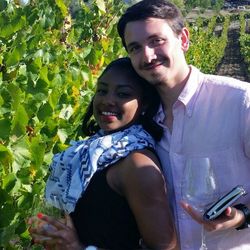
Super interesting co-fermented blend of 45% Petite Sirah, 45% Roussanne, 6% Grenache and 4% Syrah.
Deep and dark purplish red. Layered nose with tons of dark chocolate floating out of the glass. Layers of dark berries, black pepper, white pepper, purple floral notes, spices and herbs. Got a bit more savory and gamey as it opened up. Moderate tannins (6.6/10) and medium plus body. Kept getting fuller as it breathed. Big and juicy with dark cocoa, tight dark berries, bramble, dark spices, a touch of heat and anise in the finish. Long and lingering finish. Quite heavy and needs some time to fully integrate. Great wine. Drink from 2019 till 2026.
Need to go grab a few more tomorrow! — 9 years ago

Palmer & Co
Brut Millésimé Champagne Blend 2008

Terrific blend. 50 chard, 45 Pinot noir, 5 Pinot meunier. Great character, very bright, clean and fresh. — 10 years ago
Save Me San Francisco Wine Co.
Soul Sister Pinot Noir 2012

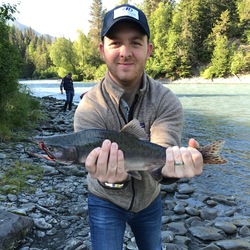
A little throw back Charleston Wine Festival circa 2014 with my bestie Brooke! — 12 years ago
Palmer & Co
Brut Blanc de Blancs Champagne Chardonnay 2007

2014/5/24@Johnnie's birthday Hong Kong — 12 years ago
La Jota Vineyard Co.
Anniversary Release Cabernet Sauvignon 1994
Fully matured cab. Full bodied, long finish. Soft tannins. Deep dried cherries on the nose. It's peaked but should hold for 4 maybe 5 more years. — 13 years ago
Bedrock Wine Co.
Ode to Lulu California Old Vine Rosé Blend 2017
And just like thaf a whole case is gone. It’s barely July, but its’s been hitting 100 frequently enough that these tend to disappear. Just as the last drops of this were going down I said the same words i’ve said for the last 5 straight summers “I never order enough of this stuff”. — 8 years ago
Château Brane-Cantenac
Grand Cru Classé en 1855 Margaux Red Bordeaux Blend 2005
I have a six-pack of this 05. I thought after 10 years in bottle, it would be interesting to check in on its evolution. While tasty, I’ll wait another 8-10 to open another. Even after 2-3 hours in the decanter, it’s still a very young adolescent. On the nose, slightly sour blackberries & dark cherries, dark currants, baked black plum, haunting blue fruits, anise, whiff of spice, steeped tea, dry stones, dry crushed rocks with dry top soil, caramel, vanilla with fresh & dry red florals. The body is thick & full. Tannins are starting to round out. It’s velvety on the palate. The fruits are; bright, fresh & ripe and really show the greatness of the 05 vintage. Dark currants, blackberries, dark cherries, baked black plum, haunting blue fruits, baked strawberries, cherries, raspberries on the long set, dark spice, clay & loamy dry top soil with crushed rocks, dry stones, cigar with ash, graphite, dry stems, slight herbaceous character, mint, used leather, clove, caramel, vanilla, fresh & dry red florals with violets. The round acidity is about perfect. The structure and length are still strong. The balance is in harmony. As for the long finish, it’s lush, ruby, rich and well polished. Photos of; Chateau Brane Cantenac, large wood vats, Henri Lurton and Estate vines. Producer notes and history...Chateau Brane Cantenac began in the early 17th century. At the time, the estate was known as Domaine Guilhem Hosten. Even that far back, wine was produced from the property. In fact, the wine was so highly regarded it was one of the more expensive wines in Bordeaux. It sold for almost as much money as Brane Mouton. This is interesting because of who went on to buy the vineyard in the 1800’s. The Baron of Brane, also known as “Napoleon of the Vineyards”, purchased the Chateau in 1833. At the time of the sale, the estate was called Chateau Gorce-Guy. To get the funds needed to purchase the Margaux vineyard, the Baron sold what is now called Mouton Rothschild, which was at the time of the sale, known as Chateau Brane-Mouton. Not such a good move with hundreds of years in hindsight! In 1838, the Baron renamed property taking his name and the name of the sector where the vineyards were located and called it Chateau Brane Cantenac. The Chateau later passed to the Roy family, who were well-known in the Margaux appellation in those days, as they owned Chateau d’issan. Moving ahead to 1920, the Societe des Grands Crus de France, a group of merchants and growers that owned several chateaux located in the Medoc including; Chateau Margaux, Chateau Giscours, and Chateau Lagrange in St. Julien, purchased Chateau Brane Cantenac. Five years later, M. Recapet and his son-in-law, François Lurton, took over Brane Cantenac along with Chateau Margaux. Lucien Lurton (the son of François Lurton) inherited Brane Cantenac in 1956. Today, the estate is still in the hands of the Lurton family. Brane Cantenac is owned and run by Henri Lurton. After being given the responsibility of managing Brane Cantenac, it was under the direction of Henri Lurton that large portions of the vineyard were replanted. Vine densities were increased, the drainage systems were improved and the plantings were also, slowly changed. The vineyard of Brane Cantenac is planted to 55% Cabernet Sauvignon, 40% Merlot, 4.5% Cabernet Franc and .5% Carmenere. Carmenere was used for the first time in the 2011 vintage. The only other Chateau I know that still uses Carmenere is Clerc Milon. The 75 hectare Left Bank vineyard of Brane Cantenac is essentially unchanged since it earned Second Growth status in the 1855 Classification. At least that is the case with the 45 hectares used to produce the Grand Vin of Brane Cantenac. Those 45 hectares are planted surrounding the Chateau. Those vines are located just in front of the Cantenac plateau and are the best terroir that Brane Cantenac owns. They have other parcels, which are further inland and much of those grapes are placed into their second wine, Le Baron de Brane. Those additional hectares can be divided into 3 main sections. Behind the Chateau, they have 15 hectares of vines on gravel and sand, 10 hectares across the road with sand, gravel and iron and a 13 hectare parcel with gravel called Notton, which is used for their second wine. The vineyard is planted to a vine density that ranges from 6,666 vines per hectare on the plateau and up to 8,000 vines per hectare for the vines located behind chateau, in their sandier soils. The higher levels of vine density are always found in the newer plantings. The terroir of Brane Cantenac consists of deep gravel, sand and clay soil. Experiments in the vineyards are currently looking at becoming more organic in their vineyard management. Today, more than 25% of Brane Cantenac is farmed using organic farming techniques. It is expected that over time, the amount of hectares farmed with organic methods will be increased. Brane Cantenac has gone through 2 relatively recent modernization’s in 1999, when they added began adding the first of their smaller vats to allow for parcel by parcel vinification and then again in 2015 when they completed a much more complete renovation of their cellars and vat rooms. While Brane Cantenac is a traditional producer, they are no stranger to technology as they were one of the first estates to embrace optical grape sorting machines. In very wet vintages, they can also use reverse osmosis. To produce the wine of Chateau Brane Cantenac, the wine is vinified in a combination of temperature controlled, traditional, 22 oak vats, 18 concrete tanks and 20 stainless steel vats that vary in size from 40 hectoliters all the way up to 200 hectoliters, which allows for parcel by parcel vinification. 40% of the fermentation takes place in the oak vats. The oldest vines are vinified in vats that are selected to allow for separate parcel by parcel vinification. The younger vines are vinified more often together in the same vats. However, the Carmenere is entirely micro-vinified, meaning that those grapes were completely vinified in barrel, using micro-vinification techniques. This can also happen because the amount of grapes produced is so small. Some vats can be co-inoculated, meaning they go through alcoholic fermentation and malolactic fermentation simultaneously. At Chateau Brane Cantenac, malolactic fermentation takes place in a combination of French oak tanks and barrels. The wine of Brane Cantenac is aged in an average of 60% new, French oak barrels for 18 months before bottling. The initial 2 months of aging is done with the wine on its lees, which adds more depth to the wine. There second wine is Le Baron de Brane. Le Baron de Brane is not new. In fact, previously, the second wine went under the name of Chateau Notton, which took its name from one of the main parcels where the grapes were planted. During the late 1950’s and into the 1960’s, having a second wine was important as the estate declassified 3 vintages, due to extremely poor, weather conditions in 1956, 1960 and 1963. Production of Chateau Brane Cantenac is about 11,000 cases per year. — 9 years ago

Cruse Wine Co.
Monkey Jacket North Coast Red Blend 2015

Michael Cruse found a sweet spot in a crowded market. This wine will reward those wanting something they can't find anywhere else. If it was $5-10 cheaper I'd buy this as my house wine. Still, a fun wine that brings bright cherry, with some tartness and herbal notes followed by a minerality that gives it some crunch. Strong finish that pairs well with roast chicken, grilled brats, or a salad lyonnaise. Much better at cellar temp than after an hour at room temp otherwise I would score higher. — 10 years ago


Green Flash Brewing Co.
Soul Style IPA

Very west coast, very good west IPA, if you like your IPA's more on the tropical taste profile, like I do, you will love this, big pineapple, mango, orange, grapefruit, — 11 years ago
Bedrock Wine Co.
Monte Rosso Sonoma Valley Zinfandel 2012
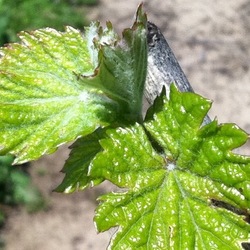
Decanted for several hours then drank over the course of 5 days. Still had days of life left over. — 12 years ago
Hokusetsu Shuzo Co.
Nobu The Sake Junmai Daigino

Good on the soul! Happy birthday me! — 12 years ago
De Lucca
Reserve Libero Tannat

tannat with 5 % nero d avola & san giovese co fermented original — 13 years ago
Patrick Derdeyn
Might be the most backward of the carlisle vineyards recently. This vintage is still extremely young and the wine takes several hours to open and an initial raisin note blows off. It eventually reveals a wine that is light in texture but full of depth. This claret like wine is made up of over a dozen different grapes and it seems each one takes a turn showing its character in this wine. It’s a beauty but one that wont truly be ready for at least another 5 years. — 8 years ago