Per Alessandra
The Standish Wine Company
The Relic Shiraz Blend 2004

On the nose; a bit of a brett bomb to start. Even after 11 years in the bottle, it needed a good 2 hour decant. Stewed fruits of; huckleberry, boysenberries, blueberries, plums, black raspberries, dark & liqueured cherries. Black raspberry cola, figs & dates, black & white pepper, touch of smoke & grilled meats, menthol, used leather, dry stems, dark minerals, loamy dry top soil, right amount of baking spices, lilacs & liquid violets. The body is full, round & lush. Tannins perfectly resolved. They still have a little baby teeth. The structure, length, tension and balance are near perfect. Stewed fruits of; huckleberry, boysenberries, blueberries, plums, black raspberries, dark liqueured cherries & strawberries haunting the palate here and there. Black raspberry cola, figs & dates, black & white pepper, a touch of smoke & grilled meats, menthol, used leather, dry stems, dark minerals, loamy dry top soil, right amount & mix of baking spices, lilacs, liquid violets & red florals. The acidity is perfect and acts like a waterfall over the palate. The fruit floral, lightly spiced finish goes on and on and on. Standish does not have a U.S. importer as his wines are small productions and he has no issues selling nearly all of them down under. You can order from his mailing list but, the shipping costs from Australia are stupid. Look for bottles on the secondary markets. You’ll be glad you did. If you have or had reservations about Australian wine or Shiraz vs. Syrah, Dan’s wines will end those thoughts. We tasted with Dan at his winery in April. He is extremely knowledgeable and a very talented Winemaker. He made Torbreck for years before starting his own winery. Photos of; his Estate, Dan and his low yield vines. His yield was an extremely low half ton per acre on this vintage. — 9 years ago

Paul T, Missing My Beautiful Wife 24/7
I’ve fallen for that one before, no thanks @Benchmark Wine GroupPaul T, Missing My Beautiful Wife 24/7
I’ve had many a Torbreck, my favorite Aussie wine.
Bass Phillip
Issan Vineyard Pinot Noir 2013

Deep Ruby. Both stalky, sappy and with full berry fruits. A full bodied Pinot from the very close planted Issan Vineyard ( in excess of 9,000 vines per Hectare). A different flavour profile to the equally full bodied Otago Pinots. Phillip Jones calls it a freak wine. We probably drunk it a little too soon as its best years are in front of it- yet delicious now. 15.2% Alc but not noticeable. — 10 years ago
Weingut Hermann Moser
Per Due Grüner Veltliner 2013
Had with a chicken stir fry, zucchini, bell peppers and onions. Great pairing. — 10 years ago
Sisters Forever
Sorelle Per Sempre Rouge

Good oak flavor. Good blend. — 10 years ago
Carnivor
California Cabernet Sauvignon 2013
8.99 at Costco. Per wine enthusiast 90 puts — 11 years ago
Andreas Huber - Az. Agr. Pacherhof
Grüner Veltliner 2014

intenso di profumi di fiori e frutta, la pera soprattutto, grande freschezza che rimbalza per tutta la bocca, un gran corpo per un bianco, una bella struttura è un discreto equilibrio per quanto un vino così possa essere equilibrato, lungo nel finale con un retrogusto di mandorle fresche — 11 years ago
Casa D'Ambra
Ischia Per''e Palummo Piedirosso 2012

Bought this on our vacation 2 years ago. Nice memories. Nice earthy undertones. Similar@to cab franc but a little earthier. Balanced and delicious — 11 years ago
Domaine Saladin
Per Èl Côtes du Rhône Villages White Rhône Blend

Subtle. Nic ewhite that’s a blend of Marsanne, Viognier, Clairette and Grenache Blanc? . pure and classy aromas and flavors of white peach and minerals. white flowers. Nice length. Medium-bodied, gulpable, delicious — 12 years ago
Donati Family Vineyard
Sisters Forever Sorelle Per Sempre Un-oaked Central Coast Chardonnay 2013

Brilliant wine, especially for the price. Lightly tropical fruits with pleasantly mouth-coating viscosity dragging all the boisterous flavors into a medium finish. — 12 years ago

Per Me Sola
Toscana Rosso
Sangiovese - merlot awesomeness. This is why super Tuscans make sense sometimes. Pizza with sausage and green onion plus this juice is a good time — 13 years ago
Château Brane-Cantenac
Grand Cru Classé en 1855 Margaux Red Bordeaux Blend 2005
I have a six-pack of this 05. I thought after 10 years in bottle, it would be interesting to check in on its evolution. While tasty, I’ll wait another 8-10 to open another. Even after 2-3 hours in the decanter, it’s still a very young adolescent. On the nose, slightly sour blackberries & dark cherries, dark currants, baked black plum, haunting blue fruits, anise, whiff of spice, steeped tea, dry stones, dry crushed rocks with dry top soil, caramel, vanilla with fresh & dry red florals. The body is thick & full. Tannins are starting to round out. It’s velvety on the palate. The fruits are; bright, fresh & ripe and really show the greatness of the 05 vintage. Dark currants, blackberries, dark cherries, baked black plum, haunting blue fruits, baked strawberries, cherries, raspberries on the long set, dark spice, clay & loamy dry top soil with crushed rocks, dry stones, cigar with ash, graphite, dry stems, slight herbaceous character, mint, used leather, clove, caramel, vanilla, fresh & dry red florals with violets. The round acidity is about perfect. The structure and length are still strong. The balance is in harmony. As for the long finish, it’s lush, ruby, rich and well polished. Photos of; Chateau Brane Cantenac, large wood vats, Henri Lurton and Estate vines. Producer notes and history...Chateau Brane Cantenac began in the early 17th century. At the time, the estate was known as Domaine Guilhem Hosten. Even that far back, wine was produced from the property. In fact, the wine was so highly regarded it was one of the more expensive wines in Bordeaux. It sold for almost as much money as Brane Mouton. This is interesting because of who went on to buy the vineyard in the 1800’s. The Baron of Brane, also known as “Napoleon of the Vineyards”, purchased the Chateau in 1833. At the time of the sale, the estate was called Chateau Gorce-Guy. To get the funds needed to purchase the Margaux vineyard, the Baron sold what is now called Mouton Rothschild, which was at the time of the sale, known as Chateau Brane-Mouton. Not such a good move with hundreds of years in hindsight! In 1838, the Baron renamed property taking his name and the name of the sector where the vineyards were located and called it Chateau Brane Cantenac. The Chateau later passed to the Roy family, who were well-known in the Margaux appellation in those days, as they owned Chateau d’issan. Moving ahead to 1920, the Societe des Grands Crus de France, a group of merchants and growers that owned several chateaux located in the Medoc including; Chateau Margaux, Chateau Giscours, and Chateau Lagrange in St. Julien, purchased Chateau Brane Cantenac. Five years later, M. Recapet and his son-in-law, François Lurton, took over Brane Cantenac along with Chateau Margaux. Lucien Lurton (the son of François Lurton) inherited Brane Cantenac in 1956. Today, the estate is still in the hands of the Lurton family. Brane Cantenac is owned and run by Henri Lurton. After being given the responsibility of managing Brane Cantenac, it was under the direction of Henri Lurton that large portions of the vineyard were replanted. Vine densities were increased, the drainage systems were improved and the plantings were also, slowly changed. The vineyard of Brane Cantenac is planted to 55% Cabernet Sauvignon, 40% Merlot, 4.5% Cabernet Franc and .5% Carmenere. Carmenere was used for the first time in the 2011 vintage. The only other Chateau I know that still uses Carmenere is Clerc Milon. The 75 hectare Left Bank vineyard of Brane Cantenac is essentially unchanged since it earned Second Growth status in the 1855 Classification. At least that is the case with the 45 hectares used to produce the Grand Vin of Brane Cantenac. Those 45 hectares are planted surrounding the Chateau. Those vines are located just in front of the Cantenac plateau and are the best terroir that Brane Cantenac owns. They have other parcels, which are further inland and much of those grapes are placed into their second wine, Le Baron de Brane. Those additional hectares can be divided into 3 main sections. Behind the Chateau, they have 15 hectares of vines on gravel and sand, 10 hectares across the road with sand, gravel and iron and a 13 hectare parcel with gravel called Notton, which is used for their second wine. The vineyard is planted to a vine density that ranges from 6,666 vines per hectare on the plateau and up to 8,000 vines per hectare for the vines located behind chateau, in their sandier soils. The higher levels of vine density are always found in the newer plantings. The terroir of Brane Cantenac consists of deep gravel, sand and clay soil. Experiments in the vineyards are currently looking at becoming more organic in their vineyard management. Today, more than 25% of Brane Cantenac is farmed using organic farming techniques. It is expected that over time, the amount of hectares farmed with organic methods will be increased. Brane Cantenac has gone through 2 relatively recent modernization’s in 1999, when they added began adding the first of their smaller vats to allow for parcel by parcel vinification and then again in 2015 when they completed a much more complete renovation of their cellars and vat rooms. While Brane Cantenac is a traditional producer, they are no stranger to technology as they were one of the first estates to embrace optical grape sorting machines. In very wet vintages, they can also use reverse osmosis. To produce the wine of Chateau Brane Cantenac, the wine is vinified in a combination of temperature controlled, traditional, 22 oak vats, 18 concrete tanks and 20 stainless steel vats that vary in size from 40 hectoliters all the way up to 200 hectoliters, which allows for parcel by parcel vinification. 40% of the fermentation takes place in the oak vats. The oldest vines are vinified in vats that are selected to allow for separate parcel by parcel vinification. The younger vines are vinified more often together in the same vats. However, the Carmenere is entirely micro-vinified, meaning that those grapes were completely vinified in barrel, using micro-vinification techniques. This can also happen because the amount of grapes produced is so small. Some vats can be co-inoculated, meaning they go through alcoholic fermentation and malolactic fermentation simultaneously. At Chateau Brane Cantenac, malolactic fermentation takes place in a combination of French oak tanks and barrels. The wine of Brane Cantenac is aged in an average of 60% new, French oak barrels for 18 months before bottling. The initial 2 months of aging is done with the wine on its lees, which adds more depth to the wine. There second wine is Le Baron de Brane. Le Baron de Brane is not new. In fact, previously, the second wine went under the name of Chateau Notton, which took its name from one of the main parcels where the grapes were planted. During the late 1950’s and into the 1960’s, having a second wine was important as the estate declassified 3 vintages, due to extremely poor, weather conditions in 1956, 1960 and 1963. Production of Chateau Brane Cantenac is about 11,000 cases per year. — 9 years ago


Cantine Riondo
Il Cuore per Martina Appassimento Veneto Corvina Blend
Gott kryddigt vin! — 11 years ago
Taittinger
Comtes de Champagne Brut Blanc de Blancs Chardonnay 1996

Annual Valentine's Day bottle - 4 gone, 8 left. Excellent per usual - soft bubbles, yeasty and lemony with a deep mouthfeel, super long finish. Delicious. — 11 years ago


Giacomo Fenocchio
Bussia Barolo Nebbiolo 2010
Un profumo inebriante ed una promessa per gli anni a venire. Eccellente. — 11 years ago
Louis Roederer
Cristal Brut Champagne 2002

2002 vintage Rose. Light salmon, copper hue. Chalk, wet rock to the fore. Red currant and cranberry. Slight blossom notes. Iron fragments. On the palate, very lean and balanced as is the Crystal style. Not the concentration of the white 2002. If there's any tannins here, you have to focus to notice them. Maybe at the back end there's a touch of weight from the tannins. Very young - too young. Don't touch for 7-10 years. Makings of a great wine as acidity is so balanced with the fruit. Love it. NB: Pinot cold macerated for 4 days - to extract colour but little tannins. Then blended with Chardonnay and co-fermented. Quite unique. No added red wine per se. — 12 years ago
E Solo
100 Per Cento Barbera

From pavia northern Italy. Elegant aromas of strawberry and prunes. Upfront flavor of chocolate, cherries and licorice. — 12 years ago
The Prisoner Wine Company
The Prisoner Napa Valley Zinfandel Blend 2010

Ditto-most amazing red wine I've ever had! Worth the price per bottle. — 14 years ago
Bollinger
Brut Rosé Champagne Blend
On the nose; bright cherries, ripe strawberry & cranberry reduction, black raspberries, raspberries, watermelon near the rhine, mixed orange citrus, oyster shells, baguette crust, understated volcanic minerals, chalk, saline, fresh pink roses and florals. The body is full and a shade gluey. The fruits are ripe, rich and candied/gummy in style. Bright cherries, black cherries ripe strawberry & cranberry reduction, black raspberries, raspberries, watermelon near the rhine, mixed orange citrus spray, saline, seashells, soft grey volcanic minerals, lots of grippy powdery razor sharp chalkiness, baguette crust, fresh pink roses & florals, acidity that is round and well done, understated delicate micro bubbles and a long, well balanced, rich finish. The reason why I prefer the Billecart Salmon, Ruinart & Laurent Perrier over the Bollinger is it’s a little too sweet for me. Photos of; the House of Bollinger, cellar, headstone that marks one of their vineyards and their harvest staff picking perfectly manicured rows. Producer notes and history...Bollinger has roots dating back to 1585 when the Hennequins, one of the Bollinger founding families, owned land in Cramant. Before the Bollinger house was founded in the 18th century, the Villermont family practised wine making, though not under their family name. In 1750, Villermont settled at 16 rue Jules Lobet, which would eventually become the head office for Bollinger. In 1803 Jacques Joseph Placide Bollinger was born in Ellwangen, in the kingdom of Württemberg. In 1822, he moved to Champagne and found work at the house of Muller Ruinart, which no longer exists. Many other Germans came to settle in the Champagne region, including Johann-Josef Krug and the Heidsiecks, who founded a house that would become; Charles Heidsieck, Piper Heidsieck, Veuve Clicquot and others. The Champagne house Renaudin Bollinger was founded in 1829 in Aÿ by Hennequin de Villermont, Paul Levieux Renaudin and Jacques Bollinger. The partners agreed that the Villermont name would not be used on the labels, hence the house name Renaudin Bollinger. Starting when Jacques Bollinger married Charlotte de Villermont, the house has been managed by the Bollinger family. Even though Paul Renaudin passed without an heir to his name, the label did not become solely Bollinger until the 1960s. Founder Jacques Joseph Bollinger married Charlotte de Villermont. The had a daughter, who had two sons Joseph and Georges. These sons took over the company in 1885 and began expanding the family estate by purchasing vineyards in nearby villages. The sons also developed the image of the brand, such as when Bollinger became the official supplier to the British court and received a Royal Warrant in 1884 from Queen Victoria. In 1918, Jacques Bollinger, the son of Georges, took over the company and married Emily Law de Lauriston Boubers, known as "Lily". Jacques expanded the facilities by building new cellars, purchasing the Tauxières vineyards, and acquiring the assets of another Champagne house on Boulevard du Maréchal de Lattre de Tassign, where Bollinger's offices are presently located. When Jacques Bollinger died in 1941, Lily Bollinger took over. Lilly expanded production with the purchase of even more vineyards, but is best known for traveling the world to market the brand. Bollinger was modernized under the Claude d'Hautefeuille, who acquired additional vineyards and further developed the brand internationally. Following Claude, his cousin Christian Bizot took over the Bollinger house and expanded world distribution. Their Winemaker also used several James Bond film movies to market the brand. Bollinger is fermented in oak barrels. At harvest, only the first pressing is used in the cuvée, unless the vintage is of particularly high quality, when a second pressing of Chardonnay will be used. Bollinger sells the second pressing, the tailles. Bollinger utilizes two pressing houses (Louvois and Mareuil sur Aÿ) to ensure a short distance between harvest location and pressing. When possible, grapes purchased from growers are pressed by the house. When the pressed wine arrives, the Bollinger cellar master analyzes the musts for quality, discarding and selling off those that do not meet the house standards. The first fermentation is done cru by cru, variety by variety, preserving many of the unique characteristics of the vines location. Bollinger is one of the few Champagne houses to do some first fermentation in oak barrels. Wines that will not hold up to first fermentation in wood are vinified in vats. Bollinger Champagnes usually undergo malolactic fermentation. The Grande Année 1995 did not undergo malolactic fermentation. Bollinger uses only traditional yeast. They’ve decided that new generations of yeasts (agglomerated yeasts and encapsulated yeasts) do not produce satisfactory Champagne. Vintage wine, including all wine to be used in a Grande Année, is fermented in small oak barrels, sorted according to origin and variety. Both oak and stainless steel are used for non-vintage wine. Bollinger also has the last Cooperage in Champagne. The oak barrels are all at least four years old, avoiding the transfer of tannins to the wine. The wines are only lightly filtered. All Bollinger Champagne spends a long time on its lees, contributing to the complex flavour of the wine. Though appellation d'origine contrôlée rules only require 12 months on lees for non-vintage Champagne and for vintage (NV wines, 15 months from tirage to release and vintage wines must be kept for 36 months from tirage to release), Bollinger ages their non-vintage wines three years, and the vintage wines from five to eight years. The Grande Année and R.D. Champagnes are riddled by hand. At disgorgement, Bollinger wines are given a low dosage, to maintain the balance and flavor of the wine. The company uses 6-9 grams of sugar per liter for the Special Cuvée and La Grande Année. The extra-brut R.D. is dosed between 4 and 5 grams. After dosage, the wines are aged an additional several months, resting for a minimum of three months before shipping. Bollinger owns nearly 160 hectares of vines, producing more than 60% of its supply. The vines are largely Pinot Noir, specifically clone 386. Bollinger believes this clone ensures good quality as well as highlighting characteristics of the various terroirs. The vineyards also include some rare ungrafted French vines from before the phylloxera. Bollinger owns vines all over Champagne, including the crus of Aÿ, Bouzy and Verzenay. — 9 years ago
I figured a real keyboard needed to be involved, thanks for the insight.
Paul T, Missing My Beautiful Wife 24/7
A lot of big words for a 9.1🤕Realm Cellars
The Bard Cabernet Sauvignon Blend 2012


Château Recougne
Bordeaux Supérieur Carménère 2012
$15 per bottle, great body and easy to drink — 11 years ago
Salon
'S' Blanc de Blancs Le Mesnil Brut Chardonnay 1983
AJ 99/100 - Questa annata ha scatenato un vespaio, e dal voto potete ben capire da che parte stessi :) Per me lo champagne definitivo malgrado 85 e 82 siano in realtà le annate "top", per altri sottotono, tanto che non sarebbe neanche dovuto essere imbottigliato.... Giallo paglierino tendente oro, naso complesso con aromi di sottobosco, brioche, marzapane, vaniglia, fieno, miele, lieve pietra focaia, tutto, con grandissima finezza e armonia, in bocca esplode con grande corrispondenza al naso, buono, pieno, sapido, grasso, finale... Senza fine! A questo punto DEVO assaggiare le altre due annate di Salon per provare la perfezione! — 11 years ago
Marie et Pierre Bénetière
Cordeloux Côte-Rôtie Syrah 2012
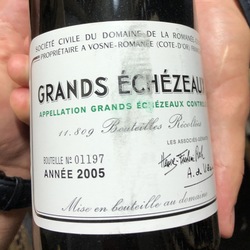
Exclusive Wine- 6-10 bottles produced per year. Paired with cornbread wrapped beef. — 11 years ago
Lanson
Black Label Brut Champagne Blend

Un champagne da 83 punti per me. Maturo e con buona struttura. — 12 years ago
Domaine de la Romanée-Conti (DRC)
Grands Échézeaux Pinot Noir 2004

Vino maschio. Chapeau per questo pinot nero. Ampio al naso con un panorama variegato di sensazioni olfattive fra cui emergono la classica merde de poulet ed un accenno ematico di grande carattere. In bocca è verticale, equilibrato, fine e potente. — 13 years ago
Delectable Wine

Follow to learn about our favorite wines & people.
Tua Rita's 2015 Syrah Per Sempre offers notable textural richness and depth, with a thread of whole cluster aromatic nuance that is woven throughout a core of intense dark fruit. Savory and floral notes continue to emerge with time in the glass. Creamy, silky tannins add to the wine's considerable appeal. (Antonio Galloni, Vinous, April 2018) — 9 years ago