Damm S. A.
Château Musar
Bekaa Valley Red Blend 2008


Château Lynch-Bages
Grand Cru Classé Pauillac Cabernet Sauvignon Blend 2000
The 2000 is delicious but, it is evolving at a glacial pace. Out of magnum.
On the nose, touch of barnyard, glycerin, ripe; blackberries, dark cherries, black raspberries, plum, strawberries & cherries. Vanilla, dry clay, limestone, river stones, just a touch of pyrazines & bandaid, dark,,turned, moist earth, dry grass and dry & fresh dark florals.
The body is full, round & sexy. Dry softened, sweet tannins. ripe; blackberries, dark cherries, black raspberries, plum, strawberries & cherries. Vanilla, dry clay, limestone, river stones, just a touch of pyrazines & bandaid, fresh tobacco leaf, saddle-wood, dry underbrush, dark, turned, moist earth, dry grass and dry & fresh dark florals. The acidity is magnificent. The structure, tension, length and balance are sensational. The finish is drop dead gorgeous. I’d still hold mine another 5 years as long as you have 3-4 bottles for more 5 year increments.
Photos of, their Estate vines, Clyde Beffa-Owner of K&L Wine Merchants, Owner of Chateau Lynch Bages - Jean-Michel Cazes, guests of the dinner and a sunset view from their Estate.
Producer notes and history...Lynch Bages takes its name from the local area where the Chateau is located in Bages. The vineyard of what was to become Lynch Bages was established and then expanded by the Dejean family who sold it in 1728 to Pierre Drouillard.
In 1749, Drouillard bequeathed the estate to his daughter Elizabeth, the wife of Thomas Lynch. This is how the estate came to belong to the Lynch family, where it remained for seventy-five years and received the name Lynch Bages. However, it was not always known under that name.
For a while the wines were sold under the name of Jurine Bages. In fact, when the estate was Classified in the 1855 Classification of the Medoc, the wines were selling under the name of Chateau Jurine Bages. That is because the property was owned at the time by a Swiss wine merchant, Sebastien Jurine.
In 1862, the property was sold to the Cayrou brothers who restored the estate’s name to Chateau Lynch family.
Around 1870, Lou Janou Cazes and his wife Angelique were living in Pauillac, close to Chateau Pichon Longueville Baron. It was here that Jean-Charles Cazes, the couple’s second son, was born in 1877.
In the 1930’s, Jean-Charles Cazes, who was already in charge of Les-Ormes-de-Pez in St. Estephe agreed to lease the vines of Lynch Bages. By that time, the Cazes family had history in Bordeaux dating back to the second half of the nineteenth century.
This agreement to take over Lynch Bages was good for both the owner and Jean Charles Cazes. Because, the vineyards had become dilapidated and were in need of expensive replanting, which was too expensive for the owner. However, for Cazes, this represented an opportunity, as he had the time, and the ability to manage Lynch Bages, but he lacked the funds to buy the vineyard.
Jean-Charles Cazes eventually purchased both properties on the eve of the Second World War. Lynch Bages and Les-Ormes-de-Pez have been run by the Cazes family ever since. In 1988, the Cazes family added to their holdings in Bordeaux when they purchased an estate in the Graves region, Chateau Villa Bel Air.
Around 1970, they increased their vineyards with the purchase of Haut-Bages Averous and Saussus. By the late 1990’s their holdings had expanded to nearly 100 hectares! Jean-Michel Cazes who had been employed as an engineer in Paris, joined the wine trade in 1973. In a short time, Jean Michel Cazes modernized everything at Lynch Bages.
He installed a new vat room, insulated the buildings, developing new technologies and equipment, built storage cellars, restored the loading areas and wine storehouses over the next fifteen years. During that time period, Jean Michel Cazes was the unofficial ambassador of not just the Left Bank, but all of Bordeaux. Jean Michel Cazes was one of the first Chateau owners to begin promoting their wine in China back in 1986.
Bages became the first wine sent into space, when a French astronaut carried a bottle of 1975 Lynch Bages with him on the joint American/French space flight!
Beginning in 1987, Jean-Michel Cazes joined the team at the insurance company AXA, who wanted to build an investment portfolio of quality vineyards in the Medoc, Pomerol, Sauternes, Portugal and Hungary.
Jean-Michel Cazes was named the director of the wine division and all the estates including of course, the neighboring, Second Growth, Chateau Pichon Baron.
June 1989 marked the inauguration of the new wine making facilities at Lynch Bages, which was on of their best vintages. 1989 also marked the debut of the Cordeillan- hotel and restaurant where Sofia and I had one of our best dinners ever. A few years after that, the Village de Bages with its shops was born.
The following year, in 1990, the estate began making white wine, Blanc de Lynch Bages. In 2001, the Cazes family company bought vineyards in the Rhone Valley in the Languedoc appellation, as well as in Australia and Portugal. They added to their holdings a few years later when they purchased a vineyard in Chateauneuf du Pape.
In 2006, Jean-Charles Cazes took over as the managing director of Chateau Lynch Bages. Jean-Michel Cazes continues to lead the wine and tourism division of the family’s activities. Due to their constant promotion in the Asian market, Chateau Lynch Bages remains one of the strongest brands in the Asian market, especially in China.
In 2017, Chateau Lynch Bages began a massive renovation and modernization, focusing on their wine making, and technical facilities. The project, headed by the noted architects Chien Chung Pei and Li Chung Pei, the sons of the famous architect that designed the glass pyramid for the Louvre in Paris as well as several other important buildings.
The project will be completed in 2019. This includes a new grape, reception center, gravity flow wine cellar and the vat rooms, which will house at least, 80 stainless steel vats in various sizes allowing for parcel by parcel vinification.
The new cellars will feature a glass roof, terraces with 360 degree views and completely modernized reception areas and offices. They are not seeing visitors until it’s completion.
In March, 2017, they purchased Chateau Haut Batailley from Françoise Des Brest Borie giving the Cazes family over 120 hectares of vines in Pauillac!
The 100 hectare vineyard of Lynch Bages is planted to 75% Cabernet Sauvignon, 17% Merlot, 6% Cabernet Franc and 2% Petit Verdot. The vineyard has a terroir of gravel, chalk and sand soils.
The vineyard can be divided into two main sections, with a large portion of the vines being planted close to the Chateau on the Bages plateau. At their peak, the vineyard reaches an elevation of 20 meters. The other section of the vineyard lies further north, with its key terroir placed on the Monferan plateau.
They also own vines in the far southwest of the appellation, next Chateau Pichon Lalande, on the St. Julien border, which can be used in the Grand Vin. The vineyard can be split into four main blocks, which can be further subdivided into 140 separate parcels.
The average age of the vines is about 30 years old. But they have old vines, some of which are close to 90 years old.
The vineyards are planted to a vine density of 9,000 vines per hectare. The average age of the vines is about 30 years old. But they have old vines, some of which are close to 90 years old.
Lynch Bages also six hectares of vine are reserved for the production of the white Bordeaux wine of Chateau Lynch Bages. Those vines are located to the west of the estate. They are planted to 53% Sauvignon Blanc, 32% Semillon and 15% Muscadelle. On average, those vines are about 20 years of age. Lynch Bages Blanc made its debut in 1990.
To produce the wine of Chateau Lynch Bages, vinification takes place 35 stainless steel vats that vary in size. Malolactic fermentation takes place in a combination of 30% French, oak barrels with the remainder taking place in tank.
The wine of Chateau Lynch Bages is aged in an average of 70% new, French oak barrels for between 12 and 15 months. Due to the appellation laws of Pauillac, the wine is sold as a generic AOC Bordeaux Blanc, because Pauillac does not allow for the plantings of white wine grapes.
For the vinification of their white, Bordeaux wine, Blanc de Lynch-Bages is vinified in a combination of 50% new, French oak barrels, 20% in one year old barrels and the remaining 30% is vinified in vats. The wine is aged on its lees for at least six months. The white wine is sold an AOC Bordeaux wine.
The annual production at Lynch Bages is close to 35,000 cases depending on the vintage.
The also make a 2nd wine, which was previously known as Chateau Chateau Haut Bages Averous. However, the estate changed its name to Echo de Lynch Bages beginning with the 2007 vintage. The estate recently added a third wine, Pauillac de Lynch-Bages.
— 8 years ago

Masi Agricola Spa S. Ambrogio
Brolo Campofiorin OroRosso del Veronese Corvina Blend 2010
Nice nose but a little too heavy on the palate — 11 years ago
Tenuta San Guido
Bolgheri Sassicaia Cabernet Sauvignon Cabernet Franc 1985

1985 Sassicaia. Second red wine at Redd Wood lunch w A, S, and K. This wine was perfect. Epic. We could not believe how perfect this wine was drinking. Thoroughly enjoyed it- it was enjoyable the way truffles are- hard to describe, but pleasing to all relevant senses. — 11 years ago

Podere Rocche dei Manzoni
Vigna Cappella S. Stefano di Perno Barolo Nebbiolo 1995

Intensely aromatic. Black tea, rose petals, red cherry and tar. Every component feels accentuated but in a very balanced way. Lots of fruit, good amount of acid, solid tannic grip and long finish. — 12 years ago
Masi Agricola Spa S. Ambrogio
Nectar Campofiorin Rosso Verona Corvina Blend 2010

Excellent value with good structure from a quality producer, — 12 years ago

Fanetti
Tenuta S Agnese Riserva Vino Nobile di Montepulciano Sangiovese 2013



Château Brane-Cantenac
Grand Cru Classé en 1855 Margaux Red Bordeaux Blend 2005
I have a six-pack of this 05. I thought after 10 years in bottle, it would be interesting to check in on its evolution. While tasty, I’ll wait another 8-10 to open another. Even after 2-3 hours in the decanter, it’s still a very young adolescent. On the nose, slightly sour blackberries & dark cherries, dark currants, baked black plum, haunting blue fruits, anise, whiff of spice, steeped tea, dry stones, dry crushed rocks with dry top soil, caramel, vanilla with fresh & dry red florals. The body is thick & full. Tannins are starting to round out. It’s velvety on the palate. The fruits are; bright, fresh & ripe and really show the greatness of the 05 vintage. Dark currants, blackberries, dark cherries, baked black plum, haunting blue fruits, baked strawberries, cherries, raspberries on the long set, dark spice, clay & loamy dry top soil with crushed rocks, dry stones, cigar with ash, graphite, dry stems, slight herbaceous character, mint, used leather, clove, caramel, vanilla, fresh & dry red florals with violets. The round acidity is about perfect. The structure and length are still strong. The balance is in harmony. As for the long finish, it’s lush, ruby, rich and well polished. Photos of; Chateau Brane Cantenac, large wood vats, Henri Lurton and Estate vines. Producer notes and history...Chateau Brane Cantenac began in the early 17th century. At the time, the estate was known as Domaine Guilhem Hosten. Even that far back, wine was produced from the property. In fact, the wine was so highly regarded it was one of the more expensive wines in Bordeaux. It sold for almost as much money as Brane Mouton. This is interesting because of who went on to buy the vineyard in the 1800’s. The Baron of Brane, also known as “Napoleon of the Vineyards”, purchased the Chateau in 1833. At the time of the sale, the estate was called Chateau Gorce-Guy. To get the funds needed to purchase the Margaux vineyard, the Baron sold what is now called Mouton Rothschild, which was at the time of the sale, known as Chateau Brane-Mouton. Not such a good move with hundreds of years in hindsight! In 1838, the Baron renamed property taking his name and the name of the sector where the vineyards were located and called it Chateau Brane Cantenac. The Chateau later passed to the Roy family, who were well-known in the Margaux appellation in those days, as they owned Chateau d’issan. Moving ahead to 1920, the Societe des Grands Crus de France, a group of merchants and growers that owned several chateaux located in the Medoc including; Chateau Margaux, Chateau Giscours, and Chateau Lagrange in St. Julien, purchased Chateau Brane Cantenac. Five years later, M. Recapet and his son-in-law, François Lurton, took over Brane Cantenac along with Chateau Margaux. Lucien Lurton (the son of François Lurton) inherited Brane Cantenac in 1956. Today, the estate is still in the hands of the Lurton family. Brane Cantenac is owned and run by Henri Lurton. After being given the responsibility of managing Brane Cantenac, it was under the direction of Henri Lurton that large portions of the vineyard were replanted. Vine densities were increased, the drainage systems were improved and the plantings were also, slowly changed. The vineyard of Brane Cantenac is planted to 55% Cabernet Sauvignon, 40% Merlot, 4.5% Cabernet Franc and .5% Carmenere. Carmenere was used for the first time in the 2011 vintage. The only other Chateau I know that still uses Carmenere is Clerc Milon. The 75 hectare Left Bank vineyard of Brane Cantenac is essentially unchanged since it earned Second Growth status in the 1855 Classification. At least that is the case with the 45 hectares used to produce the Grand Vin of Brane Cantenac. Those 45 hectares are planted surrounding the Chateau. Those vines are located just in front of the Cantenac plateau and are the best terroir that Brane Cantenac owns. They have other parcels, which are further inland and much of those grapes are placed into their second wine, Le Baron de Brane. Those additional hectares can be divided into 3 main sections. Behind the Chateau, they have 15 hectares of vines on gravel and sand, 10 hectares across the road with sand, gravel and iron and a 13 hectare parcel with gravel called Notton, which is used for their second wine. The vineyard is planted to a vine density that ranges from 6,666 vines per hectare on the plateau and up to 8,000 vines per hectare for the vines located behind chateau, in their sandier soils. The higher levels of vine density are always found in the newer plantings. The terroir of Brane Cantenac consists of deep gravel, sand and clay soil. Experiments in the vineyards are currently looking at becoming more organic in their vineyard management. Today, more than 25% of Brane Cantenac is farmed using organic farming techniques. It is expected that over time, the amount of hectares farmed with organic methods will be increased. Brane Cantenac has gone through 2 relatively recent modernization’s in 1999, when they added began adding the first of their smaller vats to allow for parcel by parcel vinification and then again in 2015 when they completed a much more complete renovation of their cellars and vat rooms. While Brane Cantenac is a traditional producer, they are no stranger to technology as they were one of the first estates to embrace optical grape sorting machines. In very wet vintages, they can also use reverse osmosis. To produce the wine of Chateau Brane Cantenac, the wine is vinified in a combination of temperature controlled, traditional, 22 oak vats, 18 concrete tanks and 20 stainless steel vats that vary in size from 40 hectoliters all the way up to 200 hectoliters, which allows for parcel by parcel vinification. 40% of the fermentation takes place in the oak vats. The oldest vines are vinified in vats that are selected to allow for separate parcel by parcel vinification. The younger vines are vinified more often together in the same vats. However, the Carmenere is entirely micro-vinified, meaning that those grapes were completely vinified in barrel, using micro-vinification techniques. This can also happen because the amount of grapes produced is so small. Some vats can be co-inoculated, meaning they go through alcoholic fermentation and malolactic fermentation simultaneously. At Chateau Brane Cantenac, malolactic fermentation takes place in a combination of French oak tanks and barrels. The wine of Brane Cantenac is aged in an average of 60% new, French oak barrels for 18 months before bottling. The initial 2 months of aging is done with the wine on its lees, which adds more depth to the wine. There second wine is Le Baron de Brane. Le Baron de Brane is not new. In fact, previously, the second wine went under the name of Chateau Notton, which took its name from one of the main parcels where the grapes were planted. During the late 1950’s and into the 1960’s, having a second wine was important as the estate declassified 3 vintages, due to extremely poor, weather conditions in 1956, 1960 and 1963. Production of Chateau Brane Cantenac is about 11,000 cases per year. — 9 years ago


Caymus Vineyards
Napa Valley Cabernet Sauvignon 2013

2013 out of a MAGNUM that is very Rare. The 13 has more structure and body. Fruit and tannin levels also are much bigger, overall I believe this 2013 will outlive the 12's. CB 96 — 11 years ago


Masi Agricola Spa S. Ambrogio
Mazzano Amarone Classico Della Valpolicella Corvina Blend 1999

Served w/ braised beef cooked in barbera....sorry you weren't here! Huge delicious fruitang aged like a champ! — 12 years ago

Masi Agricola Spa S. Ambrogio
Serego Alghieri Vaio Armaron Amarone della Valpolicella Corvina Blend 1999
Lovely but a bit over the top — 13 years ago
Joseph Phelps Vineyards
Insignia Estate Grown Napa Valley Cabernet Sauvignon Blend 1994

This was a vertical of 38 vintages to celebrate Joseph Phelps Insignia 40th anniversary! Easily the best vintage of the 90's! — 13 years ago
Guido Porro
Vigna S. Caterina Barolo Nebbiolo 2006
Fresh and bright with red cherry and plum fruit accented with tar, floral and brown spice notes. Palate has lovely texture with nice fruit and round tannins. Lacking a touch of depth and complexity that I would have expected with the bottle age. While not profound, very pleased to have 6 more bottles. — 8 years ago
Azienda Agricola Roberto Voerzio
Vigneti S. Francesco Fontanazza Langhe Nebbiolo 2007

like a Barolo, aged very well after 11y, Nose very attractive and attack and mid palate very firm and full — 8 years ago

S. Anderson
Richard Chambers Vineyard Cabernet Sauvignon 1999
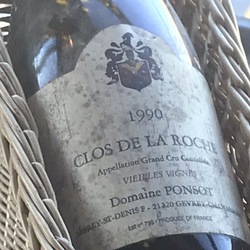
Tasted blind. Dark blackish purple. Opaque. Huge nose. Notes of black cherry, cranberry, molasses, plum, tobacco leaf and a touch of menthol. Very primary in the mouth. Huge impact. Decent finish. Big wine. — 9 years ago
I. et S. Bernaudeau
Les Nourrissons Anjou Chenin Blanc

Not much of a tier above Les Ongles in 2014 but cool stuff — 9 years ago
Château Gruaud Larose
Saint-Julien Red Bordeaux Blend 2006
£99 Magnum that RP said "one of the most disappointing St.-Juliens I tasted 84pts" well I think he should retry the great numpty 😜 Still could do w/ 2-5yrs 👍 Great nose but palate still a little tight
🍇 63% Cab S, 25% Mer, 9% Cab F & 3% Pet V
🍷 Opaque ruby
👃 Smokey oaky earthy farmyard through shy blackcurrant & spiced plum w/ minerals, leather, musky cellar & wet leaves - fab nose 👍
👄 Med earthy mocha blackcurrant body w/ dry tannins & touch of tart cherry
🎯 Med dry earthy blackcurrant finish — 9 years ago
Beaulieu Vineyard
Reserve Tapestry Napa Valley Cabernet Sauvignon Blend 1996
I under estimated this wine last weekend as I didn't decant it. Some concern over a 20 year old CA Cabernet. However, this wine is still all there. There's something special when the right wine hits 20 years of age and there is simply no shortcut or substitute. The evolution in this wine is spectacular. Ripe plum, blackberries, dark raspberries, cooked strawberries, amazing baking spices, sweet dark earth and minerals, swede and soft leather, tobacco leaf, great balance, an amazing elegant finish and perfect acidity. I would have not expected this much from a Tapestry but there you go!!! Holding my 07's for much longer than I expected based on this 96. — 10 years ago
Masi Agricola Spa S. Ambrogio
Masianco Pinot Grigio & Verduzzo 2013
Buttery in front plus green apple at the end. Flavor punch of a Chardonnay with the crisp flavor you love on a warm summer night! — 10 years ago
Giuseppe Rinaldi
Cannubi S. Lorenzo Ravera Barolo Nebbiolo 2009
Daddy likey. Great acidity. Ripping tannins that didn't cut too deep and that dissipated after a short decant. That gave way to a delicious pure strawberry rhubarb fruit. Yum! Can't wait to try this again now or with 3 years on it. — 11 years ago

Château Montrose
Saint-Estèphe Cabernet Sauvignon Blend 1975

Neck fill and cork tight and sweet sounding when you pull it. You almost can tell if a bottle will be good by how the cork comes out. Juicy still with dark cranberry notes, pure of fruit and melted tannins and acid backbone. Love it as not sure how these 75's would have aged. — 11 years ago
Masi Agricola Spa S. Ambrogio
Campolongo di Torbe Amarone della Valpolicella Classico Corvina Blend 2007

Fairly closed nose, with mushroom, tea, and licorice and sweet cherries lurking within. Quite sweet on palate, but full and lush, texturally seductive, and finely made. Not a great buy for $100 though a leader of its kind. 2007 vintage. — 12 years ago
Villa S. Anna
Chianti Colli Senesi Sangiovese 2010

Everything could ask for from a Chianti. — 12 years ago
Frank Family Vineyards
Reserve S&J Vineyard Petite Sirah 2010
From S J vineyard very dark with blackberry coulis fruit violet floral and dark spices very big and brawny with sweet sappy fruit dark spices and a fresh finish excellent — 13 years ago
Château Pichon Longueville Comtesse de Lalande
Pauillac Red Bordeaux Blend 2001

Clearly one of my favourites from Bordeaux. A very under rated vintage under the shadow of 2000's. Iron fist in a velvet glove is what I think of this lovely wine. Spherical, sexy and very serious.18,5 ++/20 — 13 years ago
Mark Flesher
Nice wine. Although "young" compared to the others I've had which are in the 80's and 90's, this wine is a really nice change of pace. Nose still has the brambly, fruit and tobacco and almost 'foresty' notes that the older ones have a bit more of (and, to me, have QUITE a bit more of). Yet, on the palate this is a combination of sweet and tart fruit. Plum, hint of raisin, tobacco, hint of herb with nice bracing acidity on the finish. I think this wine would go very nicely with a myriad of foods, without trying to compete or outdo those foods. Seems IMO to be more in balance than the ones with 10-20 more years. — 7 years ago